A majority of Canadians now expect inflation to be higher a year from now, tightening the pressure on the Bank of Canada just as markets price in a meaningful chance of another rate hike.
Canada inflation expectations rise before BoC meeting
That shift matters because inflation expectations are one of the few channels through which today’s price shock can turn into tomorrow’s broader inflation problem. When households start assuming prices will keep rising, they are more likely to push for bigger wage gains and bring forward spending, forcing policymakers to choose between protecting growth and restoring credibility.
A Nanos Research poll for Bloomberg News found 54% of respondents expect the annual pace of consumer-price growth to be above the current 3% by this time next year. About a third said inflation would be roughly unchanged, while only 7% expect it to be lower. For the Bank of Canada, that is uncomfortable reading: the longer expectations stay elevated, the harder it becomes to keep inflation pinned near the 2% target without additional tightening.
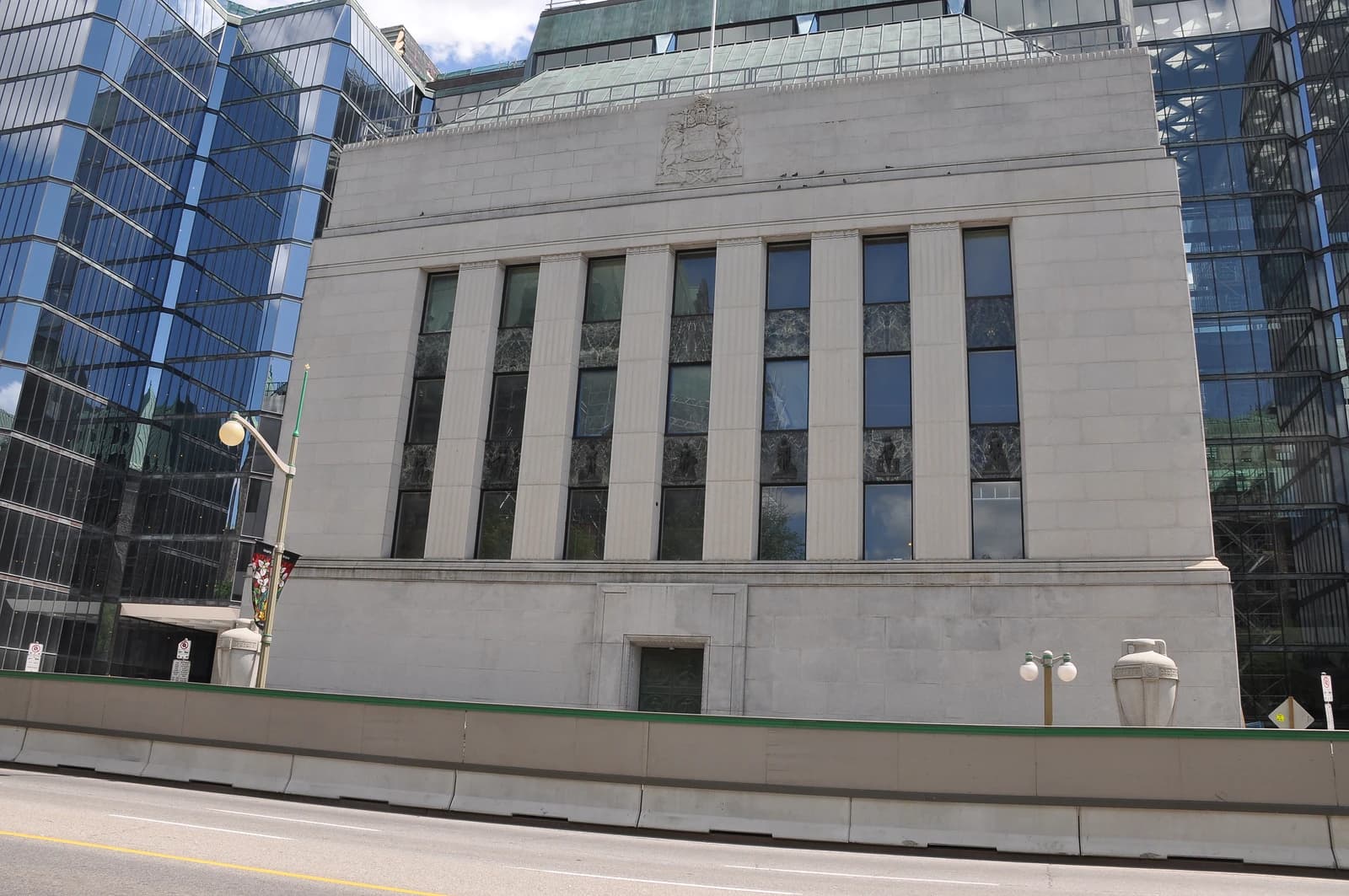
Governor Tiff Macklem has already warned that if the central bank is too slow to react to persistent inflation, it may need to raise rates higher and faster later on. At the same time, he has acknowledged the risk of overshooting and weakening an economy already operating under uncertainty. That balancing act is now central to the policy debate ahead of the Oct. 28 meeting.
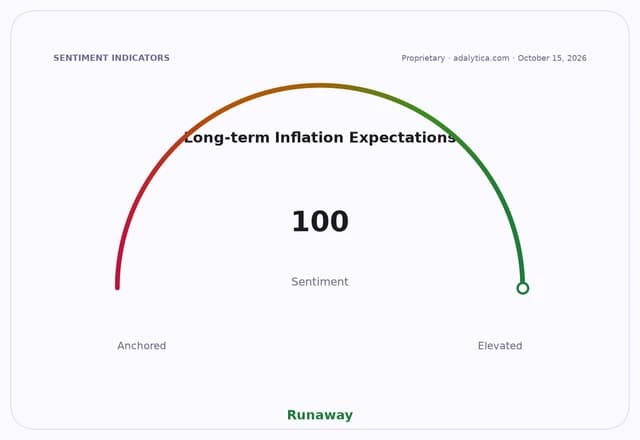
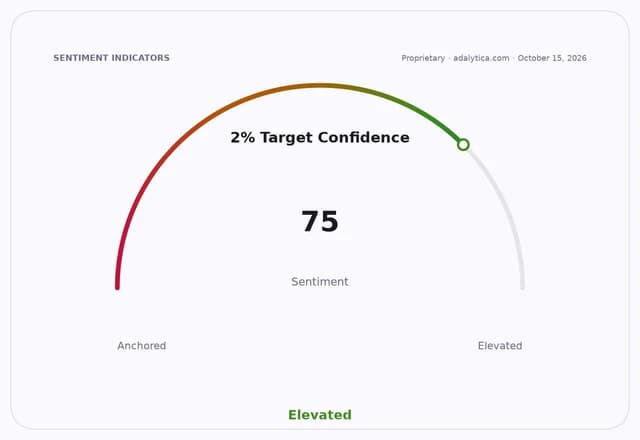
Long-term Inflation Expectations — 30-day sentimentadalytica.com
Explore this data interactively — full history, time series and cross-market comparisons.Open AlphaPulse
The backdrop is a Canadian economy that has been rattled by a run-up in gasoline prices and a broader oil shock linked to the war in Iran. Headline inflation has sat near 3% for months, the top of the Bank of Canada’s control range, and officials are still trying to determine whether those energy costs are spilling into goods and services more broadly. The policy rate is 2.25%, and traders in overnight swaps are pricing roughly a one-in-three chance of a hike this month, while seeing more than 100 basis points of additional tightening over the next year.
For investors, the message is straightforward: Canada is drifting toward a higher-rate, slower-growth setup, and the market is still underestimating the persistence of inflation psychology. That is why bank shares, rate-sensitive consumers, and borrowers all matter here. Royal Bank of Canada and Toronto-Dominion Bank have already been repriced as investors weigh the tension between wider lending margins and credit risk, while the broader Canadian equity market faces the drag of more expensive capital.
Adalytica’s long-term inflation expectations gauge shows a sharp jump in concern, reinforcing the idea that pricing pressure is becoming embedded in sentiment rather than viewed as a one-off energy shock. Confidence in the central bank’s 2% target has also held only at a middling level, underscoring how fragile the disinflation narrative remains.
The next catalyst is the Bank of Canada’s business outlook and consumer surveys on Oct. 19, which will show whether this polling is an early warning or a durable shift in behavior. If inflation fears stay elevated, the market will have to price a longer tightening cycle. That creates the clearest trade in Canada right now: stay cautious on domestic cyclicals and rate-sensitive borrowers, and favor balance-sheet strength, deposit franchises, and financials that can survive a prolonged period of policy restraint.
| Entity | Gains | Losses |
|---|---|---|
| Bank of Canada | ▲credibility if it stays tough | ▼room to support growth |
| Canadian banks | ▲wider lending margins | ▼higher credit stress |
| Borrowers and consumers | ▲lower rates later | ▼higher debt service costs |
| Inflation hedges | ▲stronger demand | ▼fixed-income returns |