Canada’s unemployment rate climbed to 6.7% in October as employment slipped and more people entered the labour force, a reminder that the country’s job market is still struggling to regain momentum even after the Bank of Canada pushed rates higher.
Canada Unemployment Rises to 6.7% in October
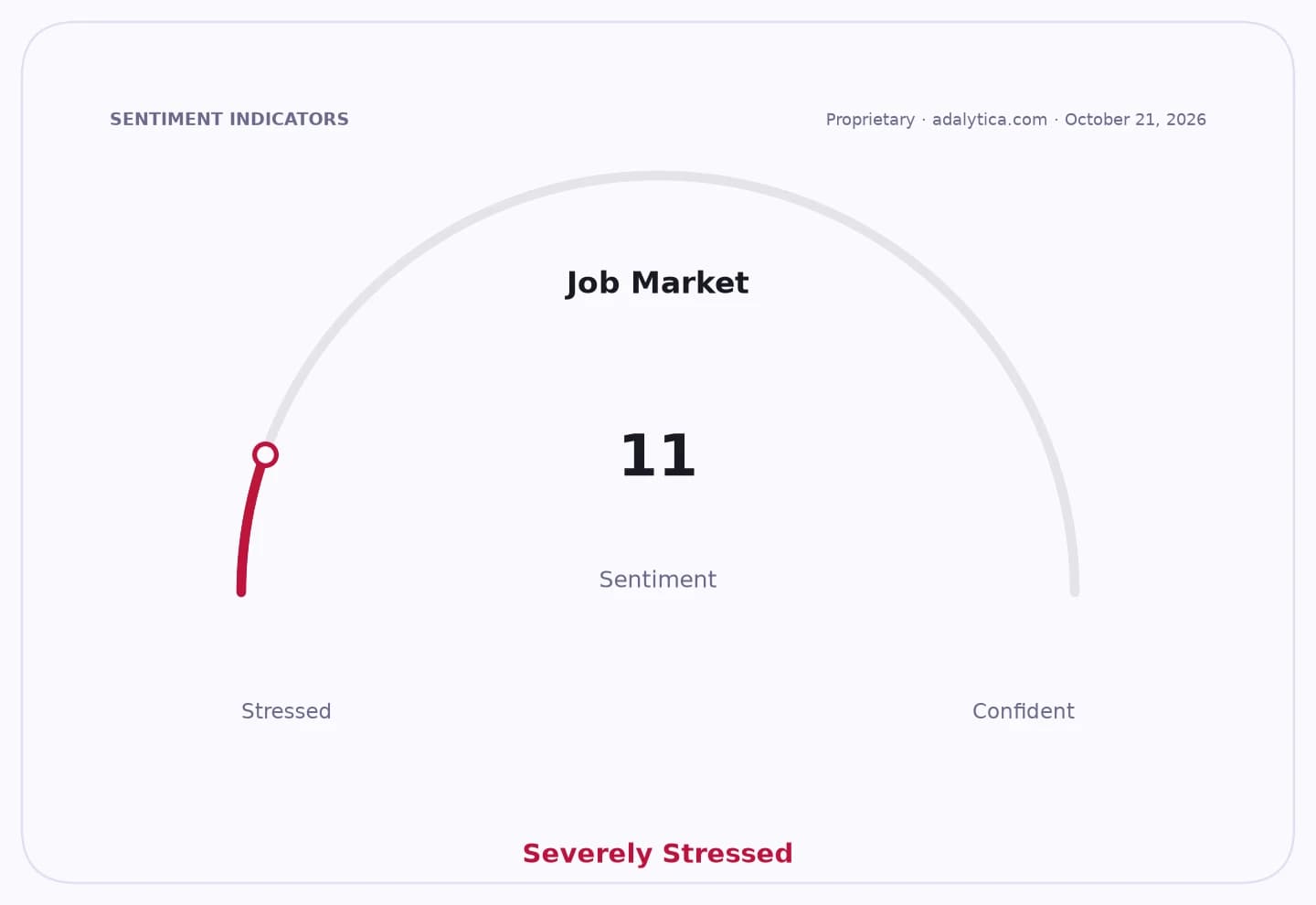
Job Market
That matters because labor weakness is now colliding with two bigger forces investors care about: sticky inflation and trade frictions with the United States. A softer jobs market normally gives the central bank more room to ease, but the BoC raised rates last week anyway, putting inflation risks ahead of growth concerns. For households, higher unemployment and slower wage gains mean less spending power. For investors, it raises the odds of slower economic growth, weaker consumer demand and more uneven earnings across Canadian banks, retailers and domestically focused companies.
Sentiment Indicators
Statistics Canada said total employment fell by 4,700 in October, far worse than economists had expected, while private-sector payrolls dropped by 52,500. Public-sector hiring cushioned the blow, rising by 49,600, but that does not change the broader picture: the labor market has stalled. Wholesale and retail trade lost 28,800 positions in the month and has shed 113,100 jobs over the past year, with the weakness concentrated in Ontario, Quebec and British Columbia.
The damage is showing up in the more forward-looking parts of the report too. Long-term unemployment is rising, with 23.7% of unemployed Canadians now looking for work for 27 weeks or more, up from 21.5% a year earlier. Youth unemployment jumped to 13.7%. And wage growth is cooling, with average hourly pay for permanent full-time workers up just 2% from a year ago, below expectations and slower than the prior month.
The report adds to a year that has already been unusually soft by Canadian standards. Employment is down 46,000 so far in 2026, the biggest year-to-date decline since the global financial crisis outside the pandemic year. That is especially concerning because the weakness is not just cyclical; U.S. tariffs are still hitting exposed sectors, and the outlook remains tied to trade negotiations between Ottawa and Washington.
For investors, the main takeaway is that Canada is becoming a more selective market. Construction has held up and added jobs, which is constructive for materials, housing-linked and infrastructure names. But consumer-facing sectors, especially retail, look more vulnerable if job losses and slower wage growth continue. Financial stocks may also face more pressure if loan growth slows and households feel the pinch.
The bank’s next move will hinge on whether inflation stays hot enough to overpower this labor-market cooling. If trade tensions ease and growth stabilizes, the soft jobs data could help set up lower rates later on. If not, Canada could be heading into a period of slower growth with little policy relief — a difficult backdrop, but also one that tends to create long-term opportunities for patient investors willing to wait for stronger valuations.
| Entity | Gains | Losses |
|---|---|---|
| Canadian workers | ▲More bargaining needed | ▼Slower hiring, weaker wage growth |
| Bank of Canada | ▲More reason to watch inflation closely | ▼Less room to ignore growth risks |
| Retailers and consumers | ▲Construction resilience | ▼Softer spending, fewer jobs |
| Long-term investors | ▲Better entry points in cyclicals | ▼Near-term earnings pressure |