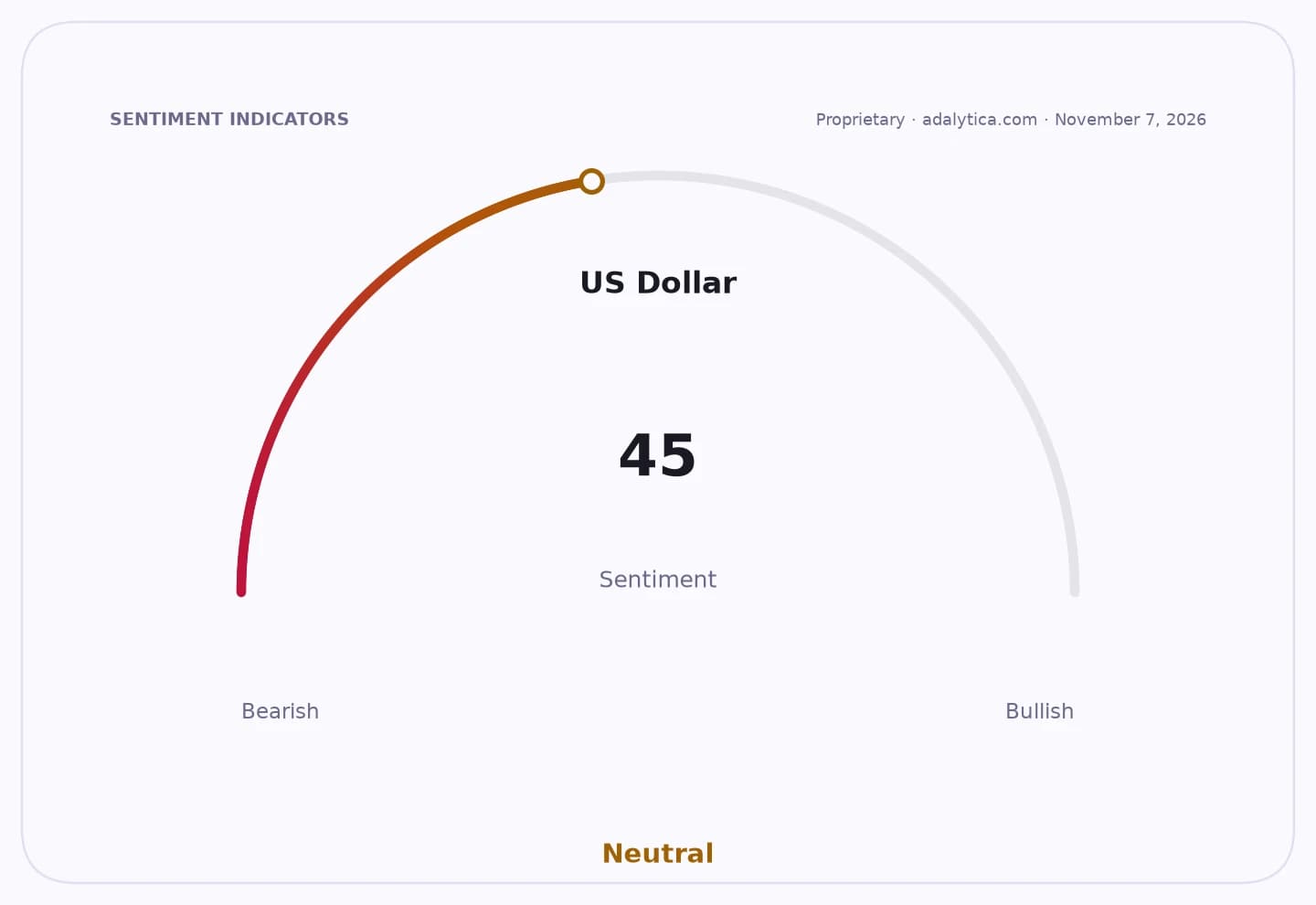
The Canadian dollar slid to a nearly three-week low on Friday after October employment unexpectedly fell, reinforcing bets the Bank of Canada will have less urgency to raise interest rates.
Canadian Dollar Falls on Weak October Jobs Data
The loonie was down 0.7% at 1.4110 per U.S. dollar, or 70.87 U.S. cents, after touching 1.4125, its weakest intraday level since Oct. 19. For the week, it was headed for a loss of nearly 1% as global equity markets sold off, leaving the currency vulnerable even before the latest domestic data hit.
Sentiment Indicators
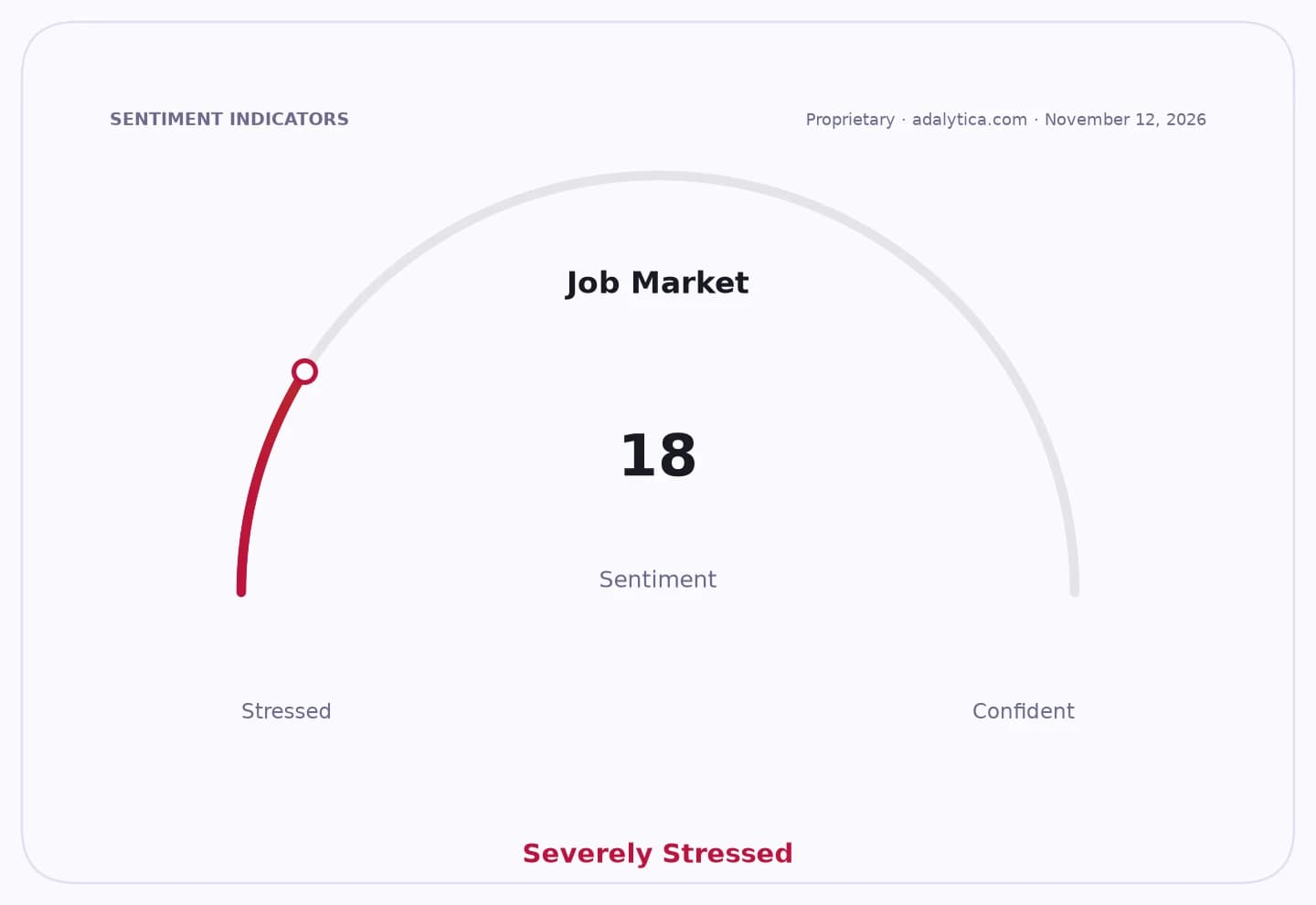
Canada lost 4,700 jobs in October, its third straight month of employment declines, while the unemployment rate climbed to a six-month high of 6.7%. Economists had expected a gain of 13,600 jobs. The weak report pushed the odds of a Bank of Canada tightening move in December down to 35% from 40%, according to swap market pricing.
The data matters because a softer labour market reduces pressure on the central bank to keep policy tight, especially with inflation still above target and growth already slowing. It also widens the policy gap with the United States, where stronger-than-expected nonfarm payrolls supported the dollar and pushed Canadian short-term yields lower relative to U.S. Treasuries.
Canada’s two-year yield fell 3.3 basis points to 3.123%, extending its discount to the comparable U.S. rate to about 139 basis points. That spread can weigh on the loonie by making Canadian assets less attractive to yield-seeking investors.
The currency’s decline also came as crude prices weakened, adding another drag on a dollar closely tied to energy exports. Oil futures were down on hopes of a de-escalation in the US-Israeli war on Iran after election losses for President Donald Trump’s Republican Party, keeping pressure on one of Canada’s biggest export earners.
Even with the Bank of Canada and the federal finance ministry unveiling a new five-year policy framework this week and Prime Minister Mark Carney’s budget keeping fiscal goals intact, the market response was driven by jobs and rates. For investors, the immediate question is whether the labour-market slowdown deepens enough to force the central bank onto a longer pause or even an easing bias into year-end.
| Entity | Gains | Losses |
|---|---|---|
| U.S. dollar | ▲Higher-rate appeal | ▼None |
| Canadian dollar | ▲None | ▼Near-3-week low |
| Bank of Canada doves | ▲Lower hike odds | ▼Less room to tighten |
| Canadian exporters | ▲Softer currency support | ▼Weaker domestic demand |