Carrefour shares fell sharply after the French retailer warned that unrest in France is hitting costs and operations, while Japan’s Nikkei rose on renewed enthusiasm for artificial intelligence demand.
Carrefour cuts outlook as Nikkei rises on AI demand

For investors, the split-screen matters because it shows how quickly stock leadership is shifting around the world: companies exposed to domestic political disruption are getting punished, while markets tied to AI spending and semiconductors are still drawing buyers. That is the kind of divergence that can create both risk and opportunity for long-term portfolios.
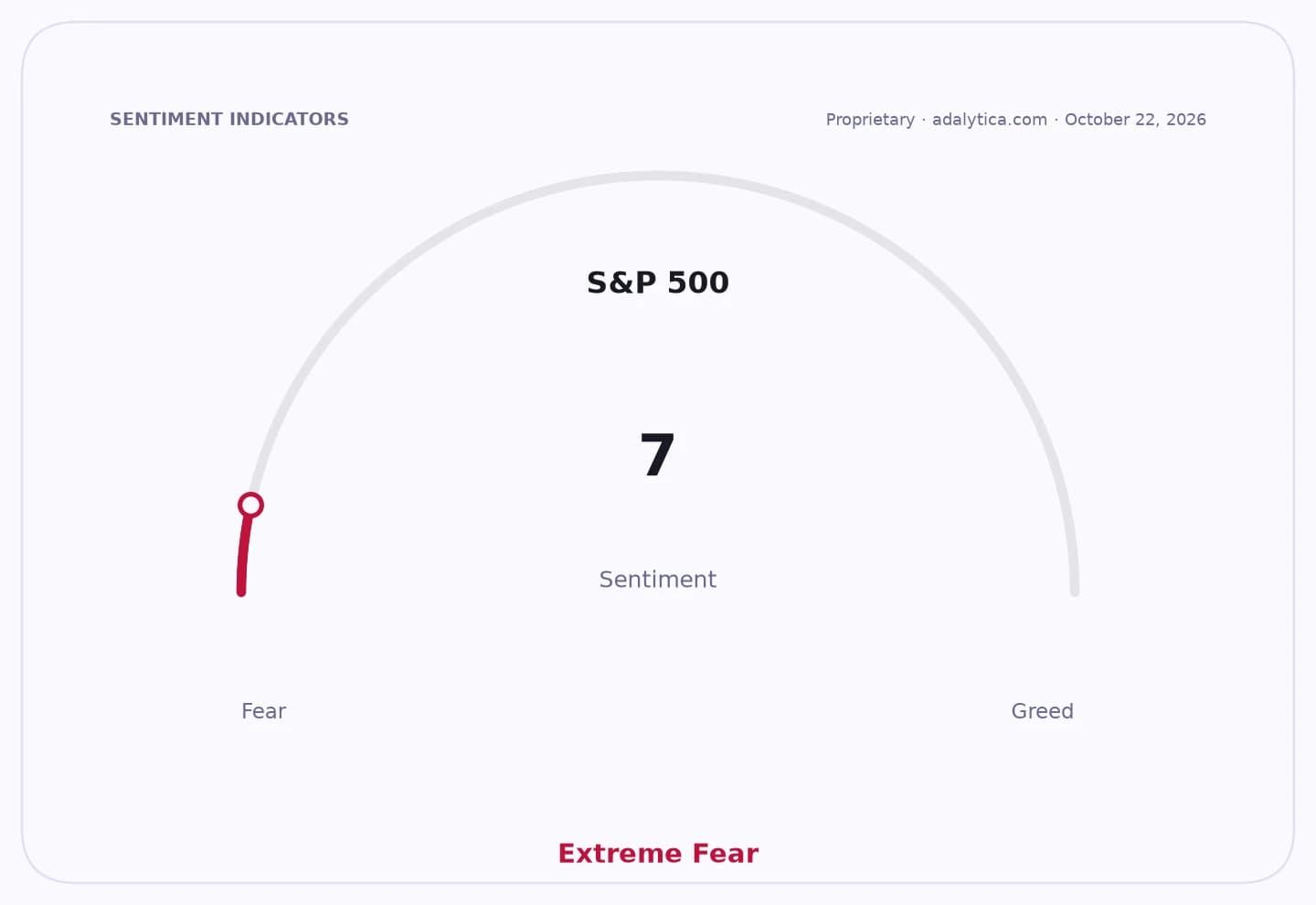
Sentiment IndicatorsⓘProprietary · adalytica.com · October 26, 2026
This is a snapshot — live sentiment, awareness and momentum for 130+ markets update continuously in the dashboard.Open AlphaPulse
Carrefour slid 12.5% after it cut its full-year earnings outlook, saying riots, looting and curfews have disrupted stores and pushed up expenses. The warning is more than a one-off hit to a supermarket chain. It underscores how fragile consumer-facing businesses can be when political instability starts to bleed into day-to-day commerce, especially in a large economy like France where investors are already worried about public finances and slower growth.
The broader European market took the news in stride, but the tone was cautious. The Stoxx 600 was little changed, suggesting strong company results are not enough to fully offset worries about France’s disorder and the region’s economic uncertainty. In Britain, hotter-than-expected inflation also kept pressure on equities by boosting expectations that the Bank of England may need to stay restrictive for longer.
Japan, by contrast, got a lift from the same force that has repeatedly rescued global risk appetite this year: artificial intelligence. The Nikkei gained 0.85% to 64,621.24, even after being up more than 2% earlier in the session, as traders latched onto signs of firm demand for AI chips and related equipment. The broader Topix rose 0.86% to 4,043.73.
That optimism was fueled by reports that ByteDance, Alibaba and Tencent together have ordered more than 3 million Nvidia graphics processing units, a deal worth more than $35 billion. Those kinds of numbers matter because they suggest the AI buildout is still running at full speed, supporting not just chipmakers but also the broader supply chain in Japan and elsewhere. Export data from Japan showed shipments rose 16.7% in September, a sign that semiconductor-linked demand remains resilient even if the pace was softer than economists expected.
The market response also shows why AI remains such an important long-term theme for investors. When capital spending in a new technology cycle stays strong, it can support earnings growth far beyond the headline names. That is why semiconductors, metal suppliers and industrial equipment makers can keep outperforming even when broader sentiment wobbles.
For long-term investors, the message is straightforward: Carrefour’s drop is a reminder that local shocks can quickly damage margins, while the Nikkei’s rise shows that AI is still one of the market’s most powerful growth engines. The right response is not to chase every move, but to stay focused on companies with durable cash flow, pricing power and exposure to secular trends that can compound over years, not weeks.
| Entity | Gains | Losses |
|---|---|---|
| AI chip suppliers | ▲Stronger demand outlook | ▼Supply constraints |
| Japanese exporters | ▲Higher AI-linked orders | ▼Slower-than-expected export growth |
| Carrefour shareholders | ▲None | ▼Lower earnings outlook |
| French consumers/retail sector | ▲None | ▼Higher costs, disrupted stores |