The return of the carry trade may be the cleanest signal yet that global markets are moving into a more durable dollar-funded, yield-chasing regime, and Goldman Sachs says conditions are the best since the turn of the millennium. That matters because carry thrives when volatility is contained, rate differentials are wide and investors are willing to borrow in low-yielding currencies to buy higher-yielding ones — a setup that can accelerate capital flows across foreign exchange, rates and risk assets.
Carry Trade Revival Supports Dollar, Pressures Yen

For investors, the key point is not the trade itself but what it says about the macro backdrop. When carry becomes attractive, it usually means the market is pricing a world in which central-bank divergence, relative growth gaps and subdued volatility persist long enough for leveraged FX positioning to scale. That tends to support the dollar against low-yielding currencies such as the yen, while pressuring funding currencies and helping the assets in the destination markets that receive the inflows.
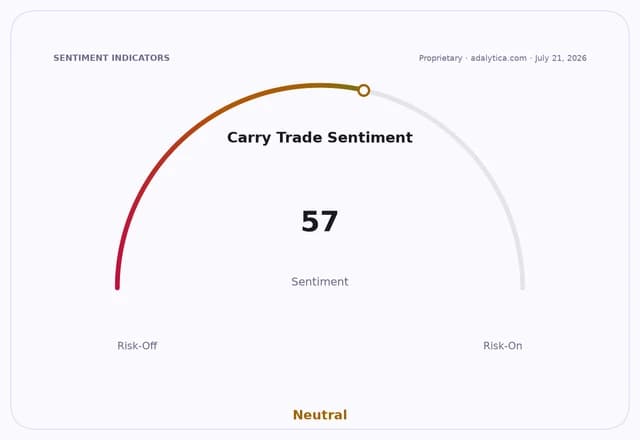
Sentiment IndicatorsⓘProprietary · adalytica.com · July 21, 2026
This is a snapshot — live sentiment, awareness and momentum for 130+ markets update continuously in the dashboard.Open AlphaPulse

The tape is already hinting at that shift. Goldman Sachs shares have surged to about $1,055 from around $753 in October, comfortably above both the 50-day and 200-day moving averages, showing investors are rewarding the firm’s trading and markets franchise as volatility and positioning opportunities improve. Its conventional RSI readings have at times been stretched, underscoring how aggressively traders have chased the move. At the same time, the dollar ETF UUP has edged higher to 28.39, while the yen-tracking FXY remains weak at 56.46, reflecting the pressure on Japan’s currency that often accompanies carry demand.
That is where the opportunity becomes asymmetric. A stronger carry environment is not just a signal for currency desks; it is a catalyst for the whole plumbing of global capital markets. Banks with major trading operations, prime brokers, and market-makers can benefit from heavier turnover and more structured flows. Hedge funds and macro traders gain a larger opportunity set. Exporters in countries with weaker currencies can also get a lift, while importers and borrowers in those same markets face tighter financial conditions.
Carry Trade Sentiment — 30-day sentimentadalytica.com
Explore this data interactively — full history, time series and cross-market comparisons.Open AlphaPulse
The market may still be underestimating how long this can last. Carry breaks down when volatility spikes, policy shocks hit or recession fears force a scramble back into funding currencies. But if Goldman's read proves right, the setup favors continued strength in the dollar, continued weakness in the yen and a renewed tailwind for institutions that monetize cross-border flow and financing activity. For investors, the message is simple: stay positioned for a world where capital once again gets paid to chase yield.
| Entity | Gains | Losses |
|---|---|---|
| Goldman Sachs | ▲Trading volumes | ▼Rate volatility |
| Dollar holders | ▲Higher carry returns | ▼Funding-cost repricing |
| Yen borrowers | ▲Short-term funding demand | ▼Currency weakness |
| Exporters with weak currencies | ▲Competitive pricing | ▼Import inflation |