Catalonia’s government is moving to keep artificial intelligence out of schools until students turn 14, a policy that would place one of Europe’s most closely watched education systems on the cautious end of the AI debate.
Catalonia to bar AI in schools until age 14

For investors and policymakers, that matters because schools are becoming a battleground over how quickly AI should enter everyday life. Salvador Illa is framing the issue as one of balance, arguing that new technologies bring benefits but also “important risks,” including screen addiction and weaker reading habits. In other words, this is not just an education rule; it is a statement about how governments may regulate AI use among children as the technology spreads faster than social norms or public institutions can adapt.
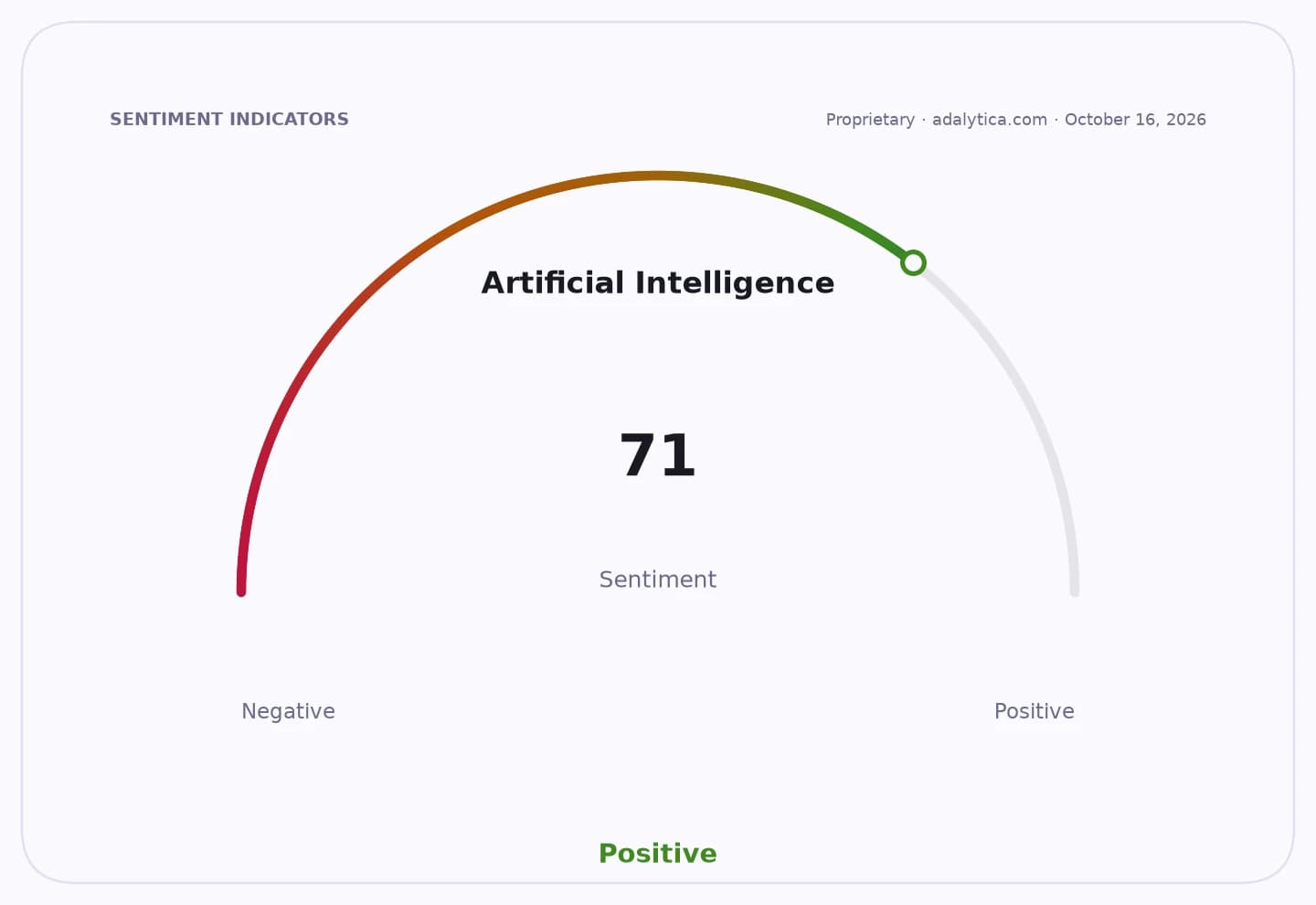
Sentiment IndicatorsⓘProprietary · adalytica.com · September 26, 2026
This is a snapshot — live sentiment, awareness and momentum for 130+ markets update continuously in the dashboard.Open AlphaPulse
The Catalan plan comes after Illa also outlined a broader push to lift education spending to 6% of GDP and to air-condition all public schools within five years with a 2.5 billion euro investment. That combination signals a larger effort to rebuild confidence in the education system after criticism tied to Catalonia’s exclusion from PISA tests. The AI restriction fits into the same narrative: more public spending, more control over classroom technology and a stronger emphasis on reading and traditional learning.
That matters economically because education policy shapes future labor quality, digital fluency and the pace at which a workforce adopts new tools. Countries that push AI literacy early may build an edge in productivity and innovation; those that delay may reduce short-term exposure to technology risks but risk leaving students less prepared for an AI-heavy economy. Catalonia is choosing caution, at least for younger students, and that puts it in tension with governments and companies racing to embed AI into classrooms.
The contrast is striking. Intel and Israel’s Education Ministry recently agreed to expand AI and STEM education, a sign that some countries view schools as the launchpad for the next generation of tech talent. Catalonia’s move points in the opposite direction, at least for children under 14, and underscores that the global AI education market is not moving in one straight line.
For investors, the immediate market impact is limited, but the policy signal is real. Alphabet, Microsoft, Nvidia and other companies building AI tools for education have been trying to normalize classroom adoption. Rules that limit use among younger students could slow some education-sector rollout, even if they do little to dent the broader AI investment cycle. The bigger takeaway is that public scrutiny around child safety, screen time and content quality is likely to intensify, which could shape procurement, product design and compliance costs over time.
The long-term investment lesson is that AI adoption will not be governed only by technical capability or corporate enthusiasm. It will also be shaped by politics, culture and what parents will tolerate. Catalonia’s proposal is a reminder that the next phase of the AI boom may be less about whether the tools work and more about where society decides they belong. Investors should watch the policy ripple effects, but stay focused on the companies that can adapt fastest if classroom rules become stricter.
| Entity | Gains | Losses |
|---|---|---|
| Younger students | ▲Less screen exposure | ▼Slower AI familiarity |
| Teachers and schools | ▲More clarity on classroom limits | ▼Less access to AI tools |
| AI education vendors | ▲Longer-term compliance wins | ▼Near-term rollout delays |
| Parents worried about screens | ▲Stronger protections | ▼Fewer digital learning options |