CBOT wheat futures ease 3 to 5 cents, corn slips 1 to 2 cents and soybeans firm 3 to 5 cents as traders keep one eye on Black Sea tensions that could tighten global grain flows and lift prices further.
CBOT Wheat, Corn Slip; Soybeans Firm on Black Sea

The mixed tone leaves wheat under the most pressure in the near term, while soybeans are finding modest support even as the broader grain complex remains sensitive to headlines out of the Black Sea. Any escalation there matters because the region remains a key export corridor for wheat, corn and oilseeds, and disruptions can quickly feed into world prices, freight costs and import bills for buyers in North Africa, the Middle East and parts of Asia.
The move comes against a backdrop of uneven production prospects and weather risk across major growing regions, with the market still balancing supplies against the possibility of a fresh shock to exports. That keeps grain traders focused less on day-to-day crop noise and more on whether geopolitical pressure starts to outweigh current availability.
Technicals also show wheat has been losing momentum after a sharp run earlier in the season. The December CBOT wheat contract was last at 677.75 cents a bushel, well below its recent peak near 767.0 cents and just under its 50-day moving average of 696.71, while the RSI reading of 38.4 points to a market that has cooled but is not yet deeply oversold.
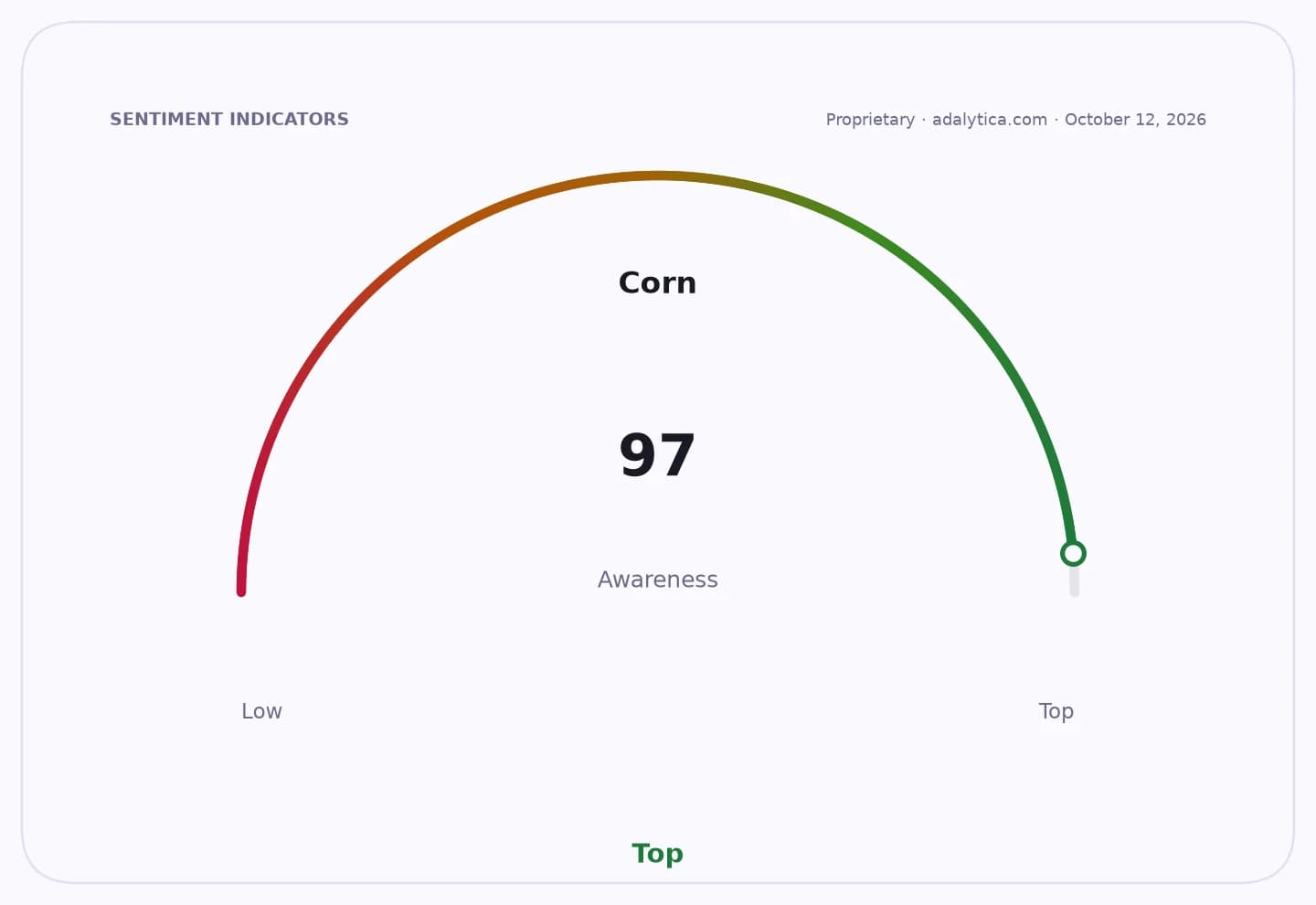
Corn has been comparatively steadier, with December futures last at 478.75 cents after sliding from 482.75 the prior day. Soybeans were the stronger leg of the complex, with January futures last at 1,273.0 cents, though they too remain below their 50-day moving average of 1,265.67 and have backed off from a recent high above 1,316.0.
For investors, the key question is whether geopolitics turns a mild grain bid into a broader rally that spills into food inflation expectations, ags-related equities and commodity funds. The next move will hinge on Black Sea headlines, export flow data and any shift in weather forecasts that could tighten supplies further.
| Entity | Gains | Losses |
|---|---|---|
| Soybean bulls | ▲Modest price support | ▼None in the immediate move |
| Wheat importers | ▲Lower near-term costs | ▼Potential later supply shock risk |
| Black Sea exporters | ▲Higher global pricing power | ▼Trade disruption exposure |
| Grain shorts | ▲Near-term price softness in wheat and corn | ▼Risk of geopolitical squeeze |