Wheat futures on the Chicago Board of Trade held firm as fresh Black Sea shipping disruptions kept traders pricing in risk that grain flows from one of the world’s most important export corridors could be interrupted again.
Wheat Holds Firm on Black Sea Shipping Disruptions

That matters because wheat is not just another soft commodity: the Black Sea has become a marginal supplier of global price direction, and any hint of slower loading, rerouted cargoes or maritime insecurity can tighten available supply fast. Even when outright losses are limited, the market tends to reprice the probability of a broader logistics shock, which is enough to support CBOT wheat after recent volatility.
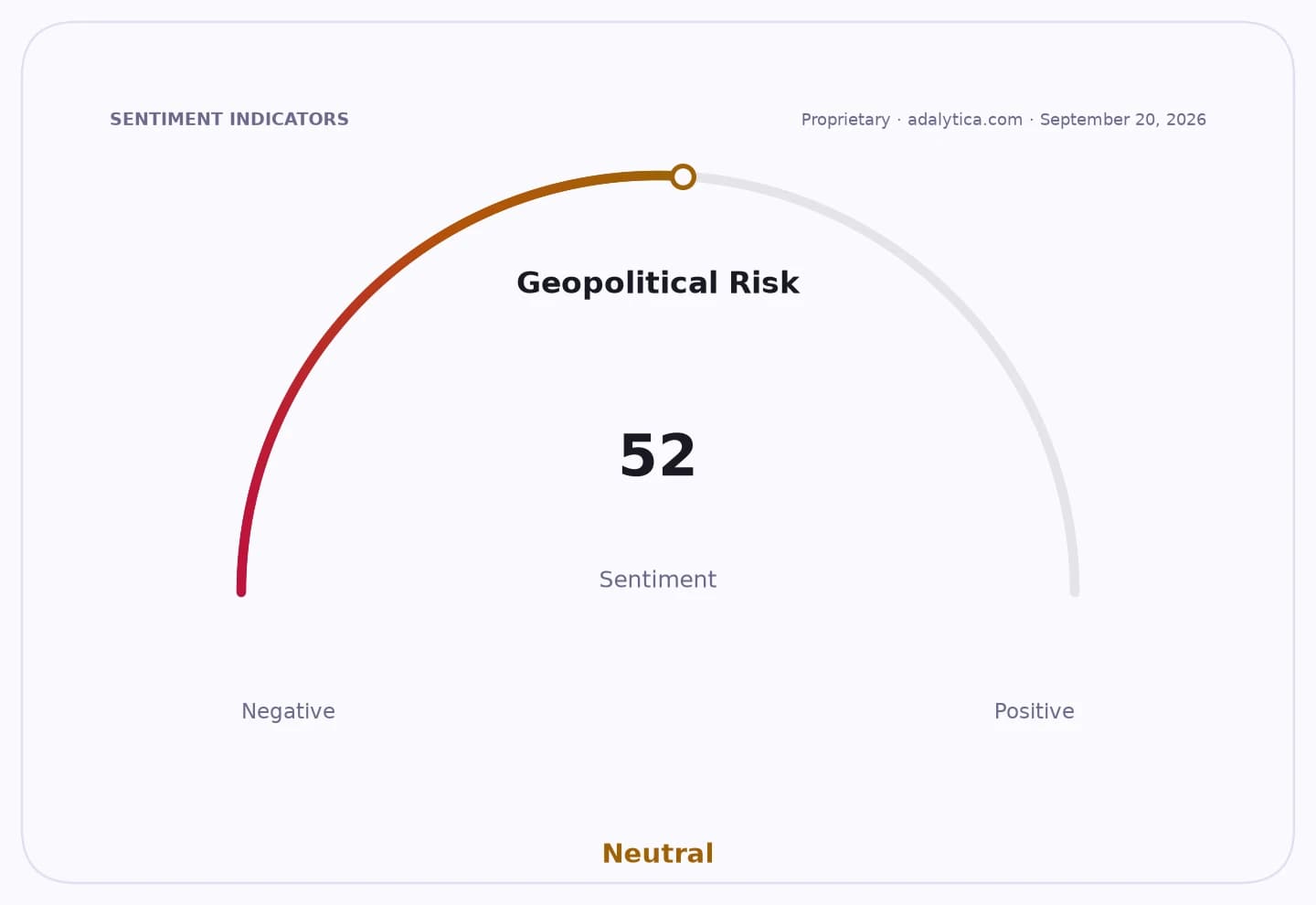
Sentiment IndicatorsⓘProprietary · adalytica.com · October 16, 2026
This is a snapshot — live sentiment, awareness and momentum for 130+ markets update continuously in the dashboard.Open AlphaPulse
The July wheat contract, a key benchmark for U.S. pricing, was trading around 669.25 cents a bushel, roughly 16% below an August peak of 767 cents but still well above levels seen earlier in the year. Technical momentum has cooled — the contract is now below its 50-day moving average and the relative strength index is in the mid-30s — but the market has not broken down decisively, a sign that geopolitical risk is still under the surface.
For investors, that means this is less about a clean weather-driven rally and more about optionality on supply disruption. In grain markets, the cheapest insurance often becomes the trade: if Black Sea flows stay unsettled, wheat can quickly outpace corn and other ags, while merchants and processors with exposure to physical sourcing costs feel the pressure first. If the shipping threat eases, those risk premiums can unwind just as fast.
The latest move also lands in a broader macro backdrop that is not especially friendly to commodities. Crude oil has climbed back above $100 a barrel, the U.S. 10-year yield remains near 5.2%, and the dollar is firm, all of which can weigh on risk assets and imported grain demand. Yet wheat has an unusually direct geopolitical transmission mechanism, so it often trades on headlines before the macro backdrop catches up.
That is why I believe the market is still underestimating the asymmetry here. Wheat does not need a full-blown supply crisis to move higher; it only needs persistent uncertainty around Black Sea freight, insurance, and port access. The beneficiaries are producers, grain merchandisers and, in the public markets, names with leverage to elevated grain volatility such as Archer-Daniels-Midland and the WEAT wheat ETF. The losers are millers, food manufacturers and importing countries already sensitive to higher staple costs.
For now, the setup argues for staying long exposure to wheat on dips rather than chasing weakness in the assumption that supply will normalize quickly. If the Black Sea disruption persists, the next leg higher can come fast.
| Entity | Gains | Losses |
|---|---|---|
| Wheat producers | ▲Higher realized prices | ▼None |
| Grain merchants/handlers | ▲Volatility and trading opportunities | ▼Inventory sourcing risk |
| ADM | ▲Stronger ag-services pricing | ▼Margin pressure if costs spike |
| Millers/importers | ▲None | ▼Higher input costs |