Chicago officials are moving to keep grocery store access available across the city at a time when food affordability and consumer caution are reshaping where Americans shop, how much they spend and which retailers win share.
Chicago Grocery Policy Could Aid Food Retailers

The policy push matters economically because grocery access is no longer just a neighborhood planning issue. It sits at the intersection of inflation, low-income consumer stress and the economics of food retail, where thin margins, heavy logistics costs and changing shopping patterns can determine whether a store opens, stays open or leaves a community without a nearby option.
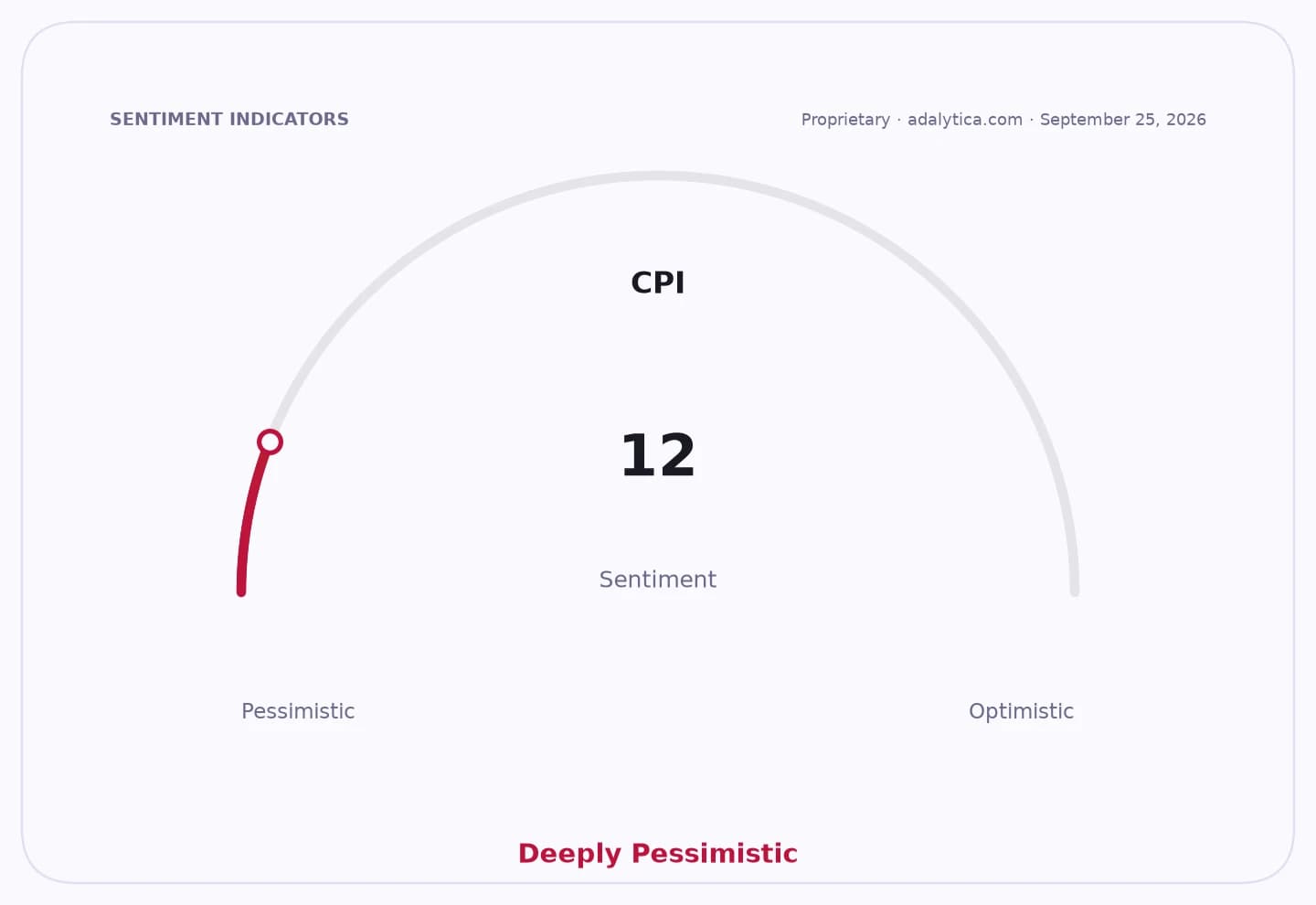
Sentiment IndicatorsⓘProprietary · adalytica.com · July 22, 2026
This is a snapshot — live sentiment, awareness and momentum for 130+ markets update continuously in the dashboard.Open AlphaPulse
That broader strain is showing up in consumer data. U.S. unemployment stood at 4.2% in June and is forecast at 4.18% for July, a level that still signals a relatively tight labor market, but not one that has fully restored household confidence. Adalytica’s Food and Grocery Spending Sentiment gauge slid to 43, with a sharp one-day drop, while its broader Consumer Spending Sentiment measure fell to 54 and showed rising fear in awareness readings, suggesting shoppers remain wary even as incomes hold up.
For public companies tied to food distribution and grocery, the stakes are immediate. US Foods shares have surged to about $96.06 from $85.16 in May, far above the 50-day moving average of $91.26, while the stock’s RSI at 37.5 shows momentum cooling after a steep run. Kroger, by contrast, is trading around $57.54, below its 50-day and 200-day moving averages, reflecting a weaker tape even as the company continues to lean on e-commerce and store productivity to defend share.
The setup also underscores why city policy can move markets at the margin. Keeping grocery stores in underserved neighborhoods supports foot traffic, reduces “food desert” risk and can stabilize demand for suppliers, wholesalers and regional chains, even if the direct revenue impact is modest at first. It also matters for landlords, developers and logistics firms that depend on reliable urban retail corridors.
The immediate question is whether Chicago can keep enough operators in place to serve lower-income areas without forcing stores to absorb losses they can’t sustain. Investors will be watching any funding support, zoning changes or incentives that follow, along with inflation prints and consumer-spending data that could determine whether grocery demand stays resilient or weakens further.
| Entity | Gains | Losses |
|---|---|---|
| Chicago residents in underserved areas | ▲Better grocery access | ▼Longer travel for essentials |
| Grocery operators and suppliers | ▲Potential traffic and policy support | ▼Margin pressure if costs rise |
| US Foods, Kroger and peers | ▲More stable local demand | ▼Exposure to weak consumer sentiment |
| Landlords and developers | ▲Stronger retail occupancy | ▼Vacancies if stores exit neighborhood areas |