China’s top economic planner is drawing up a new five-year action plan to lift domestic demand, underscoring Beijing’s effort to rebalance growth away from exports as the economy continues to lean on external sales for momentum.
China plans 2026-2030 demand boost
The National Development and Reform Commission said the plan for 2026-2030 will target consumption, investment and circulation costs, with officials promising faster rollout. The push matters because domestic demand still looks like the economy’s weak point even after a third-quarter GDP reading of 4.5% year on year. Authorities said domestic demand contributed 74.8% of growth in the first nine months, but that share also reflects how much Beijing needs households and private investment to do more of the heavy lifting.
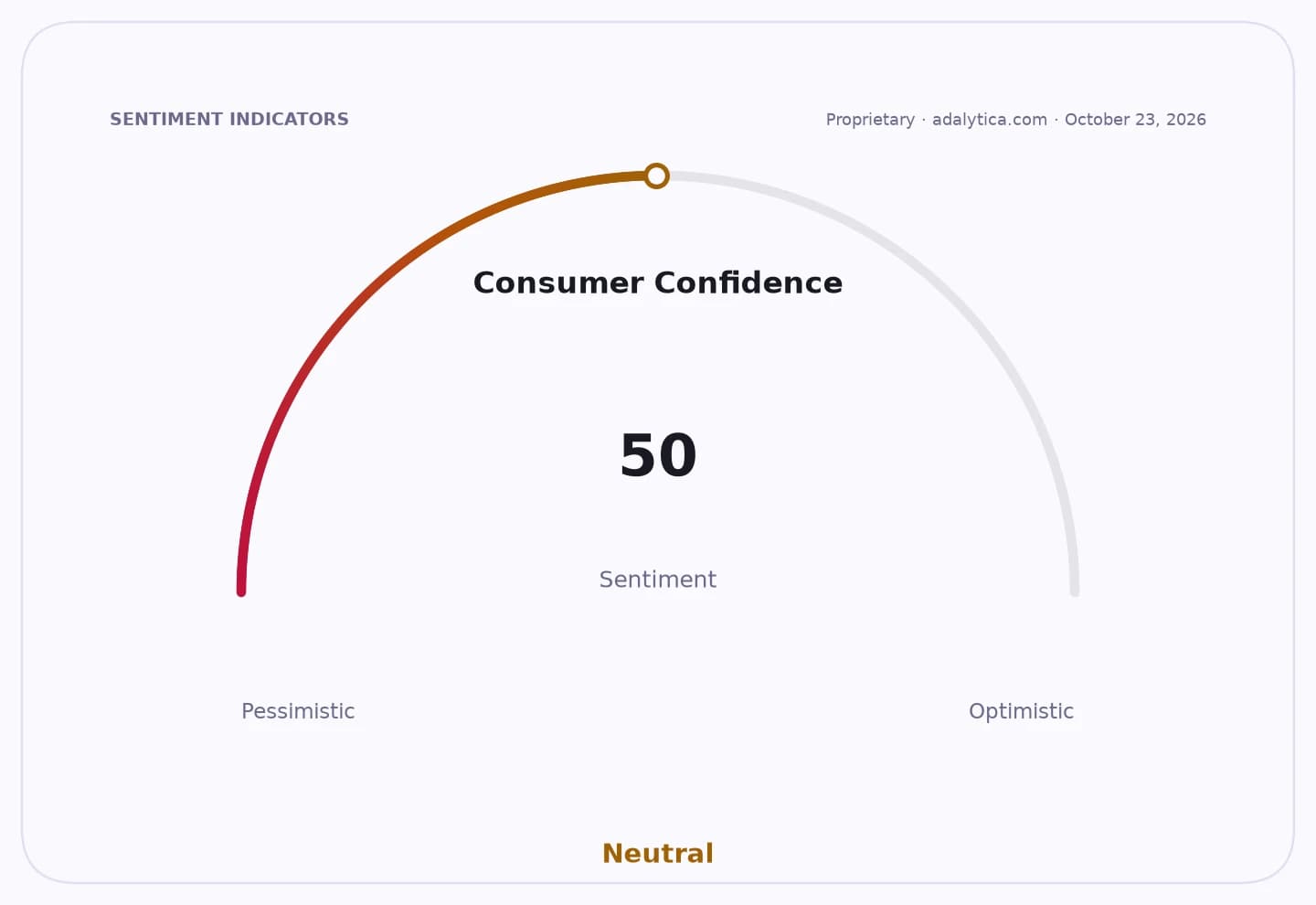
Sentiment IndicatorsⓘProprietary · adalytica.com · October 25, 2026
This is a snapshot — live sentiment, awareness and momentum for 130+ markets update continuously in the dashboard.Open AlphaPulse
The policy mix points to a familiar but economically significant bet: stabilizing jobs and household income to support spending, while using state-backed investment to keep the economy moving. Retail sales of goods and services rose 2.6% from a year earlier in the latest data, with services up 5%, a sign that spending is growing but not yet at a pace that would suggest a broad consumer rebound. Investment is becoming more selective, with high-tech industry investment up 4.9%, equipment spending up 9.7% and intellectual-property investment rising 9.3%, suggesting policymakers are trying to channel capital toward more productive uses rather than old-style property-led stimulus.
For investors, the plan is a signal that Beijing is likely to keep supporting domestic-oriented sectors while avoiding a full-scale return to the debt-fueled infrastructure surges that marked earlier cycles. That could help consumer, services, equipment and high-tech names, as well as firms tied to elderly care, childcare, tourism and sports. It also hints at continued policy support for private firms and measures to reduce internal trade barriers, which could improve margins in logistics, retail and industrial supply chains if execution is strong.
The bigger macro issue is that China is still seeking a durable source of demand at the same time that external demand remains a key growth driver. That leaves the economy vulnerable if global trade cools or if consumer sentiment stays subdued. The plan may help set a medium-term framework, but the immediate test will be whether wage growth, employment and housing stability can translate policy intent into real spending.
For now, the announcement reinforces the view that Beijing sees domestic demand as both a buffer and a battleground: essential for hitting growth targets, and still insufficient on its own to offset the economy’s structural drag.
| Entity | Gains | Losses |
|---|---|---|
| Chinese consumers | ▲More job and income support | ▼Fewer immediate signs of broad recovery |
| Domestic services and retail firms | ▲Potential policy tailwind | ▼Demand remains uneven |
| Private companies | ▲Better access to major projects | ▼Still face execution and financing risk |
| Export-dependent growth model | ▲Keeps momentum near term | ▼Bigger policy emphasis on rebalancing |