China’s economy expanded 4.5% in the third quarter, a modest pickup that still leaves the world’s second-largest economy vulnerable to the global energy shock and anemic domestic demand.
China GDP Rises 4.5% as Demand Stays Weak
The reading beat expectations and edged higher from the previous quarter, but it remains near the low end of Beijing’s target range and underscores how fragile the recovery is. China accounts for about a third of global growth and is the biggest importer of crude, so higher oil prices feed quickly into its industrial costs, household spending and trade position.
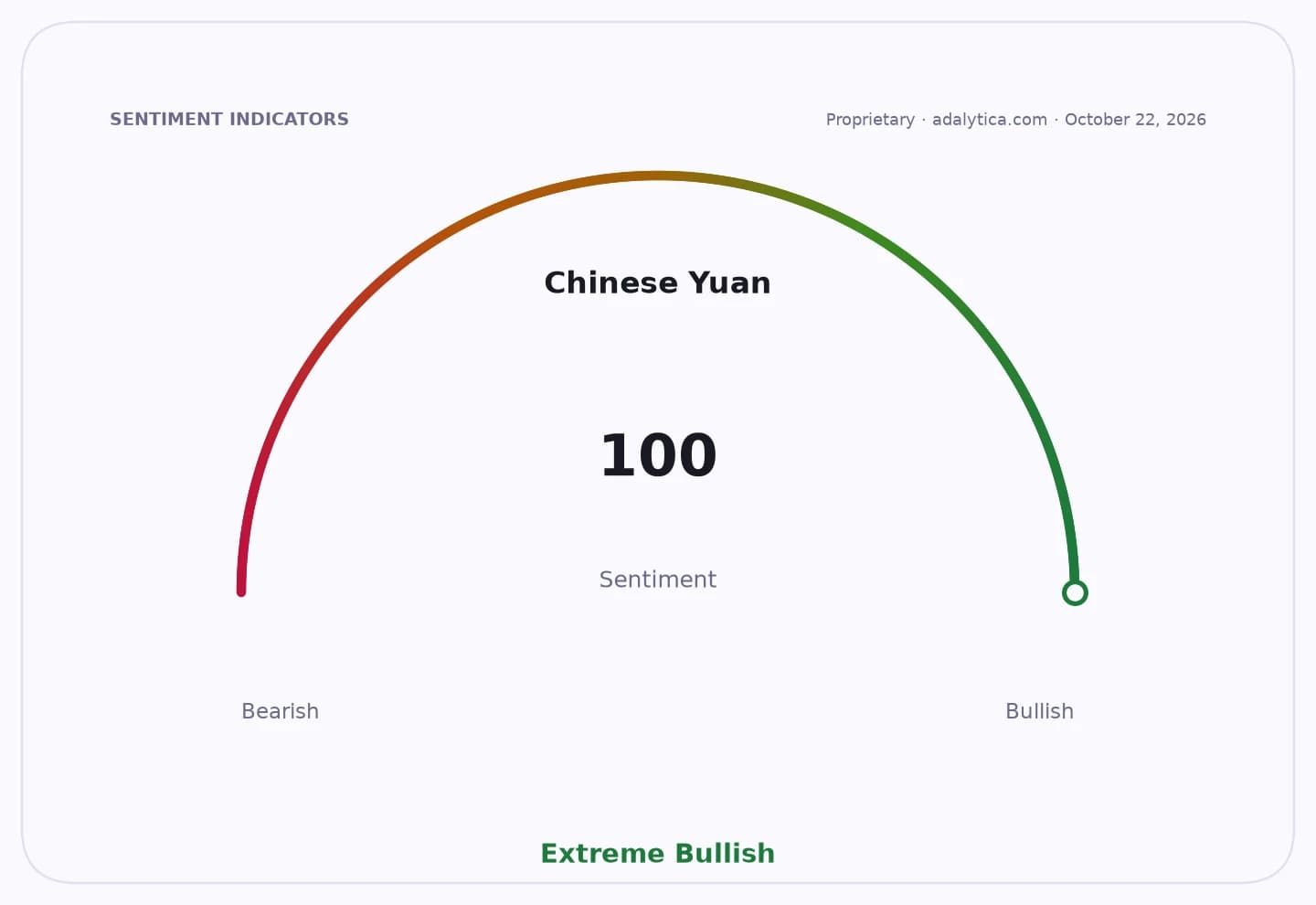
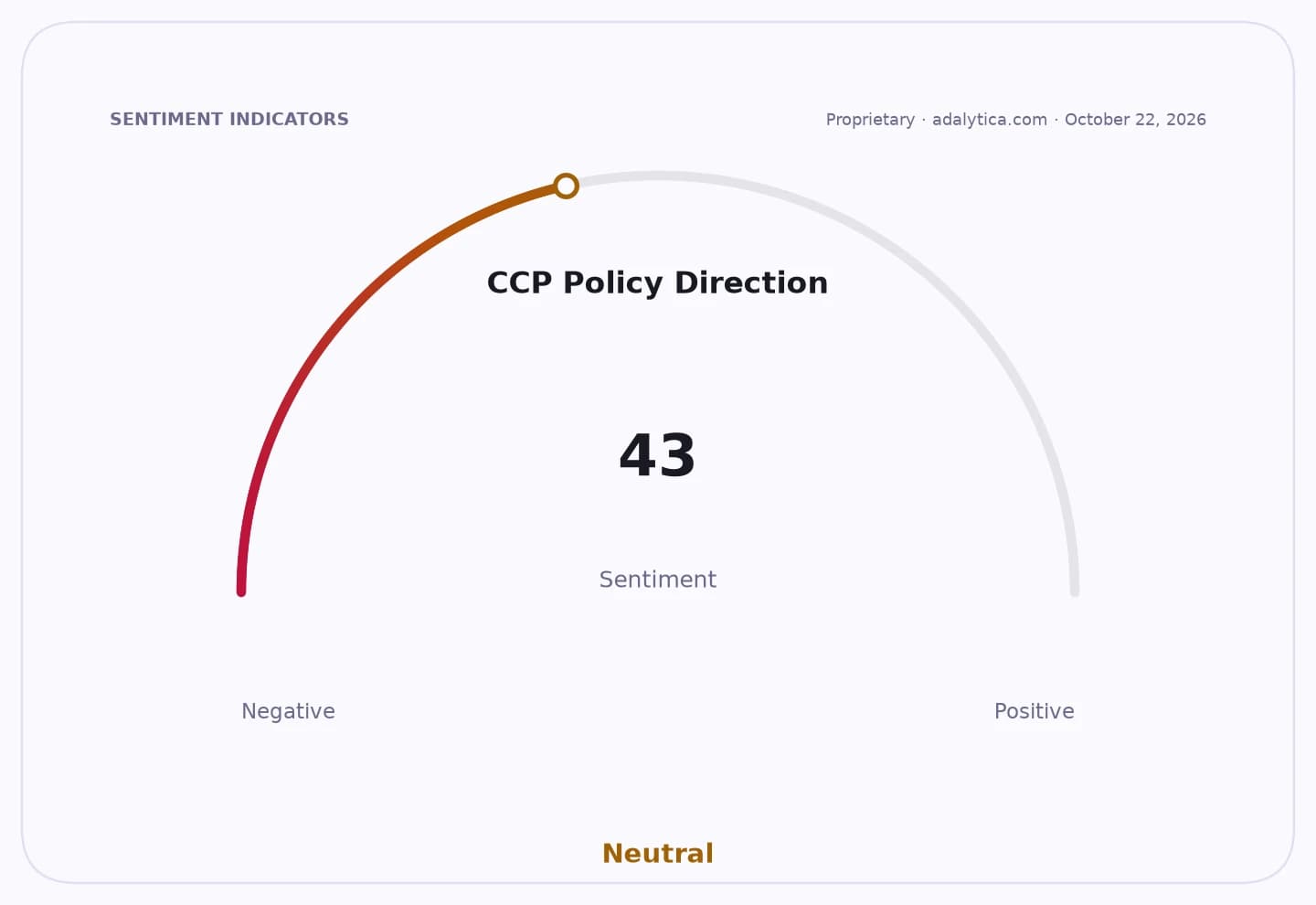
Sentiment IndicatorsⓘProprietary · adalytica.com · October 24, 2026
This is a snapshot — live sentiment, awareness and momentum for 130+ markets update continuously in the dashboard.Open AlphaPulse
Retail sales rose just 1.1% in September, and once inflation is stripped out they were effectively flat, suggesting consumers are still not doing the heavy lifting Beijing needs. Industrial output increased 5.5%, but much of that strength continues to come from overseas demand for semiconductors and the artificial-intelligence boom rather than broad-based domestic momentum.
That imbalance matters because China’s export engine is becoming more dependent on a narrow set of goods even as the rest of manufacturing runs with excess capacity. Surplus output is spilling into overseas markets, intensifying trade friction with Europe and other major economies. China’s trade surplus hit $1.2 trillion last year and is on track to set another record, keeping pressure on trading partners even as weak local demand limits the scope for a sustained internal-led expansion.
Policy makers have responded with a targeted stimulus package focused on mortgage support, infrastructure investment and innovative industries. But the combination of a prolonged property downturn, heavy youth unemployment, local government debt and deflationary pressure means the energy shock lands on an economy that was already under strain. Higher oil prices raise input costs, squeeze consumers and complicate the government’s effort to stabilize growth without reigniting leverage.
For investors, the immediate takeaway is that China is still growing, but not in a way that points to a clean reacceleration. That supports the case for selective strength in exporters tied to AI and high-end manufacturing, while keeping pressure on sectors exposed to domestic consumption, property and cyclical upstream costs. It also leaves commodity markets sensitive to any further signs that Chinese demand is slipping under the weight of expensive energy.
| Entity | Gains | Losses |
|---|---|---|
| Chinese exporters tied to AI and semiconductors | ▲Foreign demand tailwind | ▼Broader domestic weakness |
| Oil producers | ▲Higher crude prices | ▼Slower Chinese demand growth |
| Chinese consumers | ▲Targeted stimulus support | ▼Higher energy and living costs |
| European and Asian importers | ▲Potential bargaining leverage on Chinese oversupply | ▼More trade pressure from surplus goods |