Asian currencies rose on Monday, led by the yuan’s climb to its strongest level in four years, after China posted third-quarter growth that beat expectations and briefly eased concern that the region’s largest economy was losing momentum.
Yuan Hits Four-Year High After China GDP Beat

The move matters because a firmer yuan can improve financial conditions in China, support confidence in domestic demand and reduce pressure on policymakers to lean harder on stimulus. It also offers a signal to regional markets that China’s growth backdrop is stabilizing, even if only modestly, at a time when investors are weighing global rate expectations, corporate earnings and the financing needs of the artificial-intelligence investment boom.
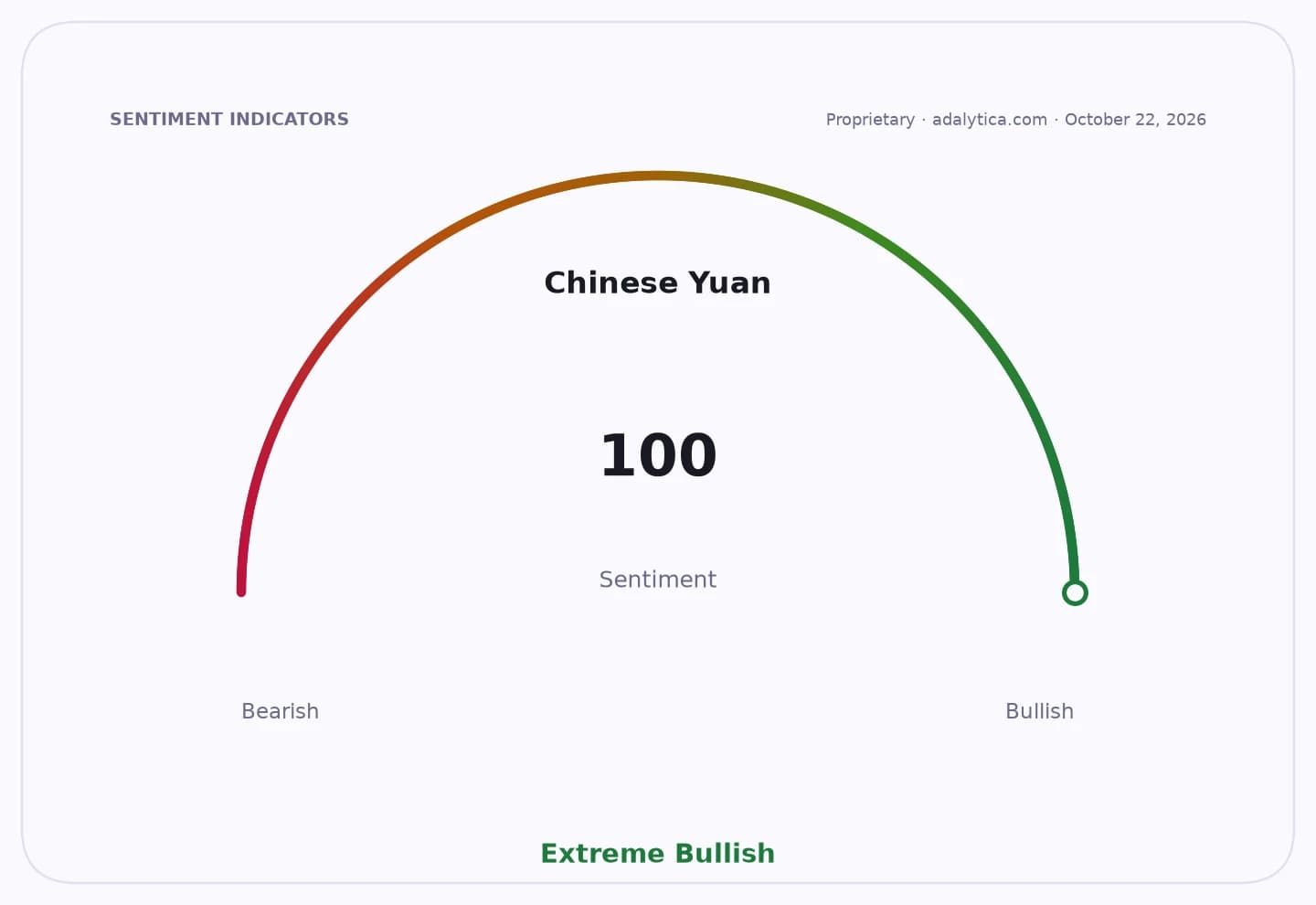
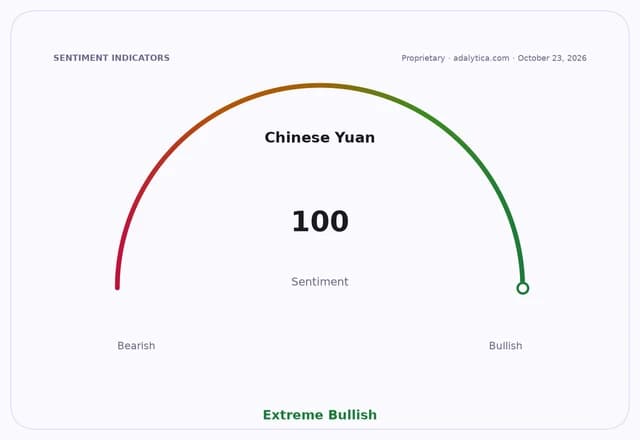
Sentiment IndicatorsⓘProprietary · adalytica.com · October 23, 2026
This is a snapshot — live sentiment, awareness and momentum for 130+ markets update continuously in the dashboard.Open AlphaPulse
The offshore yuan fell as low as its strongest in four years against the dollar, while the onshore rate also firmed, after data showed gross domestic product expanded 4.5% from a year earlier in the third quarter, ahead of the 4.4% forecast and up from 4.3% in the previous quarter. Industrial output rose 5.5% in September and retail sales increased 1.1%, suggesting a better tone in parts of the domestic economy.
That said, the currency rally rests on a narrow base. Property investment fell 20.6% in the first nine months of the year and fixed-asset investment dropped 7.2%, underlining how weak real-estate activity and hesitant capital spending continue to weigh on the recovery. For investors, that limits how far the yuan can extend gains without a more convincing pickup in private-sector demand or a turnaround in property.
The broader Asian FX complex moved with the yuan. The Australian dollar rose 0.4% against the greenback, the biggest gain among major regional peers, and the South Korean won also strengthened. In Japan, the dollar hovered near 158 yen as markets stayed alert to possible official intervention, while Bank of Japan Governor Kazuo Ueda’s comments that core inflation is nearing the 2% target kept focus on the central bank’s policy path.
The dollar index was steady at 101.82 after falling 0.4% last week, and U.S. Treasury yields edged lower as investors remained cautious ahead of major corporate results and continued to assess the funding demands of AI infrastructure spending. That backdrop has supported demand for government bonds and kept carry trades under pressure, with Adalytica’s FX carry signals showing extreme fear.
For now, the yuan’s advance reflects a mix of better Chinese data, softer dollar momentum and improved regional sentiment. The key question for investors is whether the move marks the start of a more durable re-rating of China-linked assets or simply a relief rally in a market that still faces structural headwinds from property weakness, capital outflows and uneven domestic demand.
| Entity | Gains | Losses |
|---|---|---|
| Chinese exporters | ▲Stronger confidence in China recovery | ▼Less currency weakness support for margins |
| China policymakers | ▲Easier market sentiment | ▼Pressure to justify growth support |
| Asian currencies | ▲Broader risk-on support | ▼Vulnerable if dollar rebounds |
| Yuan short sellers | ▲Lower immediate upside | ▼Pressure from four-year high rally |