A former Chinese real estate director who once earned 45,000 yuan a month is now pushing a street cart in Tianjin, a vivid sign of how the property slump is still crushing household balance sheets and forcing distressed owners to choose between debt service and default.
China property slump pushes former director to street cart

Chen Lutong’s story matters because it captures the economic damage from China’s prolonged property downturn in one household: a high-income professional was laid off, failed to find replacement work after more than 100 applications, and now depends on roadside fruit sales to cover an 8,000 yuan monthly mortgage payment. That is not just a personal setback. It is what happens when a housing market correction collides with weak labor demand, leaving borrowers trapped in homes that are worth far less than the debt attached to them.
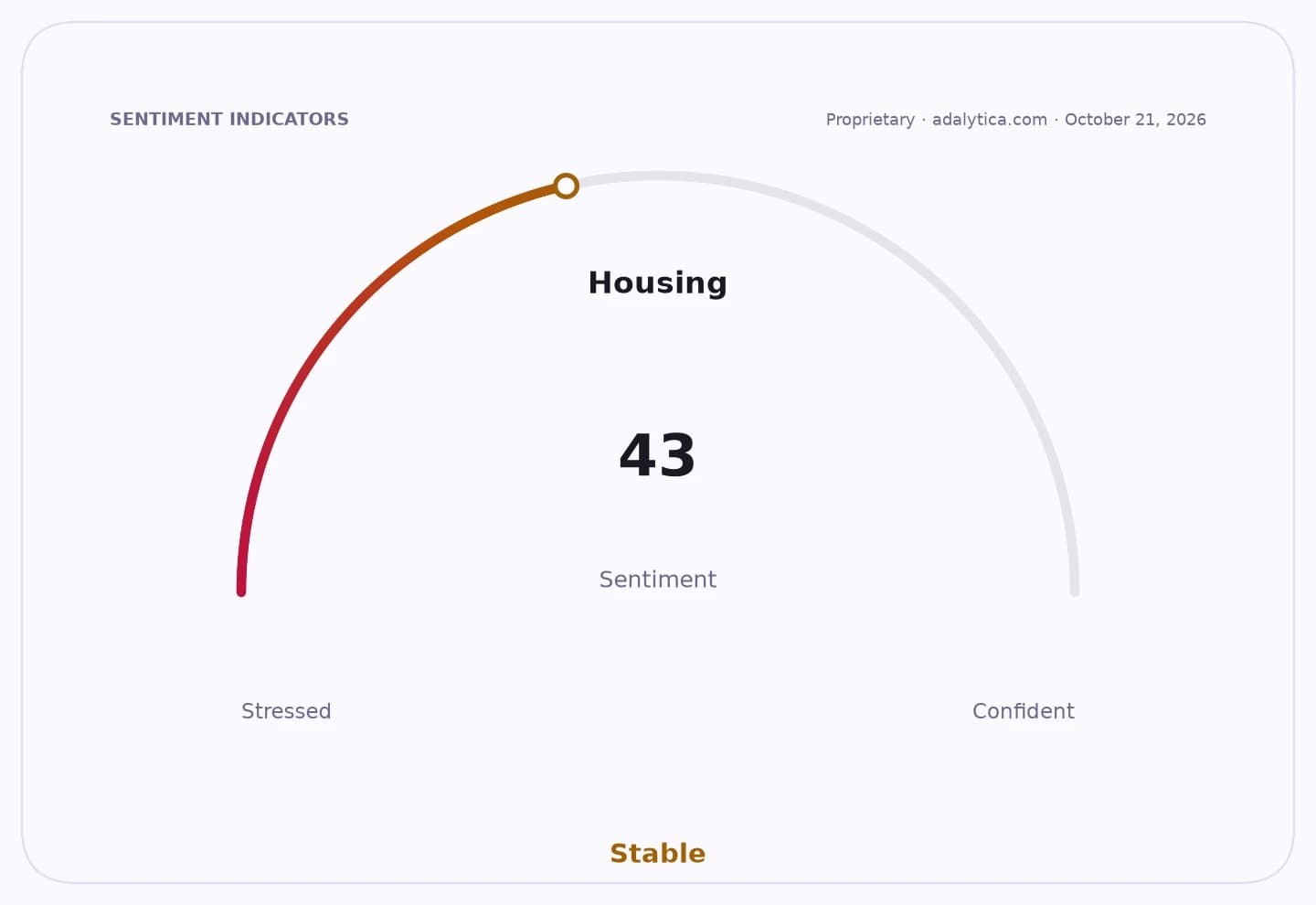
Sentiment IndicatorsⓘProprietary · adalytica.com · October 21, 2026
This is a snapshot — live sentiment, awareness and momentum for 130+ markets update continuously in the dashboard.Open AlphaPulse
She bought the 110-square-meter apartment in Tianjin in 2019 for 2.96 million yuan at the peak of her career, leaning on a modest down payment, family support and more than 2 million yuan in bank debt. But as China’s property market cooled from late 2022, her company cut staff, savings ran down and attempts to pivot into social media failed to replace her salary. By 2025, the only way to keep cash flowing was to sell fruit, baked sweet potatoes and corn near a subway station, with some days bringing in just 33 yuan.
For investors, the key takeaway is that China’s housing weakness is no longer just an issue for developers. It is spilling into consumer spending, labor mobility and local financial stability. When a former director cannot sell a home without crystallizing a loss of more than 1 million yuan, it helps explain why confidence stays fragile: homeowners delay selling, consumption stays cautious and debt burdens linger even after incomes disappear.
That dynamic is especially important because it feeds on itself. Falling property values reduce household wealth, weaker job prospects limit refinancing options and unpaid mortgages become a broader strain on banks and the shadow of the real economy. In a market where policy support has repeatedly failed to restore full confidence, stories like Chen’s suggest the adjustment is still working through middle-class borrowers, not just overleveraged builders.
The investment implication is clear: the market should keep favoring businesses insulated from China’s property cycle and avoid assuming a quick rebound in housing-linked demand. Until home prices stabilize and displaced workers find better-paying jobs, the property bust will remain a drag on spending, credit quality and sentiment across the broader economy.
| Entity | Gains | Losses |
|---|---|---|
| Homebuyers with stable income | ▲Potential entry prices stay lower | ▼Existing homeowners face paper losses |
| Chinese banks | ▲Continued mortgage payments, even if strained | ▼Rising credit stress and weaker collateral |
| Property developers | ▲Slower forced selling may limit near-term price cuts | ▼Weak demand and damaged confidence |
| Debt-heavy households | ▲Chance to preserve ownership if they can pay | ▼Cash flow squeezed by mortgage burdens |