China is moving to make artificial intelligence a core part of schooling for nearly 200 million students, turning classrooms into a national test case for how quickly the technology can reshape the next generation’s skills, and whether it does so without dulling critical thinking.
China AI education plans expand across schools
Artificial Intelligence
The push matters economically because Beijing is treating AI literacy as infrastructure for its future labor force, not an elective. Officials want every student to have some level of AI knowledge by 2030, with some regions already making it compulsory through school plans, grade-level class hours and, in some cases, exam requirements.
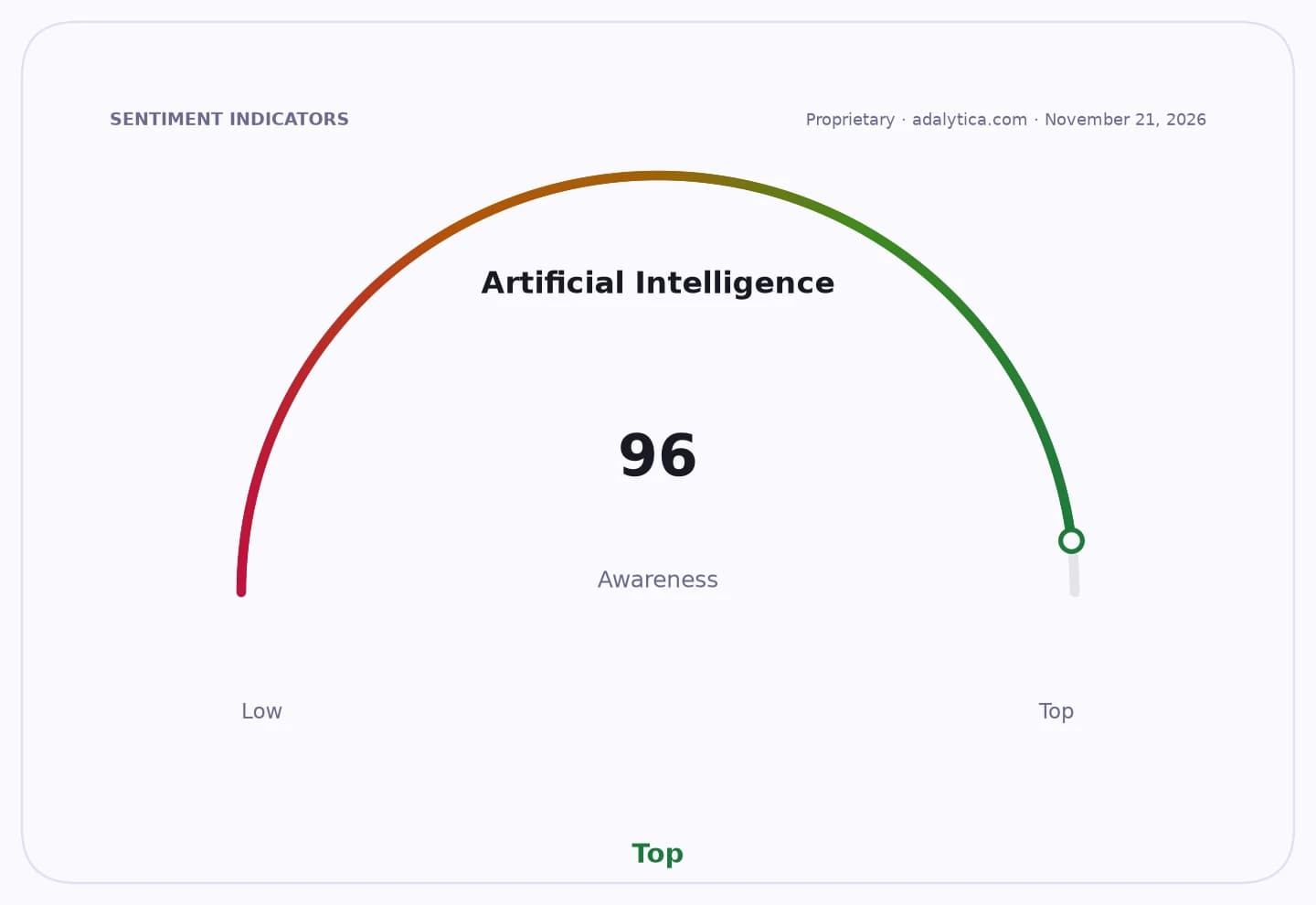
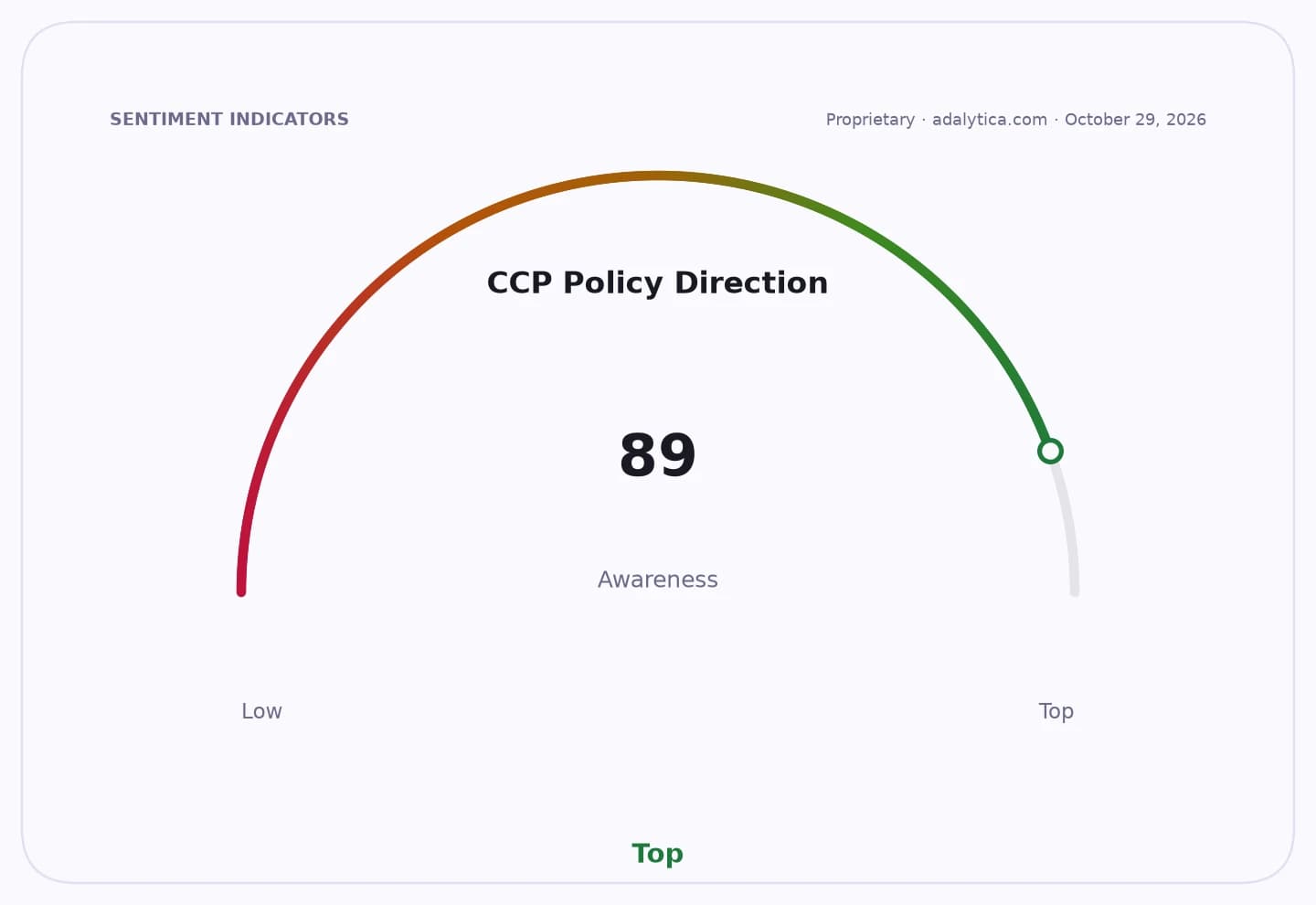
Sentiment Indicators
That makes the education drive part of China’s wider bid to compete with the United States in advanced technology. President Xi Jinping has elevated AI education into broader reform goals, while Chinese provinces have adopted binding plans far ahead of the more decentralized U.S. approach, where guidance is largely nonbinding and training standards vary.
The scale is already significant. Shanghai requires at least 30 hours of AI instruction a year for each grade, Beijing plans 100 model schools and AI-based student health tracking, and Yunnan wants lessons in 14,000 classrooms monitored and analyzed by AI. Reuters also found that local governments spent at least $31 million on classroom AI equipment, teacher training and learning platforms over the past year, while consultancy iResearch estimates China spent almost $83 billion on education digitalization in 2025.
The policy is spreading beyond elite schools in major cities. In rural Anhui, a high school serving about 4,000 mostly migrant workers’ children uses AI-generated lessons on tablets to address teacher shortages, with AI assistants prompting students rather than giving direct answers. The school says university admission rates climbed from less than 60% to 90% in recent years, underscoring why cash-strapped regions see AI as a practical substitute for scarce teaching resources.
But the experiment carries risks that matter for investors and policymakers alike. Studies cited by Reuters show mixed results: one found AI use improved homework scores by 18% but cut monthly test performance by 20% over six months among nearly 27,000 teenagers, while another found frequent AI users showed weaker memory, comprehension, analytical and creative skills. That raises a central question for China’s education overhaul: whether AI becomes a tool for higher productivity and innovation, or a shortcut that entrenches dependence and rote learning.
For investors, the story points to longer-term demand in Chinese education technology, devices, cloud software and AI model providers used in schools, including Alibaba, ByteDance and Z.AI. It also suggests that the race to sell AI infrastructure into classrooms may accelerate globally as governments seek ways to standardize usage, monitor students and train workers for an economy increasingly built around automation.
The next catalyst is implementation. As more provinces roll out binding rules, the market will watch whether China can turn a patchwork of pilot programs into a consistent national curriculum — and whether other countries, especially the U.S. and emerging markets, respond with their own mandatory AI education plans.
| Entity | Gains | Losses |
|---|---|---|
| China’s education authorities | ▲AI-ready workforce | ▼Legacy rote-learning model |
| Schools with teacher shortages | ▲Better instruction coverage | ▼Reliance on limited staff |
| AI vendors and edtech suppliers | ▲Public-sector demand | ▼Traditional tutoring models |
| Students and families | ▲AI literacy and access | ▼Risk of weaker independent thinking |