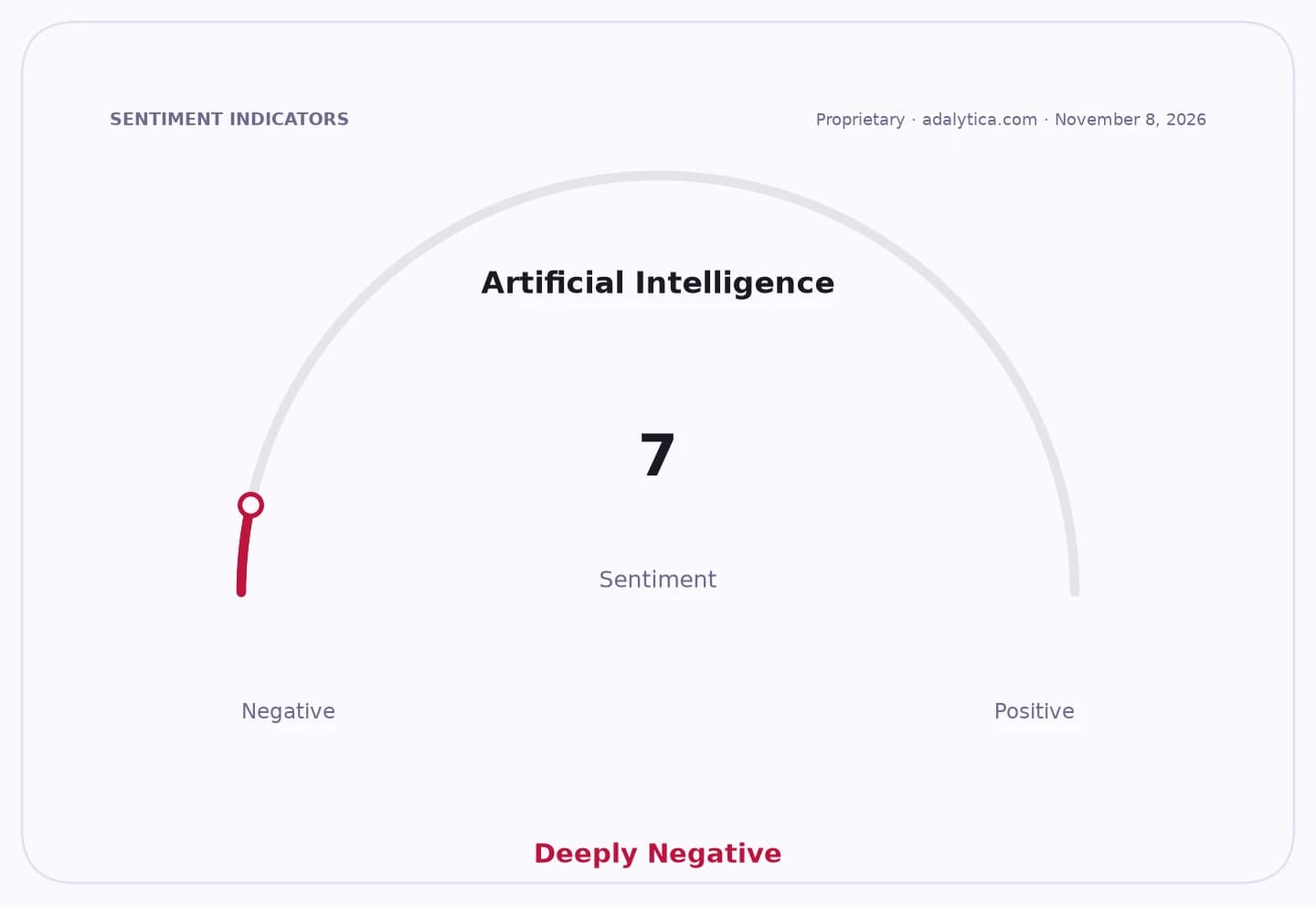
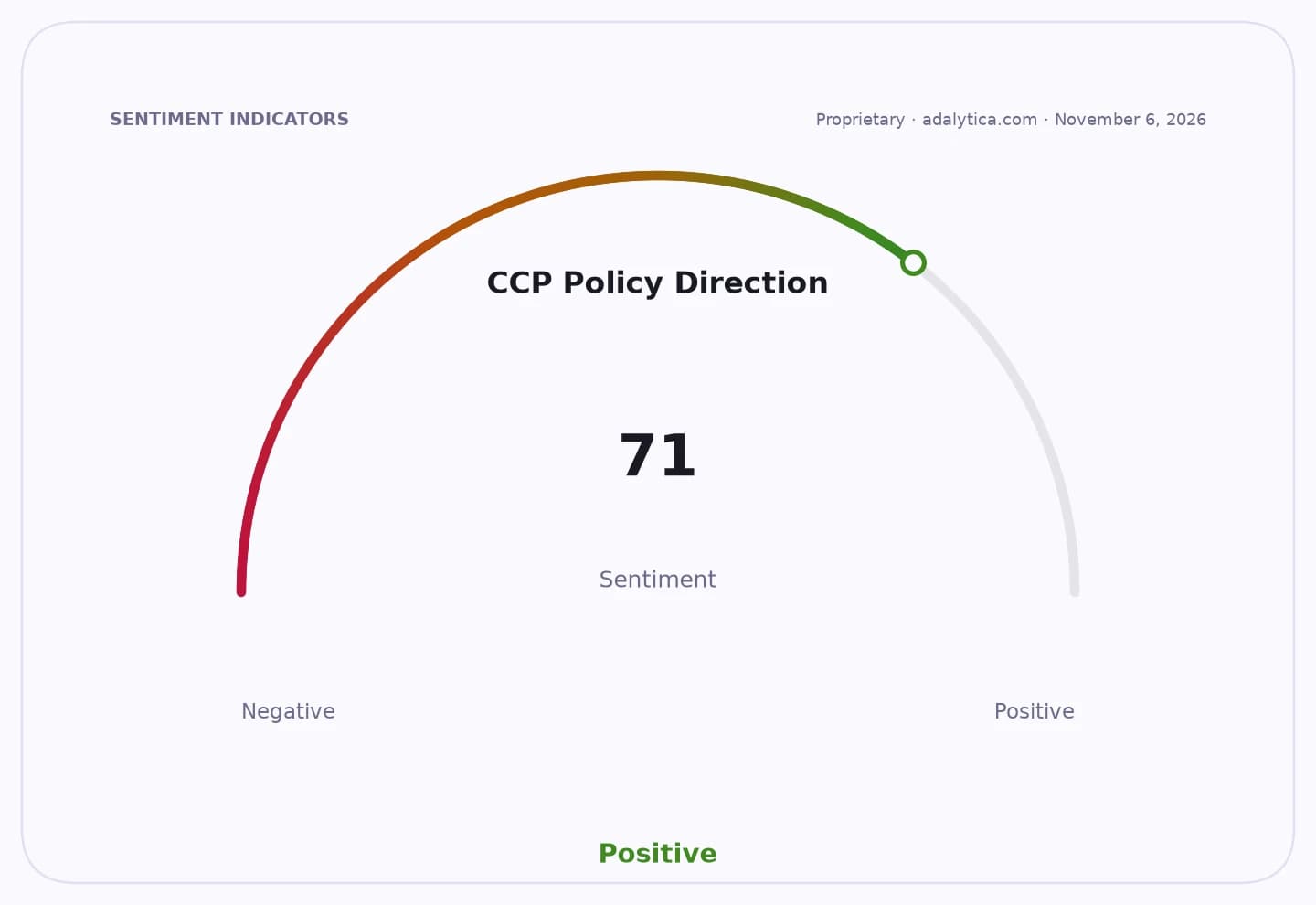
A Chinese sci-fi movie billed as the country’s first AI-generated feature has flopped in theaters, underscoring a simple but important reality for investors and media companies: artificial intelligence can lower production costs and speed up experimentation, but it does not guarantee audiences will show up.
China AI Film Flops at the Box Office
“Sanxingdui: Future Past” has taken in only about 1.7 million yuan, or roughly $230,000, since its Oct. 23 release, far below the more than 10 million yuan the production reportedly cost. That gap matters because it shows how early-stage AI content still struggles to convert novelty into revenue, even in a market where studios are eager to test cheaper, faster production methods.
Sentiment Indicators
The film was promoted as a technical breakthrough, with all of its images and some of its sound generated by AI, while humans still made the creative decisions. But online viewers criticized stiff facial expressions, awkward motion and a confusing plot. In other words, the technology may have worked as a tool, but it did not yet work as a story. That distinction is crucial for the entertainment business, where box-office success depends on emotional connection, not just technical novelty.
For long-term investors, the lesson is broader than one failed release. AI in film and television is still in the experimentation phase, and that means returns will be uneven. Some projects will become proof points that attract more capital and distribution support. Others will burn through budgets while reminding studios that creative quality, audience trust and cultural resonance still matter more than software.
That tension is why the stock market should treat AI entertainment as a real but risky theme, not a straight-line growth story. The winners are likely to be the companies that use AI to improve efficiency behind the scenes while keeping human-led storytelling at the center. The losers are those that mistake a cheaper workflow for a guaranteed hit.
Bona, the producer, said before release that it never expected big box-office returns and that the project was meant to explore new production methods. That is probably the right long-term mindset. AI tools are improving quickly, and future films may look far better than this one. But this flop suggests the industry is still years away from knowing how to turn AI-generated content into a repeatable commercial model. For investors, that makes selective exposure and patience far more sensible than chasing every headline-grabbing experiment.
| Entity | Gains | Losses |
|---|---|---|
| AI film studios | ▲cheaper experimentation | ▼box-office credibility |
| Human-led filmmakers | ▲stronger storytelling edge | ▼none from this flop |
| Producers like Bona | ▲production know-how | ▼capital tied up in failures |
| Cinema audiences | ▲better future content standards | ▼time and ticket money on weak releases |