China’s AI short-film boom is turning content production into a low-cost, high-volume business, but the real economic prize is likely to go to the companies that control the tools, the platforms and the intellectual property.
China AI Short-Film Boom Benefits Platforms and IP
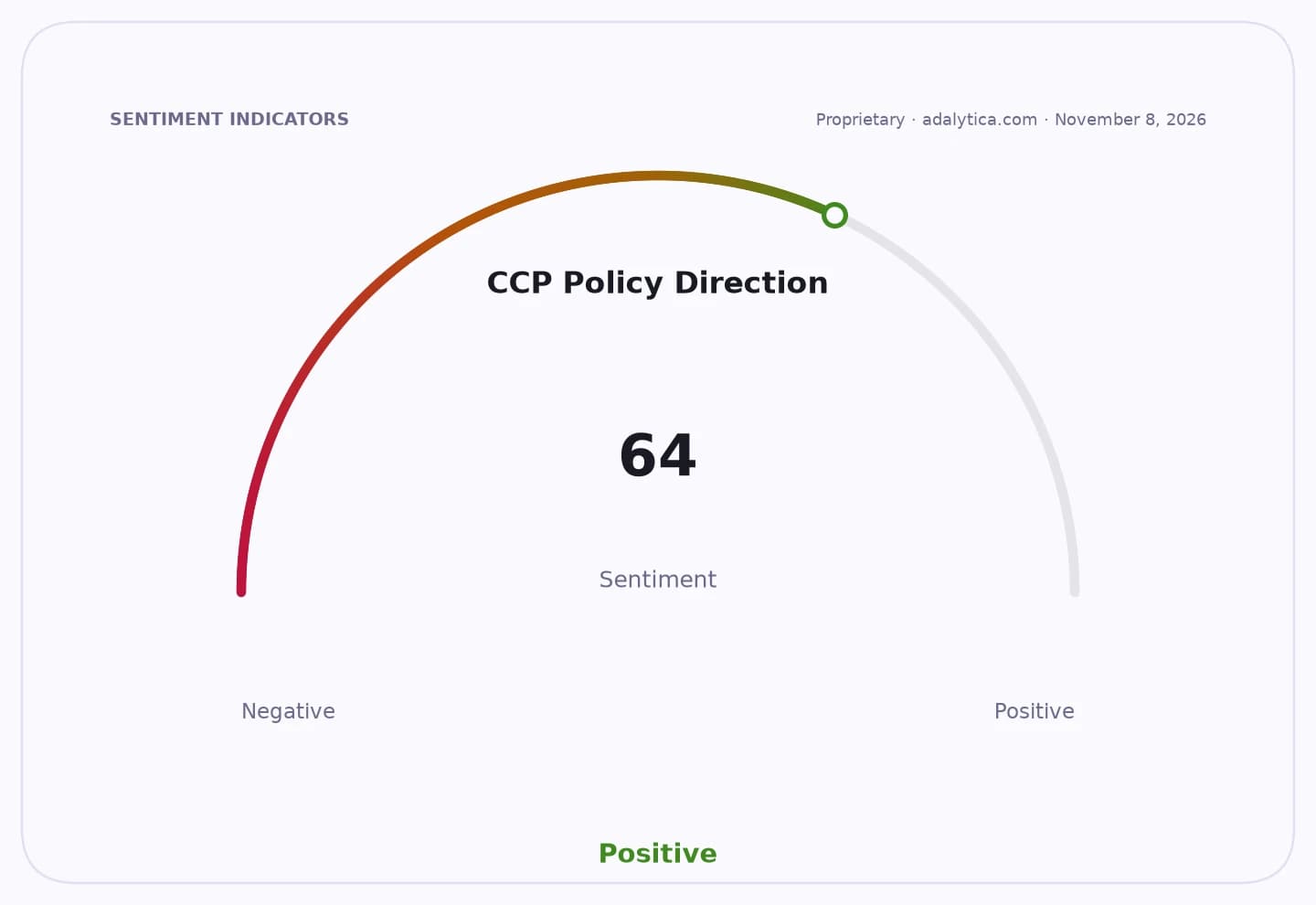
CCP Policy Direction
That matters because the economics of filmmaking in China are being rewritten. One studio cited by Caixin Global said it could finish an AI short film in under five days at about one-tenth the cost of a traditional production. That is not just an efficiency gain; it is a structural collapse in the barriers to entry. When the upfront cost of making a series falls 90%, more creators can flood the market, more advertisers can test new formats, and more platforms can monetize the surge in output.
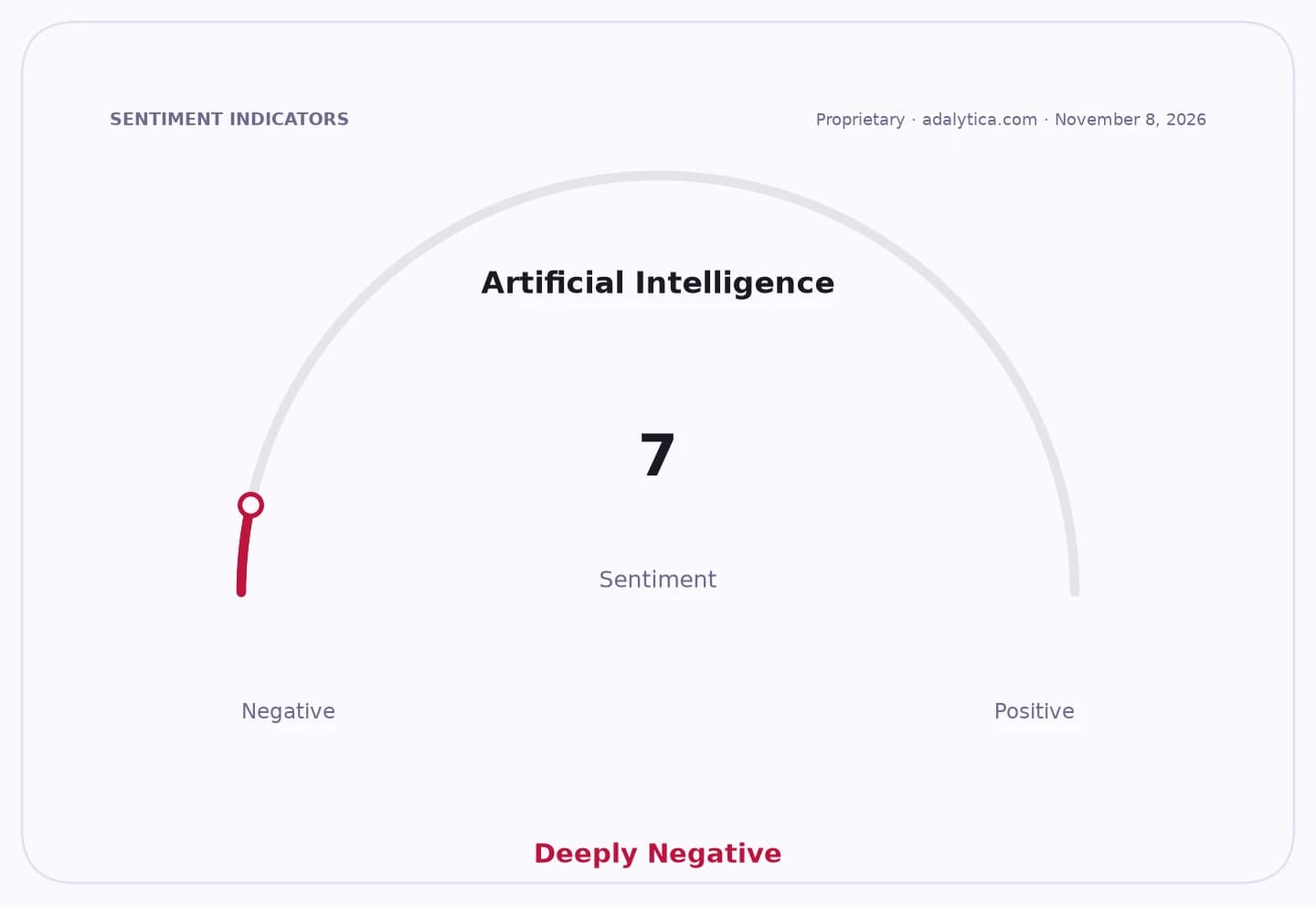
Sentiment Indicators
The scale is already starting to show up. Chinese state media and DataEye estimate the AI comic-style short-film segment reached 16.8 billion yuan, or about $2.44 billion, in 2025, with more than 10,000 new products launched each month from early 2026. A 61-episode AI series called Master of Feng Shui reportedly drew 100 million views on Douyin in just 12 hours, a sign that audiences will watch AI content when it is engineered for the algorithm and packaged for mass consumption.
For investors, the key lesson is that volume alone does not create durable wealth. Low-cost production can help studios, but it also invites competition and makes content easier to copy. The companies with the strongest moats are the ones that can turn AI production into recurring revenue: the model providers, the distribution platforms, and the owners of intellectual property that can be reused across sequels, spin-offs and formats.
That is why the opportunity is broader than film. ByteDance’s Seedance 2.0 is an example of how the technology layer can become a toll booth for the entire ecosystem, while platforms such as Douyin and Hongguo can profit from both traffic and advertising. AI studios may win business-to-business contracts, but their margins could be squeezed if everyone uses the same tools. In other words, the content factory may be easy to build; the durable business may not be.
The long-term investing takeaway is simple: this is a real secular shift in media production, but it is not a blanket win for every company exposed to AI video. Investors should focus on the businesses that own the software, the audience, or the underlying IP, and treat the rest of the field as a fast-moving, highly competitive commodity market. If AI short films keep scaling in China, the smartest move may be to watch the picks-and-shovels winners rather than chase the flashiest content studios.
| Entity | Gains | Losses |
|---|---|---|
| ByteDance / AI model providers | ▲More licensing demand | ▼Commoditized studio margins |
| Douyin / Hongguo platforms | ▲More traffic and ad sales | ▼Smaller creators’ leverage |
| IP owners | ▲Reusable characters and stories | ▼One-off production shops |
| AI film studios | ▲Faster output, lower costs | ▼Pricing pressure, easier imitation |