Media Production City’s net profit surged 56% in the third quarter of 2026 as the Egyptian media hub squeezed more revenue out of its core assets and expanded into higher-margin businesses that are helping turn it into a broader entertainment platform.
Media Production City Q3 profit rises 56%
The company said net income rose to 750 million Egyptian pounds from 480 million pounds a year earlier, while earnings per share climbed to 2.99 pounds from 1.90 pounds. For investors, the key takeaway is not just the headline earnings beat — it is that the business appears to be firing on several cylinders at once, from studio rentals to film permits, heritage restoration, media services and hospitality.
Sentiment Indicators
The biggest driver was studio leasing, where occupancy hit 100% across studios and administrative and technical premises, an unusually tight level that points to strong demand for production capacity. That matters because once a media complex reaches full utilization, incremental revenue often falls more quickly to the bottom line. Media Production City also said it expanded open filming areas to nearly 25 districts and added more than 100,000 square meters of new shooting locations through partnerships with major Egyptian production firms.
That growth is being reinforced by the company’s role as a one-stop shop for foreign productions. Its Egypt Film Commission oversaw about 105 foreign projects across tourist and archaeological sites, underscoring Egypt’s appeal as a low-friction filming destination and creating a second stream of revenue beyond domestic studio demand. The company also cited returns from restoring audio-visual heritage films and from its media services center, which serves international broadcasters including BBC, Al Arabiya, Alhurra, Sky News and Asharq.
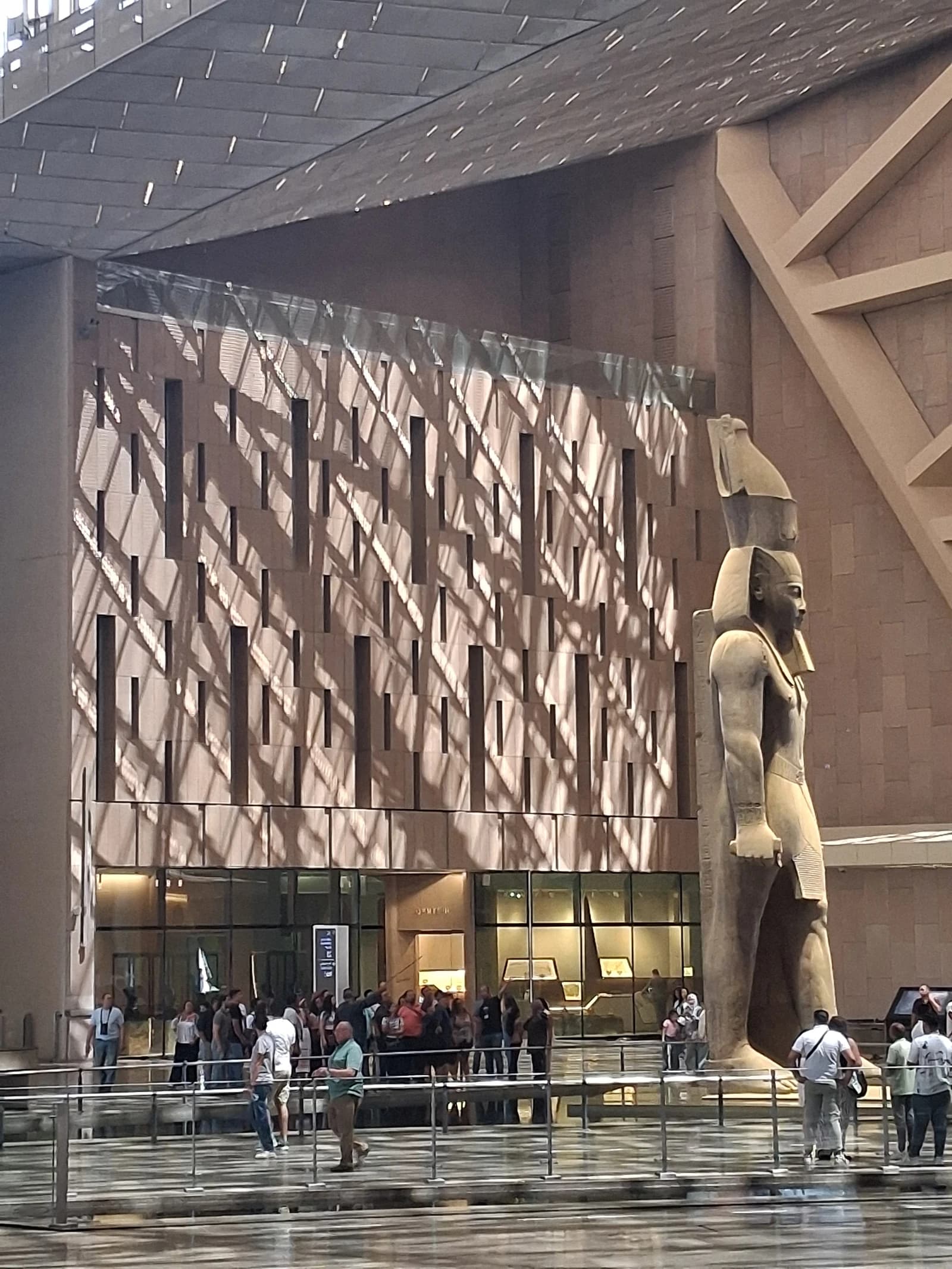
The story is also about optionality. Media Production City is not just renting space; it is building a cluster of businesses tied to content creation, training and tourism. Its international academy trained more than 3,000 students, while its five-star hotel and conference center support production crews and visiting media teams. The company said it is building a four-star hotel as well, betting on higher tourist traffic around the Grand Egyptian Museum opening. It also owns Tanza, one of Egypt’s largest entertainment zones, giving it exposure to leisure spending as well as media production.
For long-term investors, that is what makes the quarter meaningful. A company with a more diverse revenue mix and fuller asset utilization can compound faster than one reliant on a single line of business. The recent capital increase to 2.25 billion pounds from 1.806 billion pounds also suggests management is preparing for expansion rather than defending a mature asset base.
The risk, as always, is execution. Media and tourism demand can be cyclical, and returns from new hotels, filming zones and training operations will depend on continued project flow. But if the company can keep its studios full and convert its adjacent businesses into durable cash generators, this quarter may look less like a one-off and more like the start of a stronger earnings cycle. For investors who think in years, not weeks, Media Production City is worth watching closely.
| Entity | Gains | Losses |
|---|---|---|
| Media Production City | ▲Higher profits, fuller utilization | ▼Higher reinvestment needs |
| Studio renters and producers | ▲More facilities, easier access | ▼Less pricing power |
| Foreign film crews in Egypt | ▲Faster permits, local support | ▼Fewer bottlenecks |
| Competitors with weaker asset bases | ▲— | ▼Less demand and market share |