China’s launch of the World Artificial Intelligence Cooperation Organization in Shanghai is the most important new development in the country’s AI push because it turns a domestic industrial campaign into a bid to shape global rules, expand overseas demand and widen the market for Chinese AI platforms.
China Pushes AI Into Global Influence Strategy

That matters economically because Beijing is no longer treating AI only as a productivity tool for its own economy. By linking policy, state-backed diplomacy and industry participation, China is trying to convert AI into an exportable growth engine — one that can support software, cloud, chips, data-center buildout and related services at a time when domestic growth targets remain under pressure. The message from President Xi Jinping, who used the World AI Conference to highlight broader access for developing countries, is that AI is now part of China’s industrial policy and its external economic strategy.
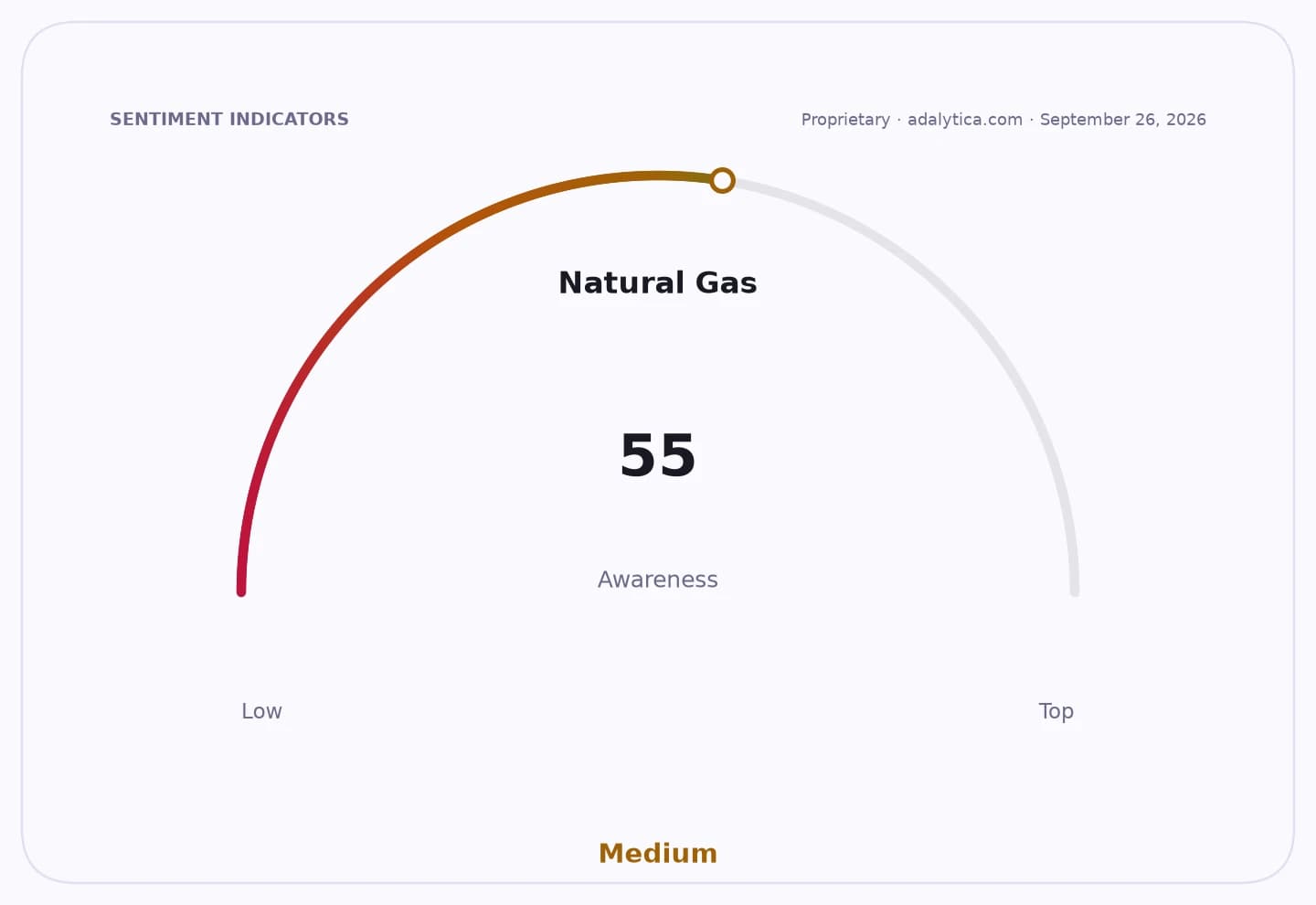
Sentiment IndicatorsⓘProprietary · adalytica.com · July 20, 2026
This is a snapshot — live sentiment, awareness and momentum for 130+ markets update continuously in the dashboard.Open AlphaPulse
The strategic logic is clear: if China can position itself as the champion of “inclusive” AI, it can win influence in emerging markets that want cheaper, less restrictive access to frontier tools and infrastructure. That creates a potential second track for global AI adoption outside the U.S.-led ecosystem. For policymakers in the Global South, WAICO offers a venue that promises cooperation without Washington’s export controls or the political scrutiny that often accompanies U.S. technology packages. For China, it is a way to internationalize standards, build alliances and create demand for its own models, applications and hardware.
For investors, the implication is that China’s AI trade is moving from narrative to monetization. Shares of Alibaba, Baidu and Tencent have all reflected that shift, though with different degrees of durability. Alibaba remains the clearest proxy for the policy-and-industry theme: the stock has rallied sharply from midyear lows, even after recent volatility, as the market has assigned more value to its cloud and AI assets. Baidu’s recent weakness shows the market is still separating platform winners from companies whose AI gains have not yet translated into sustained earnings power. Tencent has benefited from broader AI optionality, but it is still being valued more as a diversified internet and gaming group than as a pure AI governance beneficiary.
The price action suggests investors are trying to price two competing forces at once. On one side is the bull case: state support, tighter coordination between policy and industry, and a potentially larger addressable market for Chinese AI products at home and abroad. On the other is the bear case: geopolitical pushback, persistent U.S. restrictions on advanced semiconductors, and the risk that overseas customers may hesitate to adopt Chinese systems if AI governance becomes more politicized. That tension helps explain why rallies in Chinese tech have been strong but uneven.
The yuan and China growth-target signals also frame the backdrop. Adalytica’s Chinese yuan trade signals show sentiment has improved from recent fear levels, but awareness remains extremely low, underscoring how fragile confidence still is. At the same time, Adalytica’s China economic-growth-target gauge shows extreme fear, suggesting markets still doubt the policy mix will deliver a clean acceleration in activity. In that setting, AI matters not because it solves China’s cyclical slowdown, but because it is one of the few sectors with the potential to lift productivity, investment and external demand at the same time.
The broader geopolitical significance is that Beijing is trying to rewrite the AI debate from containment to access. Washington has argued that China’s rise in AI should be constrained by security concerns and technology controls. Beijing is answering with a development narrative aimed at countries that want lower-cost infrastructure and less dependence on U.S. firms. That makes WAICO more than a diplomatic gesture: it is an attempt to build an institutional framework around Chinese AI before the U.S. and its allies harden their own standards.
For investors, the key question is whether this policy-industry synergy can turn into sustained earnings growth. The near-term winners are likely to be cloud providers, AI application platforms and companies tied to domestic deployment. The bigger upside would come if Chinese firms can translate that model into exports, subscriptions and ecosystem lock-in across Asia, the Middle East and parts of Africa. The main risk is that governance ambitions outpace commercial traction, leaving the sector more exposed to regulation and more dependent on stimulus than on self-sustaining demand.
| Entity | Gains | Losses |
|---|---|---|
| Chinese AI firms | ▲policy support, export reach | ▼sanctions risk |
| Alibaba/Baidu/Tencent | ▲AI monetization optionality | ▼uneven earnings conversion |
| Developing-country buyers | ▲cheaper AI access | ▼dependence on China |
| U.S. AI incumbents | ▲— | ▼influence over standards |