China is set to spend about $100 billion on artificial intelligence in 2026, but the bigger market story is that Beijing is pursuing AI with far less capital than the US, forcing Chinese companies to lean more heavily on state support, debt markets and domestic financing rather than the venture-style funding that has fueled American AI leaders.
China AI Spending Lags US in Capital Race

That divergence matters because AI is no longer just a technology race; it is a capital-allocation contest that will shape cloud demand, semiconductor orders, valuation gaps and the balance of power across the AI stack. Deutsche Bank said US companies are expected to spend about $800 billion on AI-related capital expenditures this year, while American AI labs have raised about $250 billion in private funding. In China, by contrast, private capital is thinner, with Stanford data cited by the bank showing US private AI investment in 2025 at 23 times China’s $12.4 billion.
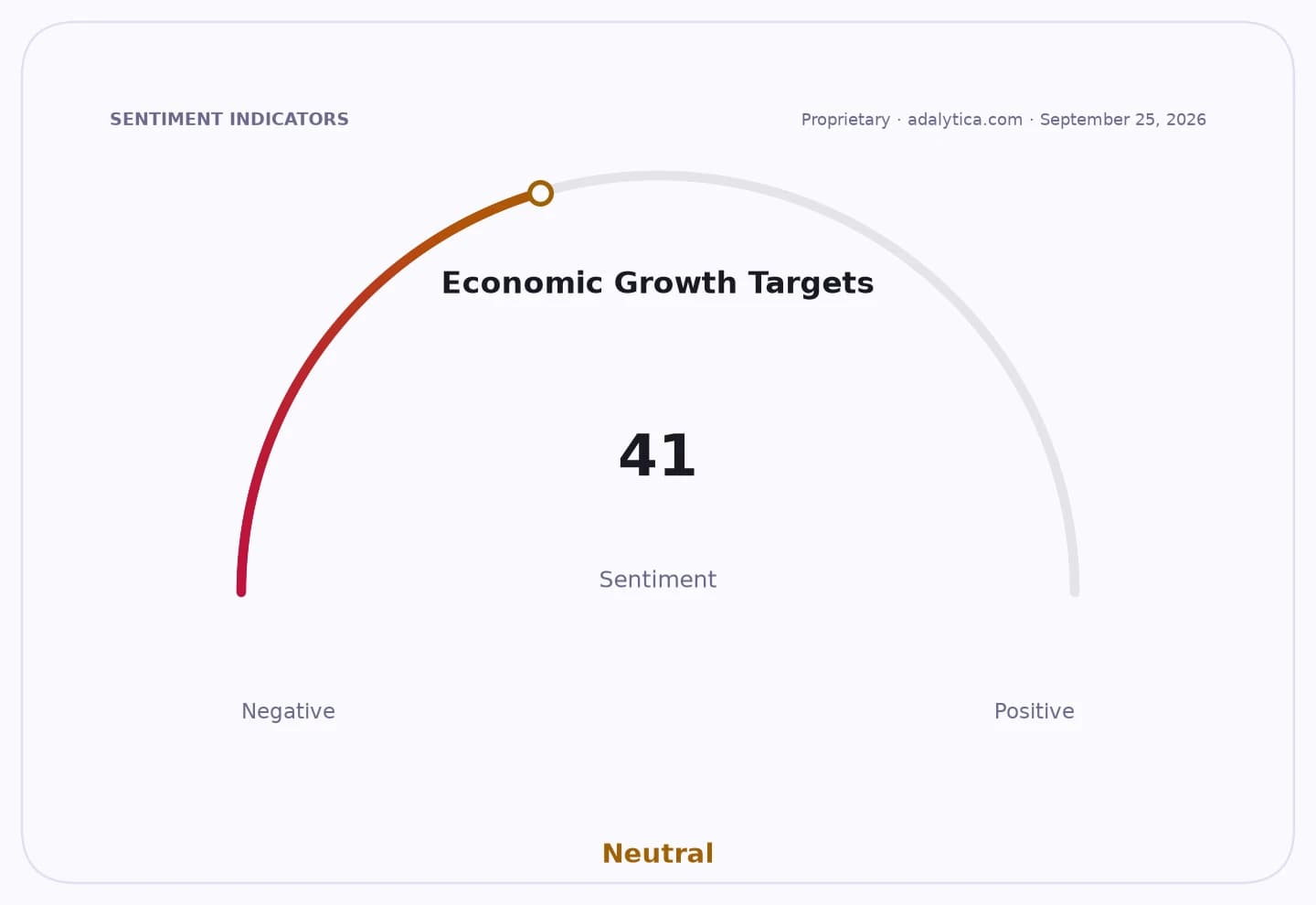
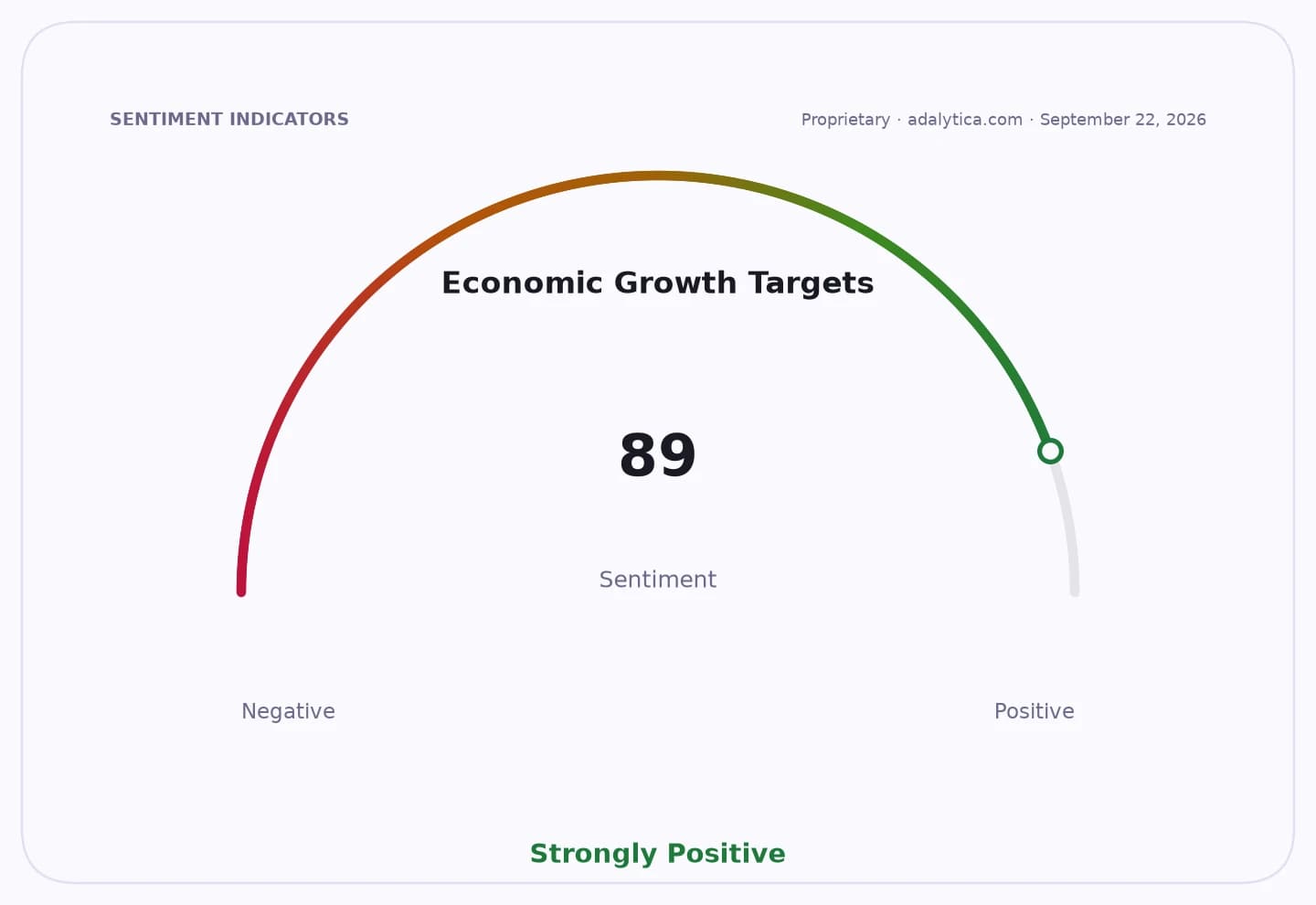
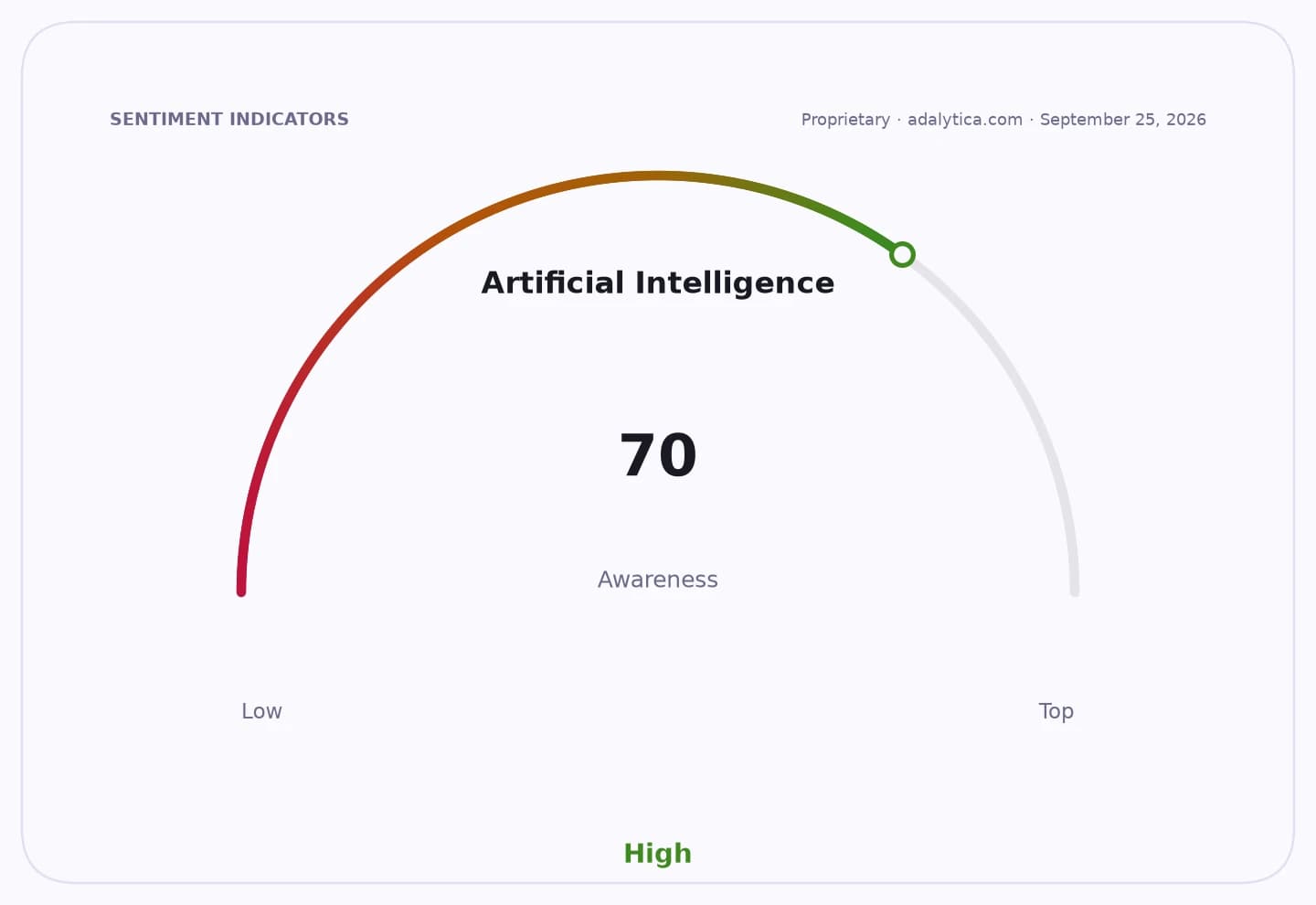
Sentiment IndicatorsⓘProprietary · adalytica.com · September 5, 2026
This is a snapshot — live sentiment, awareness and momentum for 130+ markets update continuously in the dashboard.Open AlphaPulse
The implications go well beyond a simple spending comparison. On one side of the ledger, the US ecosystem — from Nvidia and Microsoft to Oracle, AMD and other infrastructure suppliers — remains the deepest pool of AI demand, backed by large capital raises and higher valuations. On the other, China is building a parallel AI market under tighter funding conditions, which may slow the pace of frontier-model development but could also produce more disciplined deployment and greater reliance on homegrown supply chains.
Deutsche Bank said Chinese models are closing in on US peers across several performance measures, even as the US keeps an edge in frontier model development. The report also noted that Chinese models account for more than half of US corporate token usage on the OpenRouter platform, a reminder that Chinese systems are already being used in global workflows even if their developers are operating with far less capital.
For investors, the funding gap is the key variable. US AI winners have been rewarded with richer market valuations precisely because they can raise and deploy enormous sums into chips, data centers and software. Nvidia’s shares have climbed back above their longer-term trend lines, while Microsoft has also recovered from earlier pressure as investors continued to price in durable AI monetization. Chinese technology names such as Alibaba, Baidu and Tencent have less access to equity capital and are increasingly turning to debt, including dim sum bonds, which suggests a deliberate effort to reduce dollar dependence and keep funding closer to home.
The bear case for China is that a smaller capital base will make it harder to compete at the frontier, especially if access to advanced chips remains constrained. The bull case is that lower funding intensity may force better capital discipline and accelerate domestic substitution, particularly as the state channels capital through national funds and targeted financing. Deutsche Bank said China’s official figures may even understate total investment because they exclude some government-directed capital.
What investors should watch next is whether the US-China AI race remains a one-way trade into American infrastructure or becomes a more fragmented market, with China scaling enough to sustain its own ecosystem despite the financing disadvantage. The mid-September US-China AI safety dialogue will add a policy layer to an already strategic competition, but the near-term market impact will still hinge on one thing: who can fund the next wave of compute, models and applications fastest.
| Entity | Gains | Losses |
|---|---|---|
| US AI labs | ▲Bigger capital pools | ▼Higher burn and valuation risk |
| Nvidia, Microsoft, Oracle | ▲More AI demand | ▼Dependence on US capex cycle |
| Chinese AI firms | ▲State backing, debt access | ▼Frontier-scale funding gap |
| Dollar funding market | ▲Lower China reliance | ▼Less role in Chinese AI financing |