China’s ruling Communist Party is deepening its anti-corruption drive with new scrutiny of officials’ wealth, family businesses and online behavior, a move that could reinforce Xi Jinping’s grip on power while adding another layer of policy uncertainty for investors in Chinese assets.
China anti-corruption drive expands oversight of officials
The latest Central Committee resolution, released after this week’s plenum, says officials with property and spending “far exceeding” their normal incomes will be examined, while the business activities of spouses and children will face closer oversight. The party also vowed to better regulate members’ online conduct and step up efforts against corruption involving virtual currencies and blockchain.
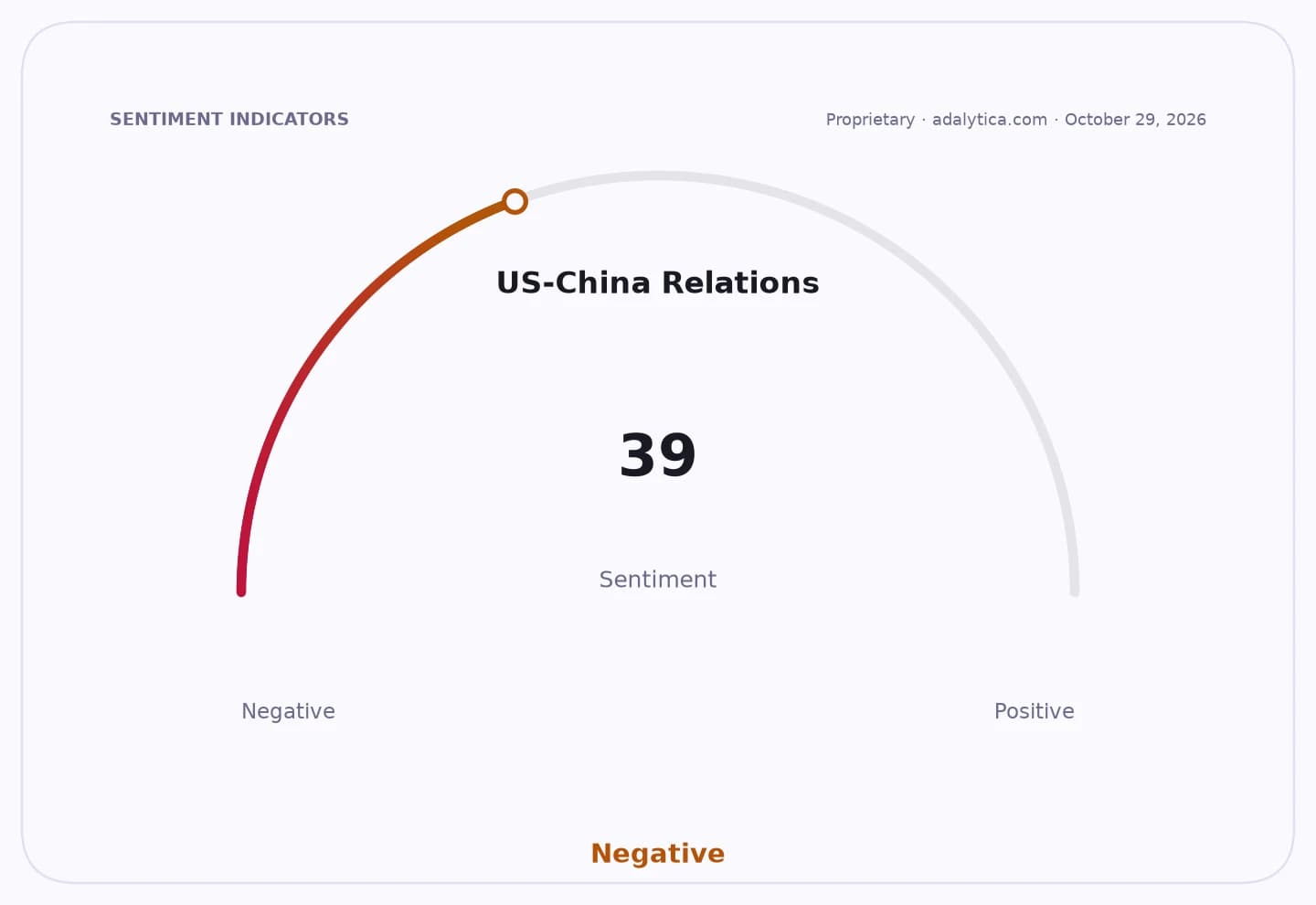
Sentiment Indicators
That matters economically because China’s anti-graft campaign is no longer just a political cleanup. It is a governance tool that reaches into state-owned enterprises, the financial sector and the ranks of local officials who approve projects, allocate credit and steer industrial policy. A tougher compliance climate can curb some forms of financial crime, but it can also make decision-making more cautious at a time when Beijing is trying to stabilize growth and restore confidence in the private economy.
For investors, the message is two-sided. In the long run, cleaner rules can improve the quality of capital allocation and reduce the risk of headline scandals in sectors from banking to energy. In the shorter run, however, a broader crackdown usually means more investigations, slower approvals and a higher premium on companies with strong governance and less political exposure.
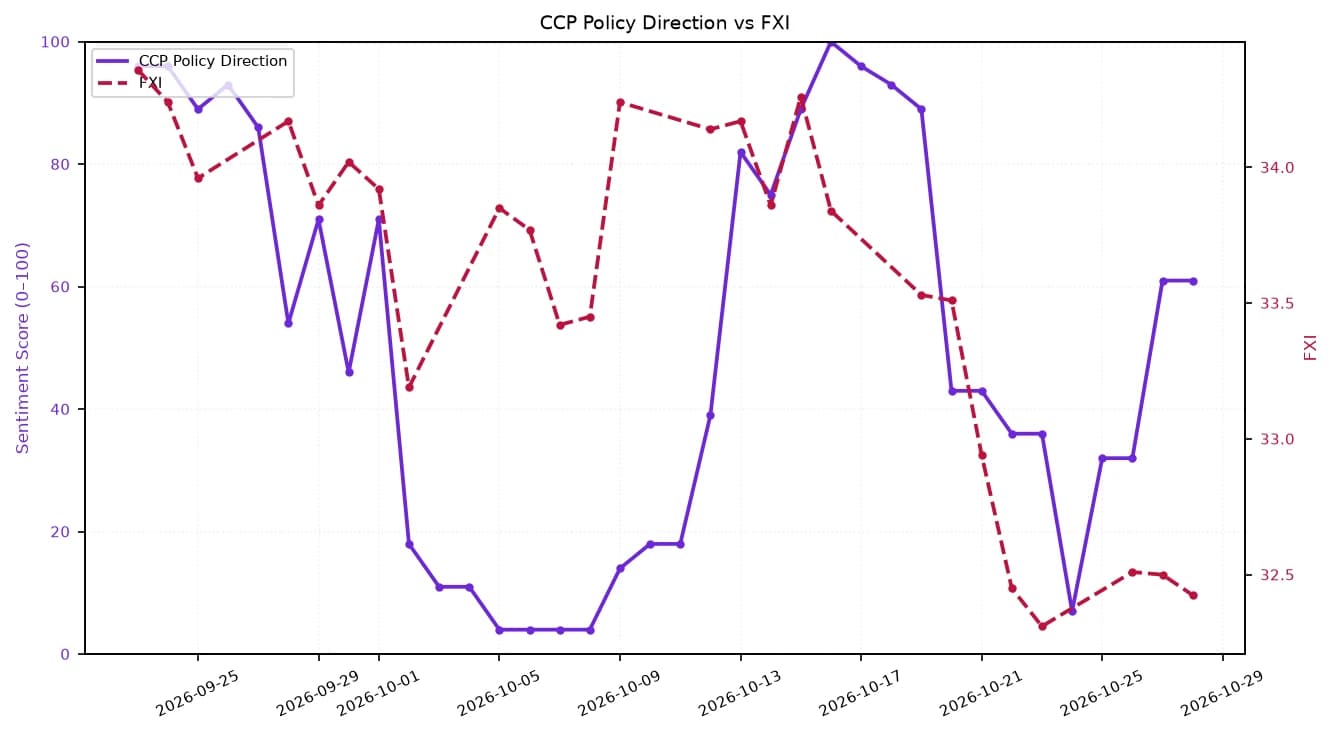
CCP Policy Direction vs FXIadalytica.com
Explore this data interactively — full history, time series and cross-market comparisons.
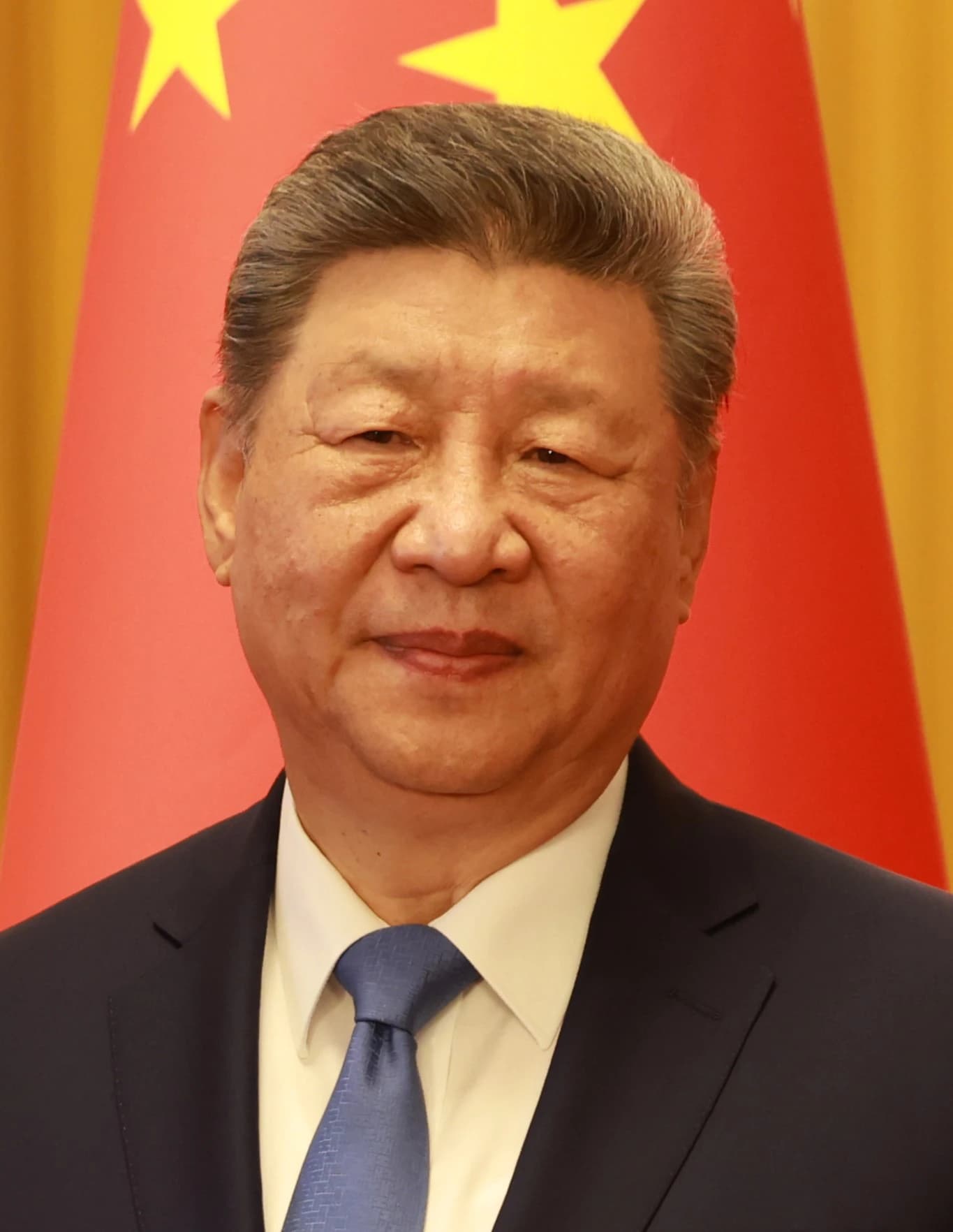
The timing is notable. State media said 33 more dignitaries were expelled, underscoring how far the purge reaches. Xi has already spent more than a decade driving an anti-graft campaign that has ensnared thousands of officials and removed senior military figures, and analysts continue to view the effort as part of a broader consolidation of power ahead of the 2027 party congress.
That is why the story matters beyond Beijing politics. China’s policy direction can shape everything from bank lending and state-investment flows to the valuation investors assign to mainland and offshore Chinese stocks. ETFs such as the iShares China Large-Cap ETF, FXI, the iShares MSCI China ETF, MCHI, and leveraged bull product YINN remain sensitive to any sign that policy risk is rising or that official discipline will slow the pace of stimulus and reform.
Technical indicators suggest the market is still wary. FXI recently traded at 33.08, below its 50-day moving average of 34.19 and its 200-day average of 35.52. MCHI closed at 49.07, also under both its 50-day and 200-day averages, while YINN, at 22.59, remains well below its 50-day and 200-day moving averages. That doesn’t tell investors what Beijing will do next, but it does show that Chinese equity sentiment remains fragile.
Long term, the bigger question is whether tighter supervision strengthens institutions or simply reinforces a climate of caution. If Beijing uses the campaign to improve accountability without choking off private initiative, investors could eventually see a healthier operating environment. If the campaign mainly serves to tighten political control, the result may be cleaner headlines but weaker risk appetite. Either way, Chinese assets are likely to stay on watchlists, not in the “buy everything” bucket, until policy uncertainty eases.
| Entity | Gains | Losses |
|---|---|---|
| CCP leadership | ▲tighter control | ▼greater internal dissent |
| Xi Jinping | ▲stronger authority | ▼faster policy execution risk |
| Clean-governance advocates | ▲fewer graft cases | ▼more uncertainty |
| Chinese equities | ▲long-term governance gains | ▼near-term policy caution |