China is sharpening its control over outbound investment just as geopolitical risk, technology controls and foreign regulatory pressure make overseas expansion more expensive for its companies.
China tightens rules on outbound investment reporting
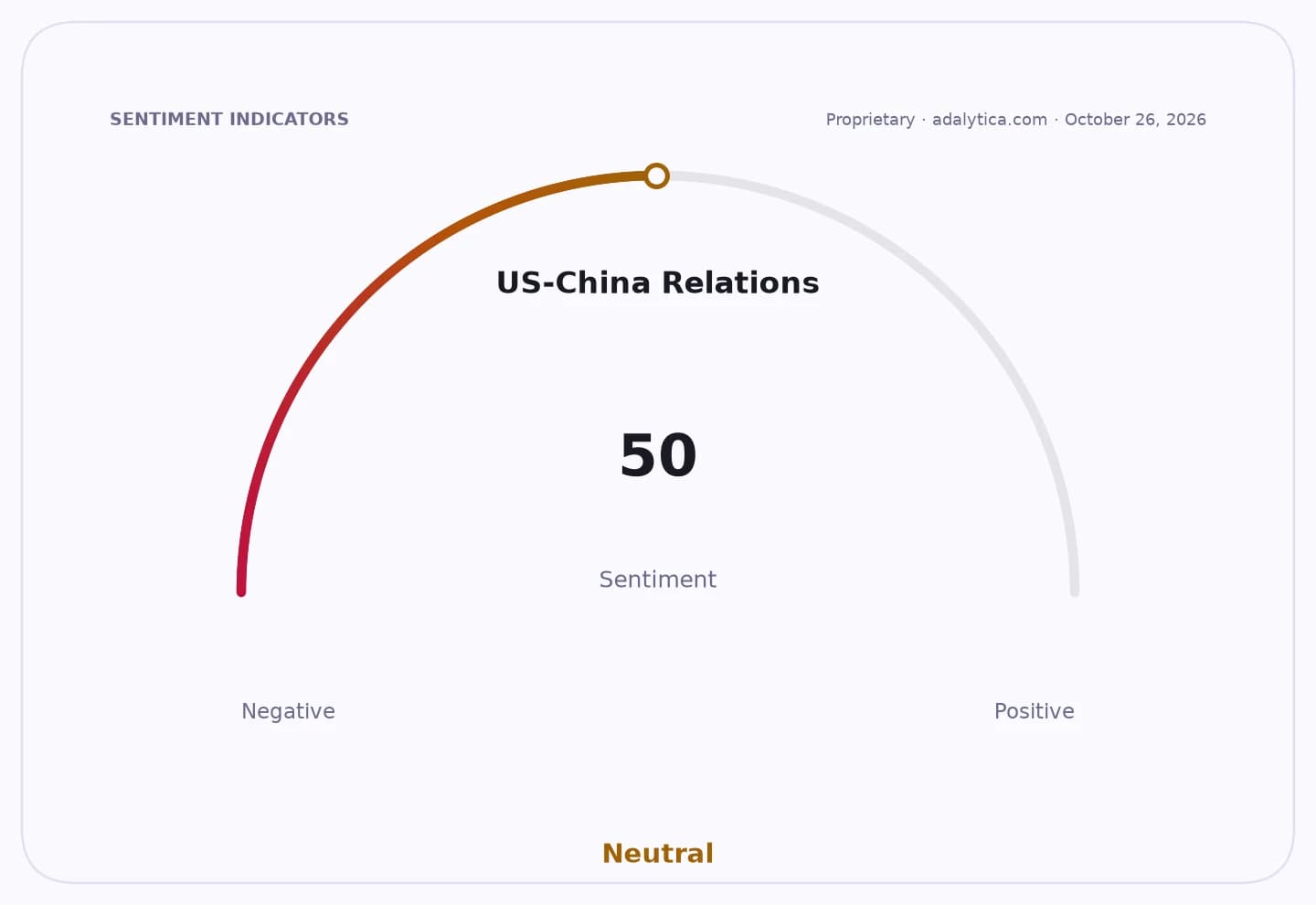
US-China Relations
The National Development and Reform Commission said it has issued new rules on foreign investment management that take effect Dec. 1 and expand reporting requirements for major deals, especially where Chinese firms face political, security or discriminatory treatment abroad. The move follows a June State Council directive to step up oversight of outbound investment and gives Beijing a more formal mechanism to track risks and protect corporate interests overseas.
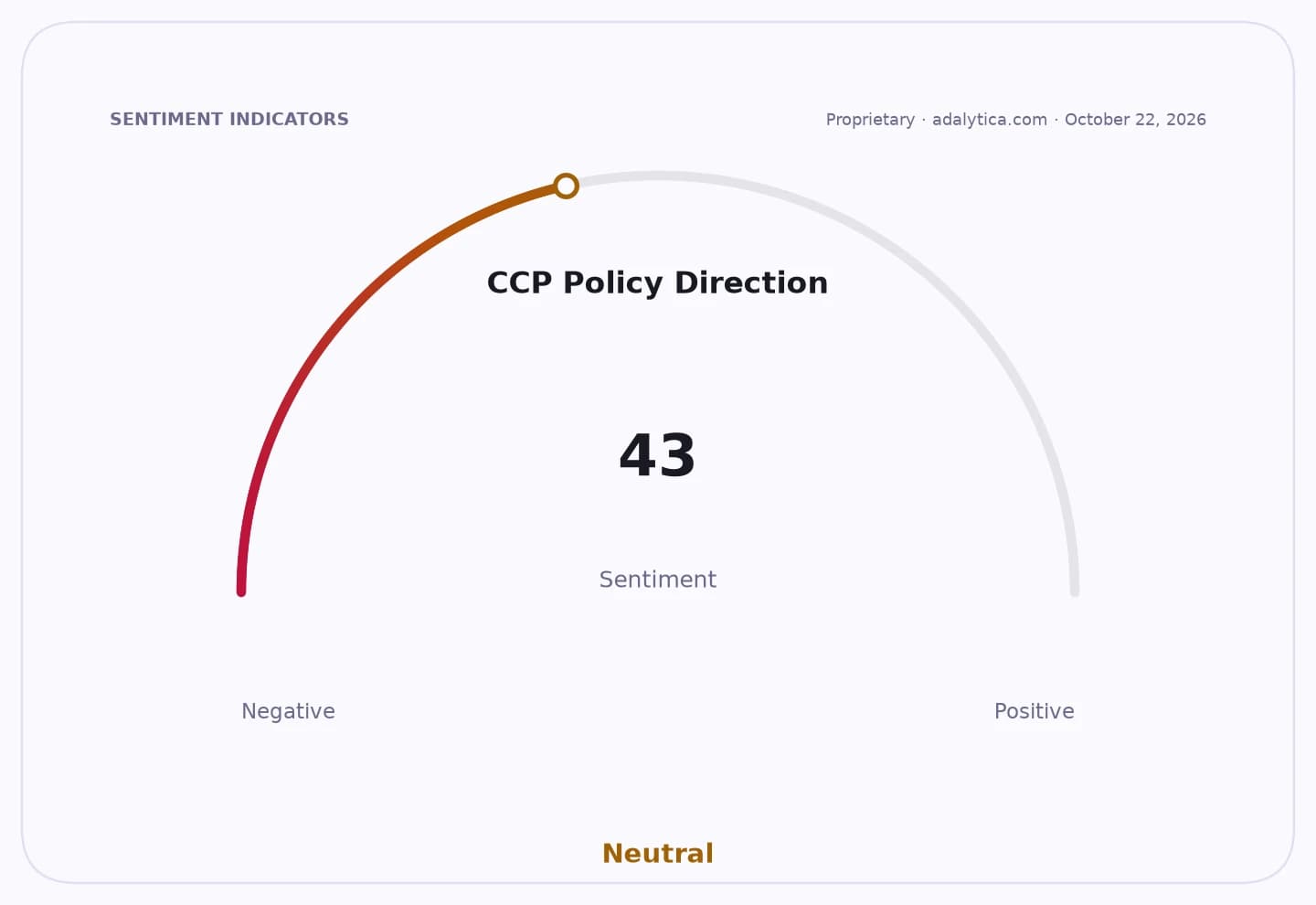
Sentiment Indicators
For investors, the significance is twofold. First, the rules underscore that China’s capital is becoming more strategic and more regulated at the same time, which can slow or complicate cross-border dealmaking. Second, they show Beijing is trying to defend the external interests of domestic companies as tensions with the West and other host countries rise over data, technology and market access.
That matters for sectors most exposed to overseas growth ambitions, from internet platforms and industrial companies to electric-vehicle and technology firms that rely on foreign supply chains, customers or assets. It also reinforces the broader pattern of Chinese policy: encourage outward expansion where it serves national goals, but keep tighter tabs on where capital goes and what risks it takes on.
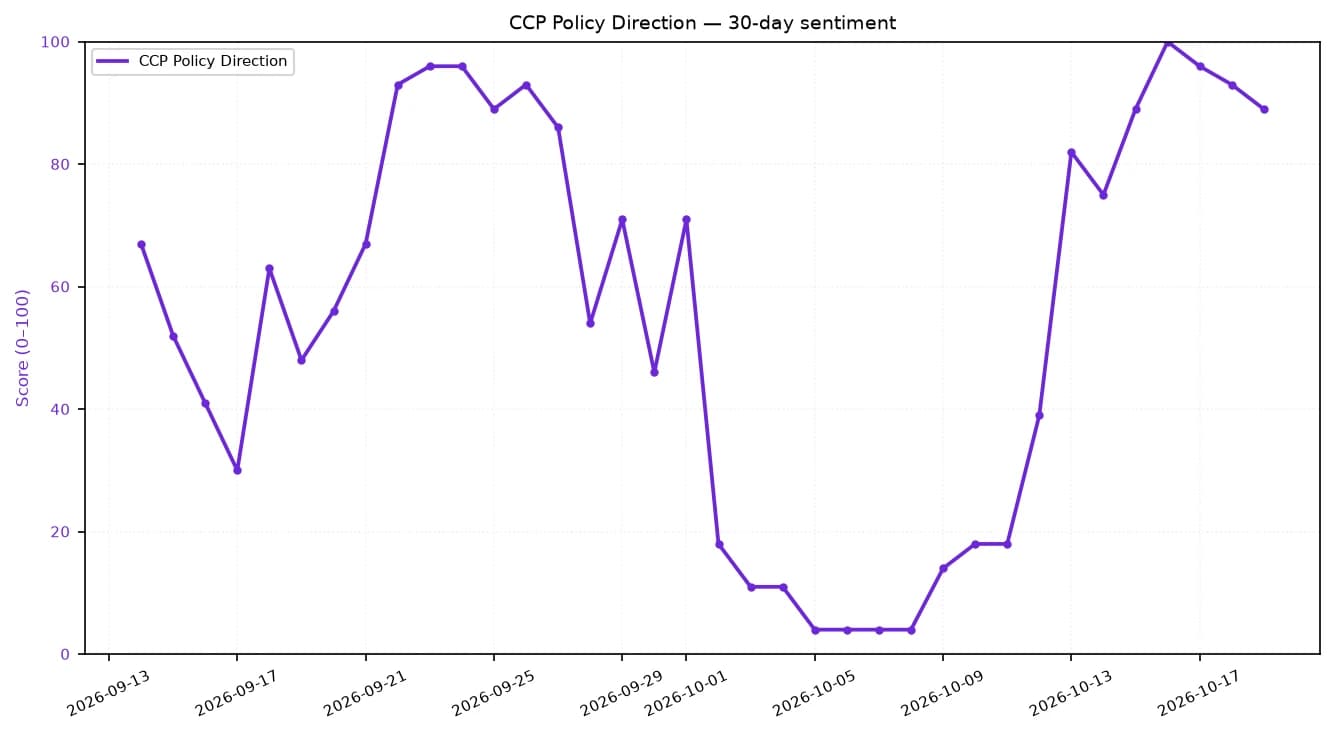
CCP Policy Direction vs FXIadalytica.com
Explore this data interactively — full history, time series and cross-market comparisons.
The timing fits a more cautious mood in Chinese markets. Foreign and domestic investors have been rotating toward safer assets as confidence in riskier holdings has weakened, while Chinese equity vehicles have remained under pressure. The Hang Seng China Enterprises ETF, FXI, was last at $32.46, below both its 50-day average of $34.30 and 200-day average of $35.59, while the iShares MSCI China ETF, MCHI, traded at $49.04, also beneath its 50-day and 200-day moving averages. The leveraged YINN fund, meanwhile, closed at $21.33, far below its 200-day average of $31.11, a sign that sentiment toward China exposure remains fragile.
Beijing’s new reporting system is designed to flag major projects when overseas conditions deteriorate and to capture investments tied to diplomatic relationships, a reminder that geopolitics is now part of the compliance burden for Chinese corporates. For companies pursuing global expansion, the rules may add paperwork and scrutiny. For policymakers, they create a clearer channel to intervene before losses or political frictions escalate.
The market takeaway is straightforward: China is not pulling back from globalization, but it is making it harder for firms to move abroad without state oversight. That should favor larger, policy-aligned companies with strong government ties and disciplined capital allocation, while raising the bar for smaller outbound investors and any business model dependent on frictionless access to foreign markets.
| Entity | Gains | Losses |
|---|---|---|
| Chinese regulators | ▲More oversight | ▼Less discretion for firms |
| Policy-aligned large corporates | ▲Clearer backing | ▼More compliance |
| Smaller outbound investors | ▲— | ▼Higher reporting burden |
| Foreign host countries | ▲Better visibility | ▼Less Chinese capital flexibility |