China is moving to loosen financial barriers in the Greater Bay Area, betting that deeper cross-border capital links can turn the region into a bigger source of technology investment and challenge Beijing and Shanghai as innovation hubs.
China eases Greater Bay Area tech finance rules
New guidelines from the People’s Bank of China and 10 other government departments call for an “open technology finance system” across Guangdong, Hong Kong and Macau, with more venture capital, more long-term funding for tech companies and closer coordination of financial rules across the region. The goal is to make it easier for investors, research institutions and startups to move money and resources across the border.
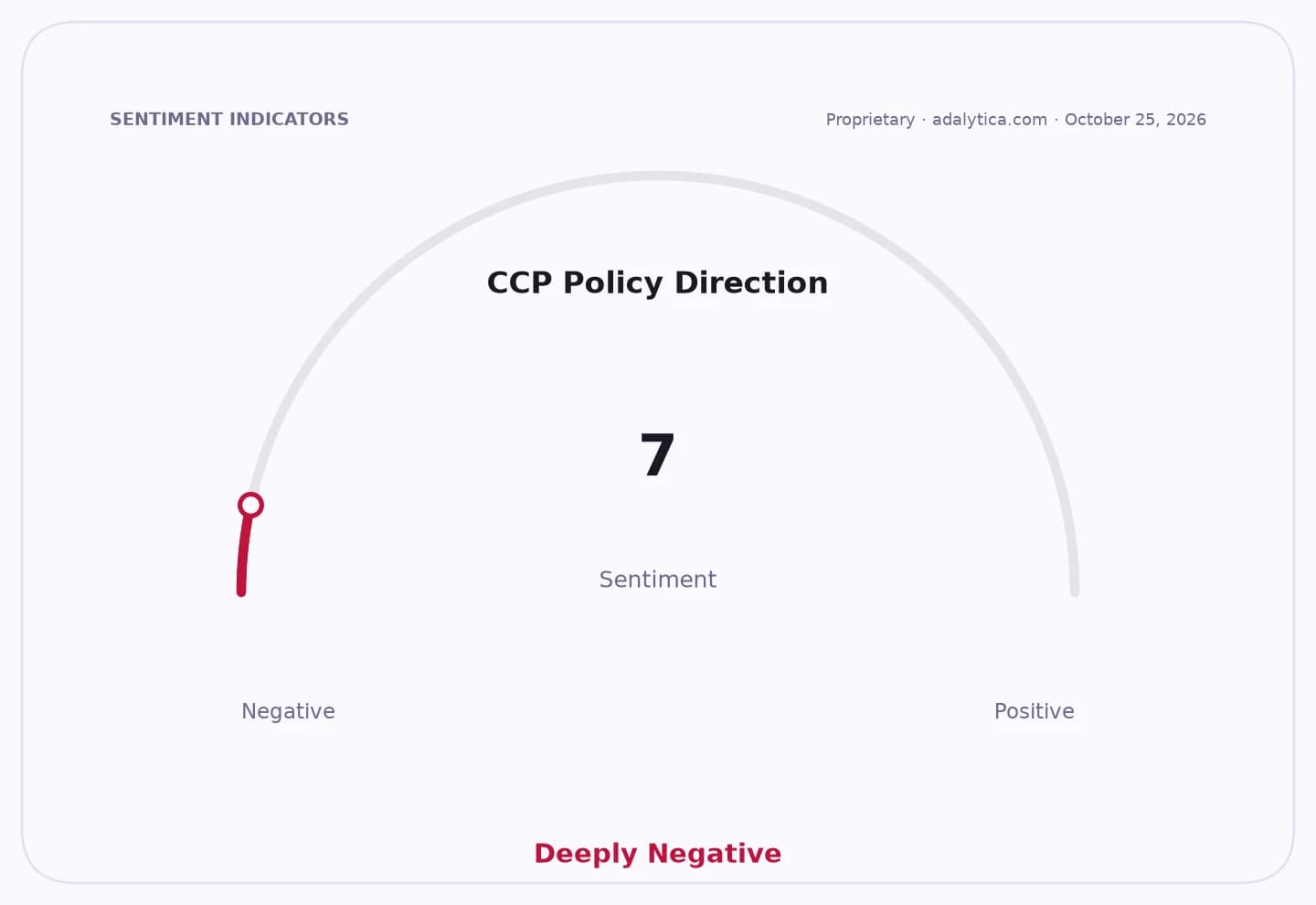
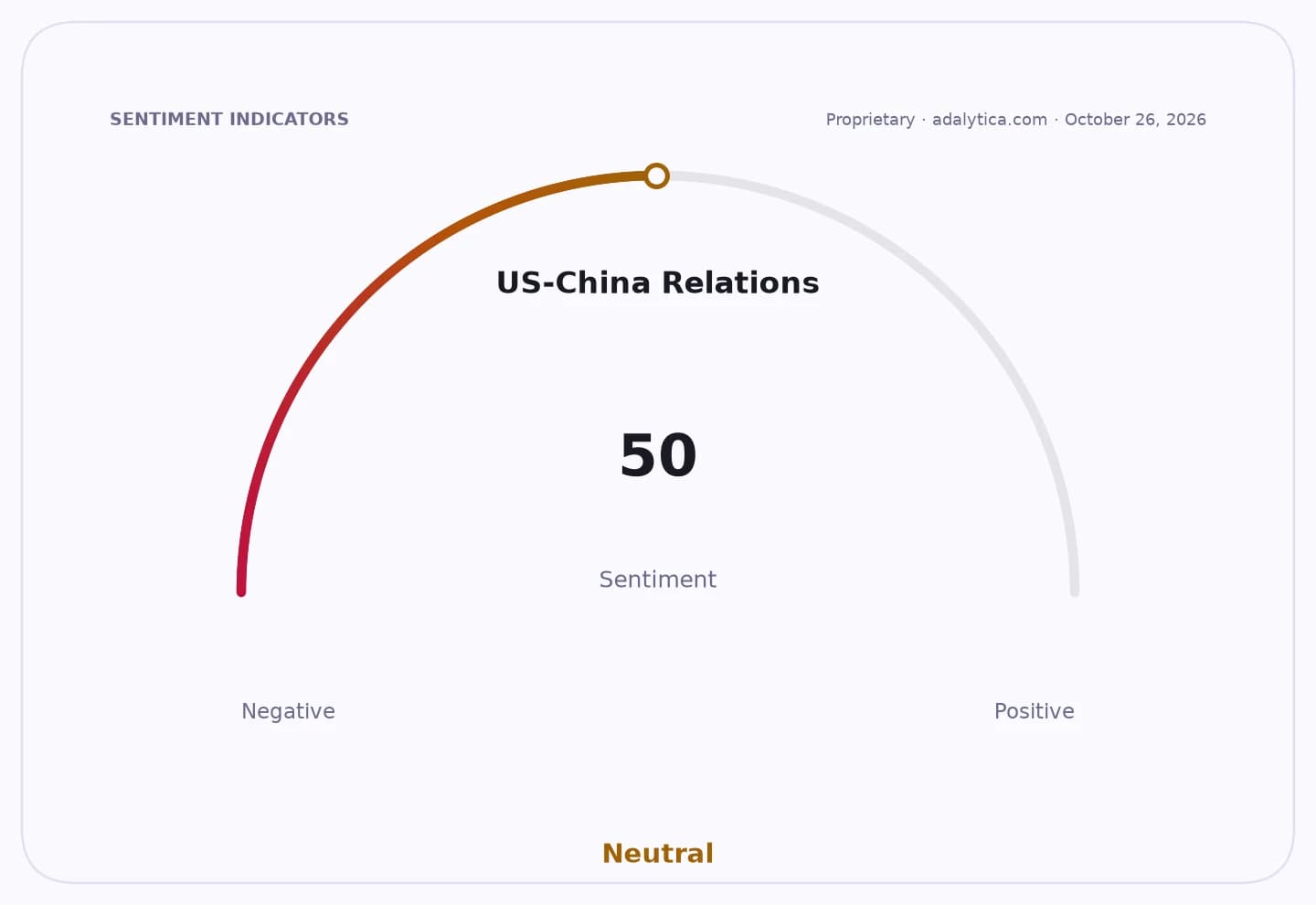
Sentiment IndicatorsⓘProprietary · adalytica.com · October 26, 2026
This is a snapshot — live sentiment, awareness and momentum for 130+ markets update continuously in the dashboard.Open AlphaPulse
The policy matters because the Greater Bay Area has long been one of China’s most commercially dynamic regions, but its tech ecosystem has often been constrained by fragmented regulation, limited funding channels and the difficulty of matching mainland industrial scale with Hong Kong’s financial depth. Beijing is now trying to use Hong Kong’s capital markets and financial infrastructure to help fill that gap, at a time when China is under pressure to accelerate domestic innovation and reduce reliance on overseas technology.
For investors, the move is a signal that authorities want more private capital, especially venture and growth funding, to support Chinese technology names rather than relying only on state-directed financing. That could improve fundraising conditions for startups and listed tech firms in the region, while also creating more business for banks, asset managers and private equity firms that can operate across the mainland-Hong Kong interface.
The policy push also fits a broader effort to tie finance more closely to industrial policy. Beijing is trying to channel capital toward strategic technologies in the same way it has leaned on credit and subsidies elsewhere, but with more emphasis on market-based funding and cross-border investment. If implemented smoothly, the guidelines could help the Greater Bay Area compete more effectively with other Chinese innovation clusters and attract more institutional money.
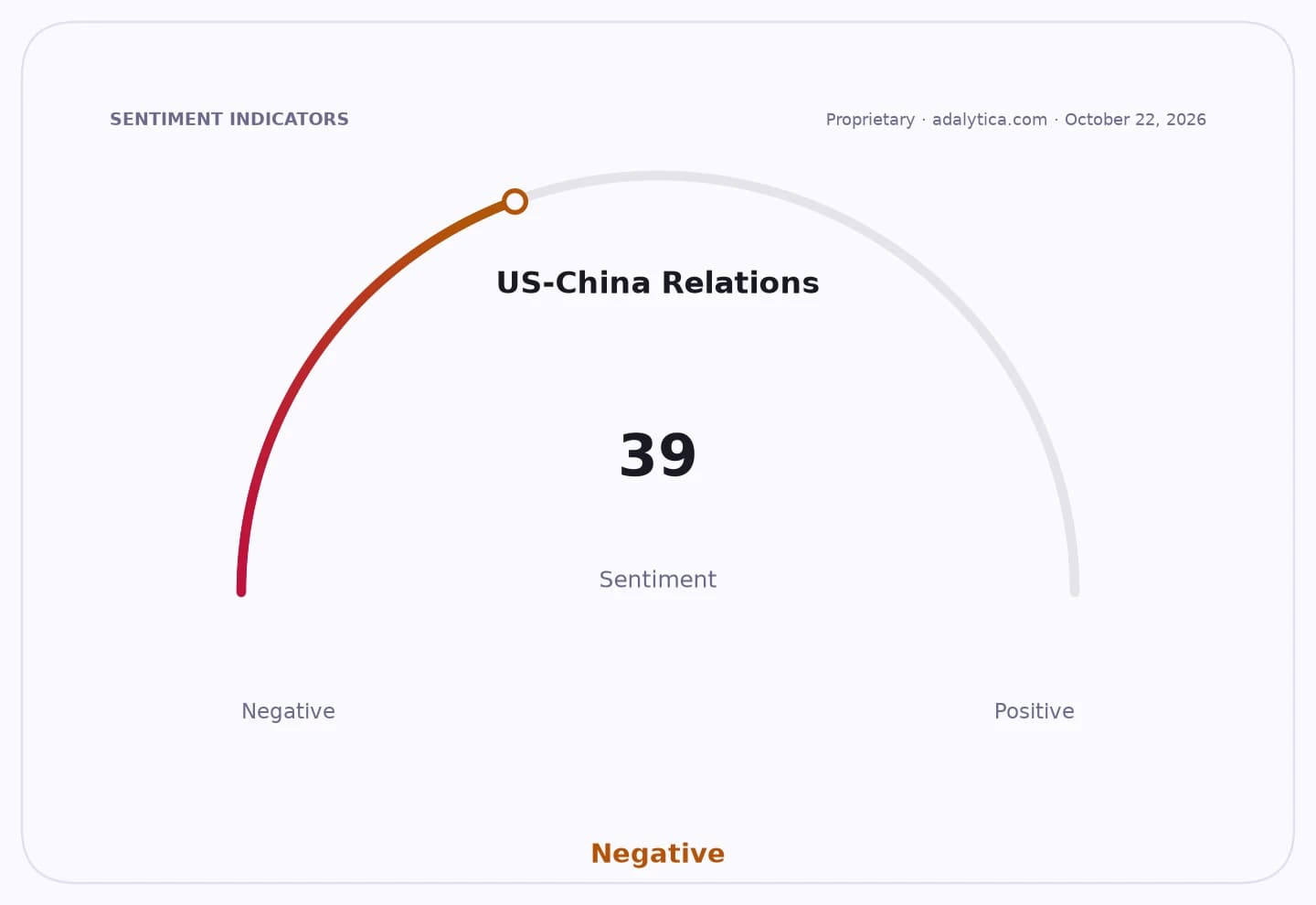
The market backdrop is still cautious. Shares in Tencent, Alibaba and Meituan have all been under pressure over the past several months, with Alibaba trading well below its 200-day moving average and Tencent also in a technical downtrend, underscoring that investors are waiting for proof that policy support will translate into earnings and cash flow rather than just headlines. Broader US-China sentiment, as tracked by Adalytica.com, is neutral but awareness of the issue remains elevated.
The key test now is execution: whether regulators can reduce cross-border frictions without undermining controls on capital movement, and whether the new framework is strong enough to pull in private funding at scale. If it works, the Greater Bay Area could become a more important engine for Chinese tech finance; if not, it risks becoming another ambitious plan that falls short of the region’s industrial promise.
| Entity | Gains | Losses |
|---|---|---|
| Greater Bay Area tech firms | ▲Easier access to capital | ▼Funding constraints ease slowly |
| Hong Kong financial sector | ▲More cross-border deal flow | ▼Less if rules stay restrictive |
| Mainland regulators | ▲Stronger innovation policy tools | ▼Higher policy execution risk |
| Private investors | ▲More tech financing opportunities | ▼Higher regulatory uncertainty |