Science-technology diplomacy is turning into the most investable bridge between Vietnam and Hong Kong, with a new Hanoi-Hong Kong air link and a widening policy push around AI, semiconductors and innovation finance creating a clearer path for capital, talent and technology to move between the two markets.
Vietnam Hong Kong Trade, AI and Semiconductor Links
That matters because the relationship is no longer being framed as protocol or symbolism. It is being built around sectors that can actually move growth: AI, robotics, life sciences, microelectronics, advanced manufacturing and logistics. Hong Kong’s 2026-2030 development plan explicitly targets an international innovation hub, while Vietnam is elevating science, technology and digital transformation into a strategic pillar of national development. For investors, that combination points to a practical deal flow narrative, not just a diplomatic one.
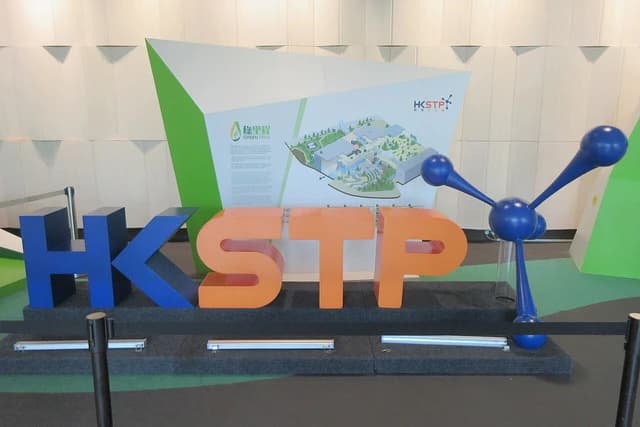
Vietnam’s consulate in Hong Kong is already putting numbers behind the effort. More than 100 Vietnamese students received scholarships at top-ranked Hong Kong universities in 2025, worth about 15 million Hong Kong dollars, or $1.9 million, annually, with a growing share studying science and technology. That pipeline matters because Vietnam’s bottleneck is not ambition — it is skilled labor, lab access and commercialization capacity. Hong Kong offers all three, along with proximity to the Guangdong-Hong Kong-Macao Greater Bay Area, where the Hetao innovation zone, Hong Kong Science Park and Cyberport are being positioned as gateways to capital-intensive tech development.
The market angle is straightforward: Hong Kong can function as Vietnam’s external funding and testing platform. The city’s “Finance + Technological Innovation” model, combined with its “AI+” push across finance, healthcare, transport, construction and services, creates a financing channel for Vietnamese startups and technology firms that are still too small for the deepest global capital pools. That is a structural advantage in a region where start-ups often die not from weak ideas, but from weak scaling capital.
The new air route between Hanoi and Hong Kong strengthens that thesis by lowering the friction for corporate travel, university exchanges, investor diligence and cross-border project work. In growth investing, those small logistics gains often matter more than headline diplomacy. They reduce transaction costs, deepen deal frequency and make it easier for companies to turn collaboration into revenue.
I believe the market underestimates how quickly this can feed into the listed supply chain. Hong Kong’s own export mix — especially machinery, electrical equipment and AI servers — points to the kind of hardware and infrastructure ecosystem that benefits from a broader Southeast Asian buildout. Vietnam, for its part, is trying to move up the semiconductor value chain, modernize ports and logistics, and use AI in industrial upgrading. That means the winners are likely to be the toll-road businesses of the digital economy: chip design, testing, packaging, cloud infrastructure, port automation, logistics software, education and talent platforms.
The bigger story is that Vietnam is no longer treating innovation as a domestic policy slogan. It is using diplomacy to import capabilities. Hong Kong is valuable not only because it is rich, but because it is connected — to money, universities, startups and the Greater Bay Area industrial base. That makes it a natural bridge for Vietnamese firms seeking credibility, capital and technology partnerships across Asia.
For investors, the takeaway is to position early around the second-order beneficiaries: AI infrastructure, semiconductor services, logistics modernization and education-tech names tied to Vietnam’s industrial upgrading and Hong Kong’s innovation ecosystem. The bilateral relationship is moving from courtesy visits to capital formation, and that is where the upside begins.
| Entity | Gains | Losses |
|---|---|---|
| Vietnam startups | ▲New capital access | ▼Funding friction |
| Hong Kong universities | ▲More talent inflow | ▼Insular pipeline |
| AI and chip suppliers | ▲Cross-border demand | ▼Standalone growth |
| Legacy logistics operators | ▲Modernization tailwind | ▼Inefficient networks |