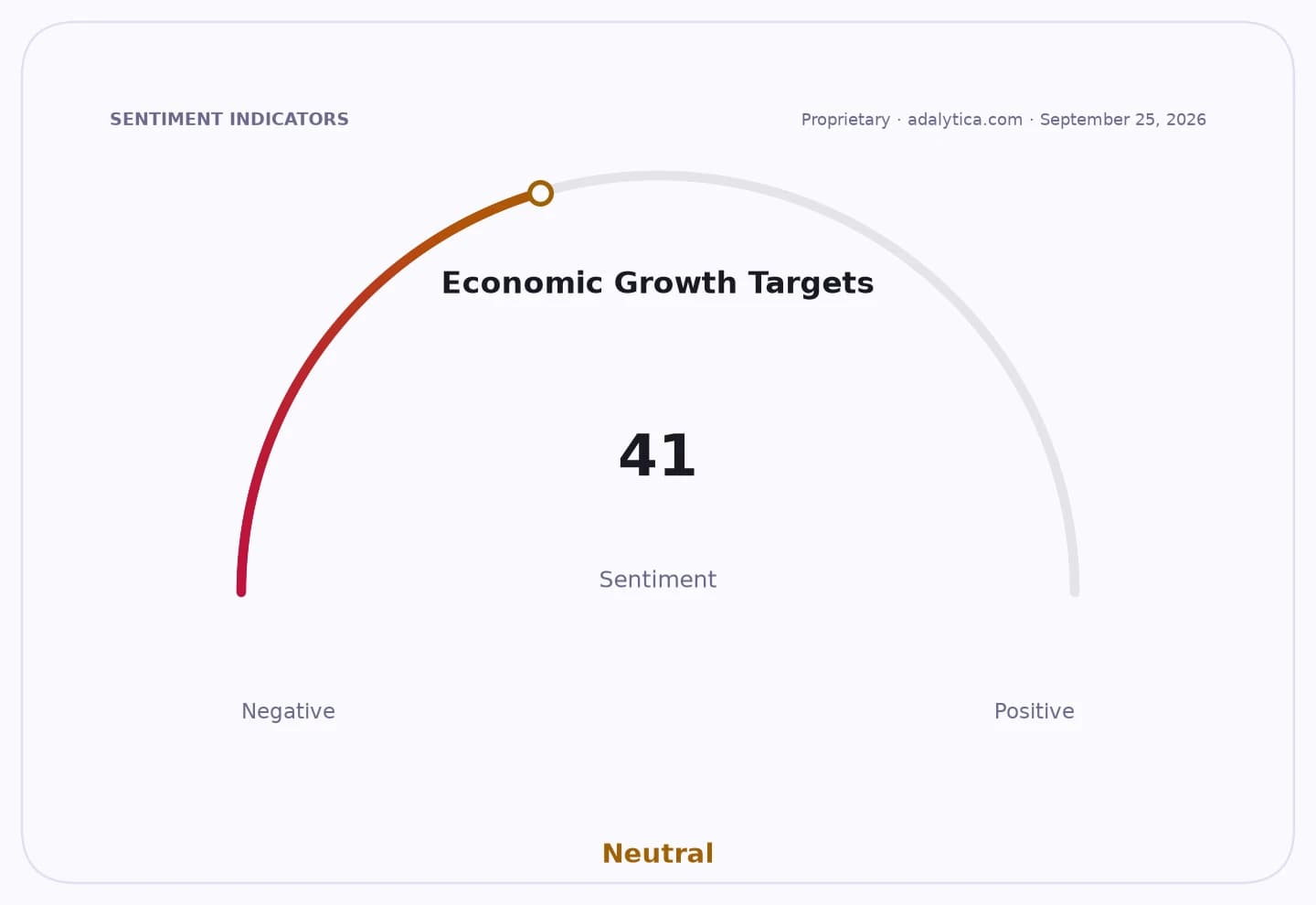
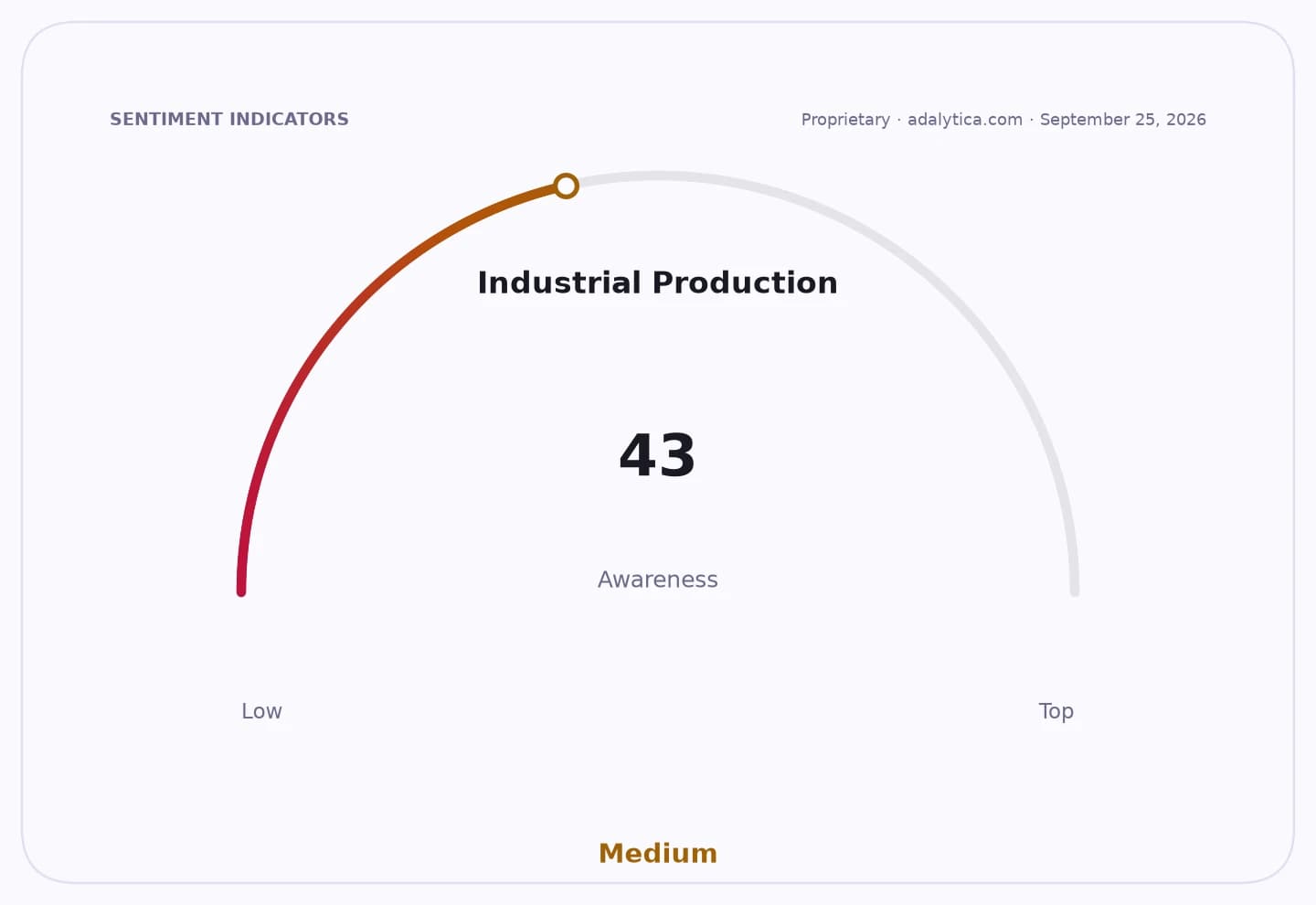
Hong Kong is preparing to lift innovation spending sharply over the next five years, a policy pivot that underscores how the city is trying to retool its economy beyond finance, property and tourism and into higher-value industries that can support growth after 2030.
Hong Kong plan raises innovation spending to 3% of GDP
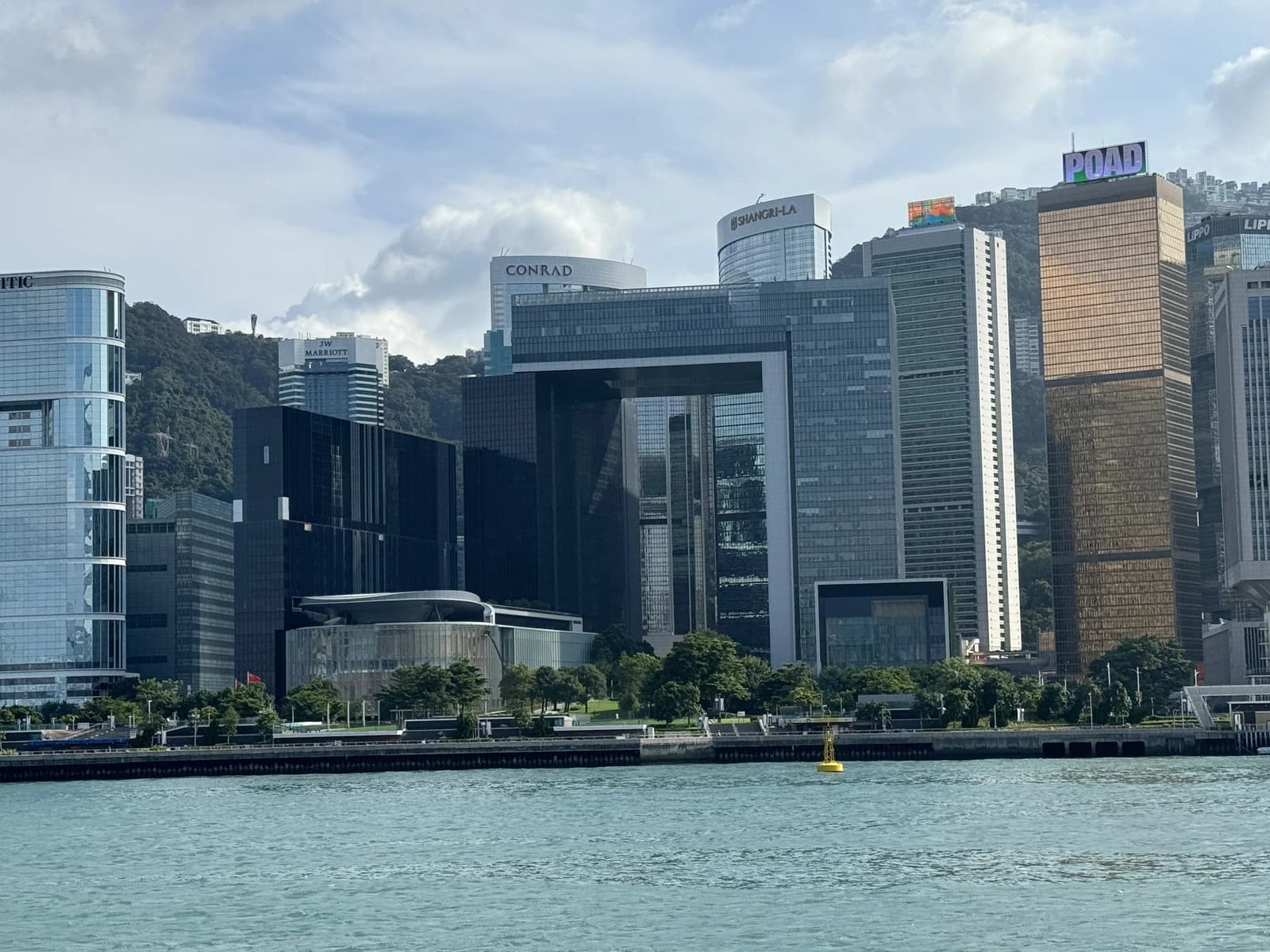
The first five-year development plan published Wednesday sets a target of raising total domestic spending on innovation to 3% of GDP after 2030, from 1.63% in 2024. That would mark nearly a doubling of the economy’s innovation intensity and puts public policy squarely behind the effort to turn emerging sectors into new engines of output.
Sentiment IndicatorsⓘProprietary · adalytica.com · September 17, 2026
This is a snapshot — live sentiment, awareness and momentum for 130+ markets update continuously in the dashboard.Open AlphaPulse
The plan also calls for manufacturing and “new industrialisation” to account for 5.5% of GDP after 2030, up from 3.8% in 2024, suggesting Hong Kong wants a larger industrial and technology base rather than relying solely on its role as a regional services hub. Tourism remains part of the mix, with value added targeted to rise 40% to 50% to HK$126 billion by 2030, but the bigger message is that authorities are trying to broaden the growth model.
For investors, the significance lies less in the headline targets than in what they imply for capital allocation, policy support and the earnings mix of listed Hong Kong and China-facing companies. Higher innovation spending typically means more incentives for research, technology commercialization, advanced manufacturing and talent development, all of which can benefit local suppliers, infrastructure names and technology platforms if funding is sustained and translated into private-sector activity.
The challenge is execution. Raising spending ratios is easier on paper than building a durable innovation ecosystem, especially in a high-cost city where land, labour and integration with the mainland’s industrial base can limit scale. Hong Kong’s latest plan suggests officials understand that dependence on traditional sectors leaves growth vulnerable to cyclical swings and weak productivity gains. The new industrialisation target points to a desire to capture more of the value chain, not just the financial intermediation around it.
The move also comes at a time when global competition for technology investment is intensifying and governments across Asia are using public spending to crowd in private capital. That matters because Hong Kong is trying to reposition itself as a connector between mainland innovation capacity, international capital and global distribution. If the plan succeeds, it could support medium-term earnings for firms tied to R&D, biotech, artificial intelligence, logistics and advanced production. If it falls short, it risks becoming another long-range policy document with limited market impact.
For now, the plan gives investors a clearer read on where policy support is headed: more money toward innovation, more emphasis on industrial upgrading, and a deliberate push to make growth less dependent on property and consumption cycles.
| Entity | Gains | Losses |
|---|---|---|
| Hong Kong innovation sector | ▲More policy funding | ▼Slower reform if execution lags |
| Tech, biotech and industrial firms | ▲Higher demand for support | ▼Pressure to prove returns |
| Tourism operators | ▲Modest growth target support | ▼Lesser policy priority than innovation |
| Traditional property-led growth model | ▲Lower reliance on cycles | ▼Reduced central role in policy mix |