Ho Chi Minh City is moving to build a smart manufacturing ecosystem around artificial intelligence, big data, robotics and shared digital infrastructure, betting that a more coordinated shift to automated production can lift industrial productivity and competitiveness.
Ho Chi Minh City builds smart manufacturing push
That matters because the city is trying to avoid a fragmented wave of digital investment that could leave smaller factories behind while failing to produce broad gains in output, quality and supply-chain resilience. Officials and industry groups say smart manufacturing is becoming a necessity, not an option, as global production shifts toward more efficient, data-driven plants.
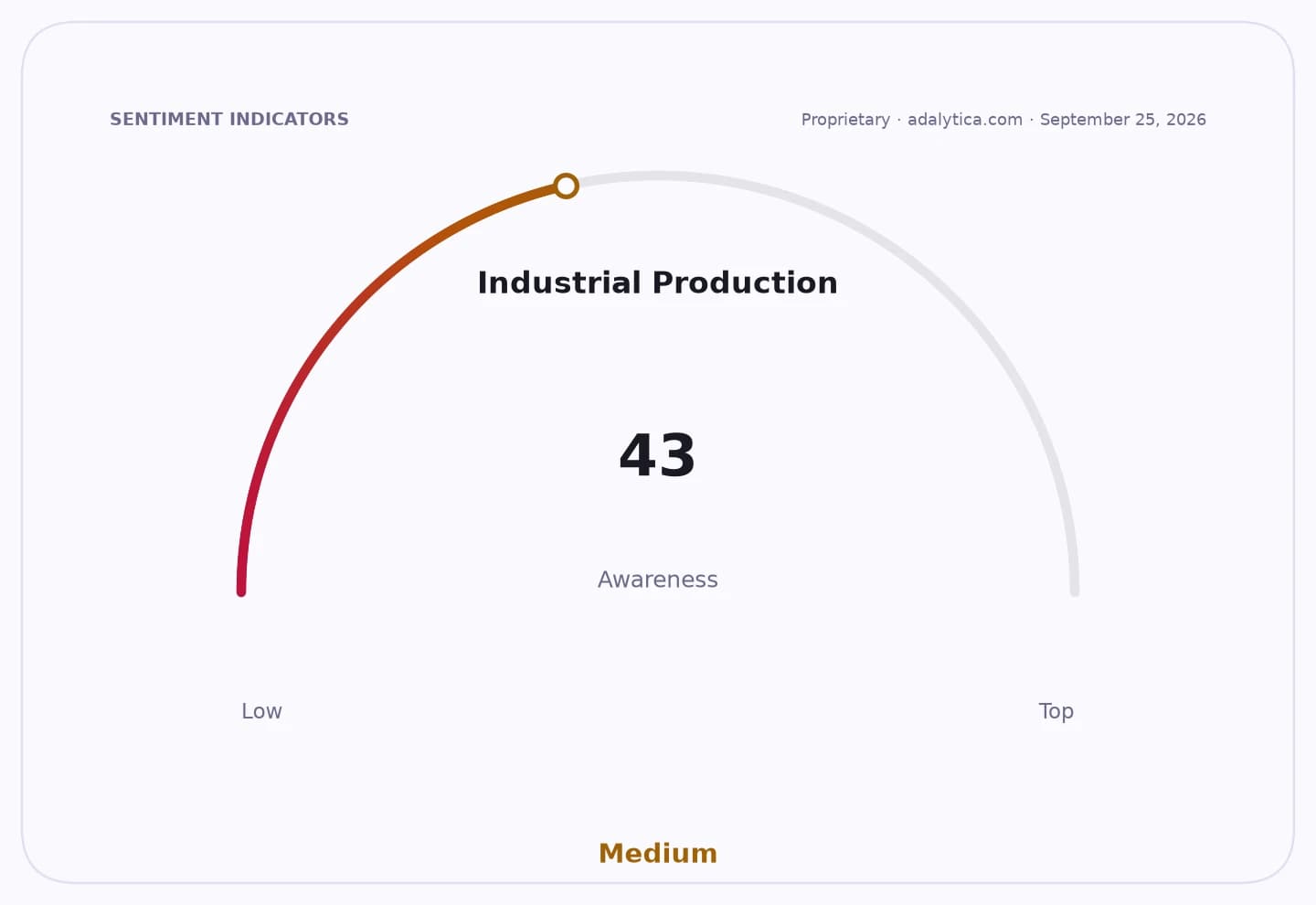
Sentiment IndicatorsⓘProprietary · adalytica.com · September 25, 2026
This is a snapshot — live sentiment, awareness and momentum for 130+ markets update continuously in the dashboard.Open AlphaPulse
The message from local policymakers and business leaders is that Vietnam’s biggest industrial hub must treat smart production as part of a wider push for faster, more sustainable growth. The goal is to raise productivity, value added and technological self-reliance while making industry more adaptable in the face of tighter global competition and shifting supply chains.
Hồ Thị Quyên, deputy head of the Ho Chi Minh City Center for Trade and Investment Promotion, said digital transformation is now a “mandatory requirement” for manufacturers seeking to improve competitiveness, optimize operations and grow sustainably. She said the city has identified nine technology groups and 26 priority products, with a focus on AI, big data, robotics and digital infrastructure.
The challenge is adoption. Most small and medium-sized enterprises still lack the capital, technology and workforce to execute the shift, while many factories remain stuck in reactive maintenance models. VINASA vice chairman Lâm Quang Nam said digital tools can narrow the scale gap between large and small manufacturers, arguing that the right technology can let a plant with 200 workers produce at the level of one employing 2,000.
That kind of productivity gain is why the push matters economically. If the city can help SMEs adopt the right systems in logistics, energy use, data management and supply-chain integration, industrial output can rise without relying solely on labor expansion. It also strengthens local suppliers at a time when manufacturers are under pressure to modernize, cut waste and meet higher environmental and quality standards.
The plan also has implications beyond factories. Ho Chi Minh City wants smart manufacturing tied to green transition goals and responsible industrial development, which could support domestic markets for software, automation, industrial equipment and consulting services. It is also seeking to attract multinationals to set up R&D centers and model factories, a move that could pull in technology, capital and know-how.
To support the shift, the city plans to train at least 100 core experts and build a network of advisers, research institutes, universities and financial partners to guide companies through the transition. That makes the initiative less about a one-off technology upgrade than about building the institutional framework for industrial modernization.
For investors, the story points to a longer runway for automation, industrial software and factory technology suppliers serving Vietnam and the wider region. It also suggests that the winners will be companies able to package scalable solutions for smaller manufacturers, while the losers are likely to be firms that delay upgrades and keep running low-productivity plants.
The broader backdrop is favorable for industrial technology. Chinese manufacturing officials are also pressing for deeper innovation and advanced production capability, underscoring how smart manufacturing has become a regional industrial priority. In the near term, Ho Chi Minh City’s success will depend on whether policy support, financing and training can turn a broad ambition into measurable factory gains.
| Entity | Gains | Losses |
|---|---|---|
| Ho Chi Minh City manufacturers adopting automation | ▲Higher productivity, lower costs | ▼Legacy low-efficiency processes |
| Small and midsize enterprises | ▲Access to scalable tech and expertise | ▼Scale disadvantage if they delay |
| Industrial software, robotics and automation vendors | ▲New demand from factory upgrades | ▼Suppliers tied to manual production |
| Multinationals and R&D investors | ▲Local partnerships and lower-cost innovation base | ▼Firms seeking only low-tech manufacturing |