China is aiming to complete a national blockchain basic network by 2030, a move that shows Beijing is treating digital infrastructure as a core part of its next growth model rather than a side project. For investors, the significance is bigger than blockchain itself: the plan ties together telecom buildout, artificial intelligence, data security and industrial modernization into one state-backed push that could reshape who benefits from China’s next wave of tech spending.
China plans national blockchain network by 2030
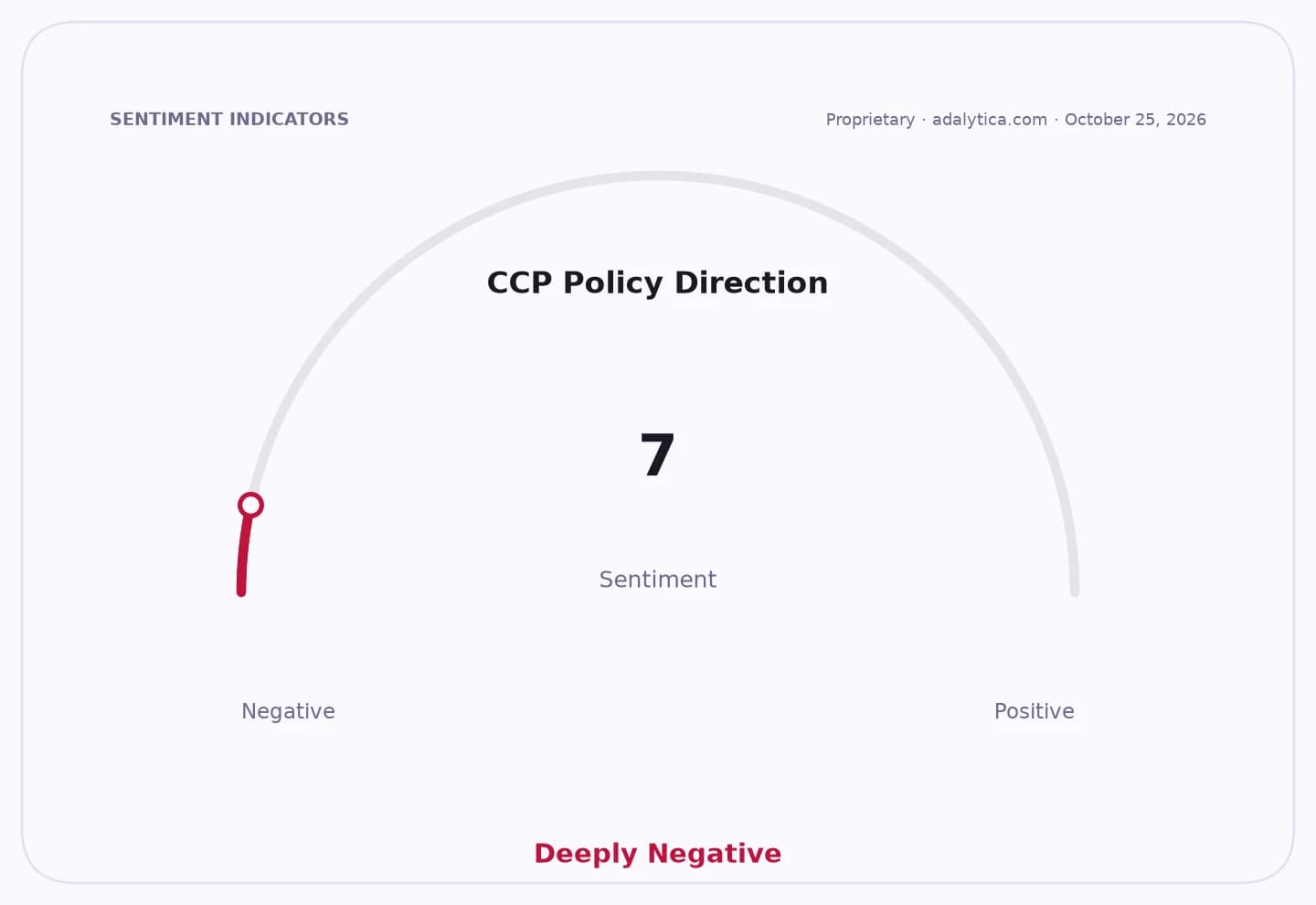
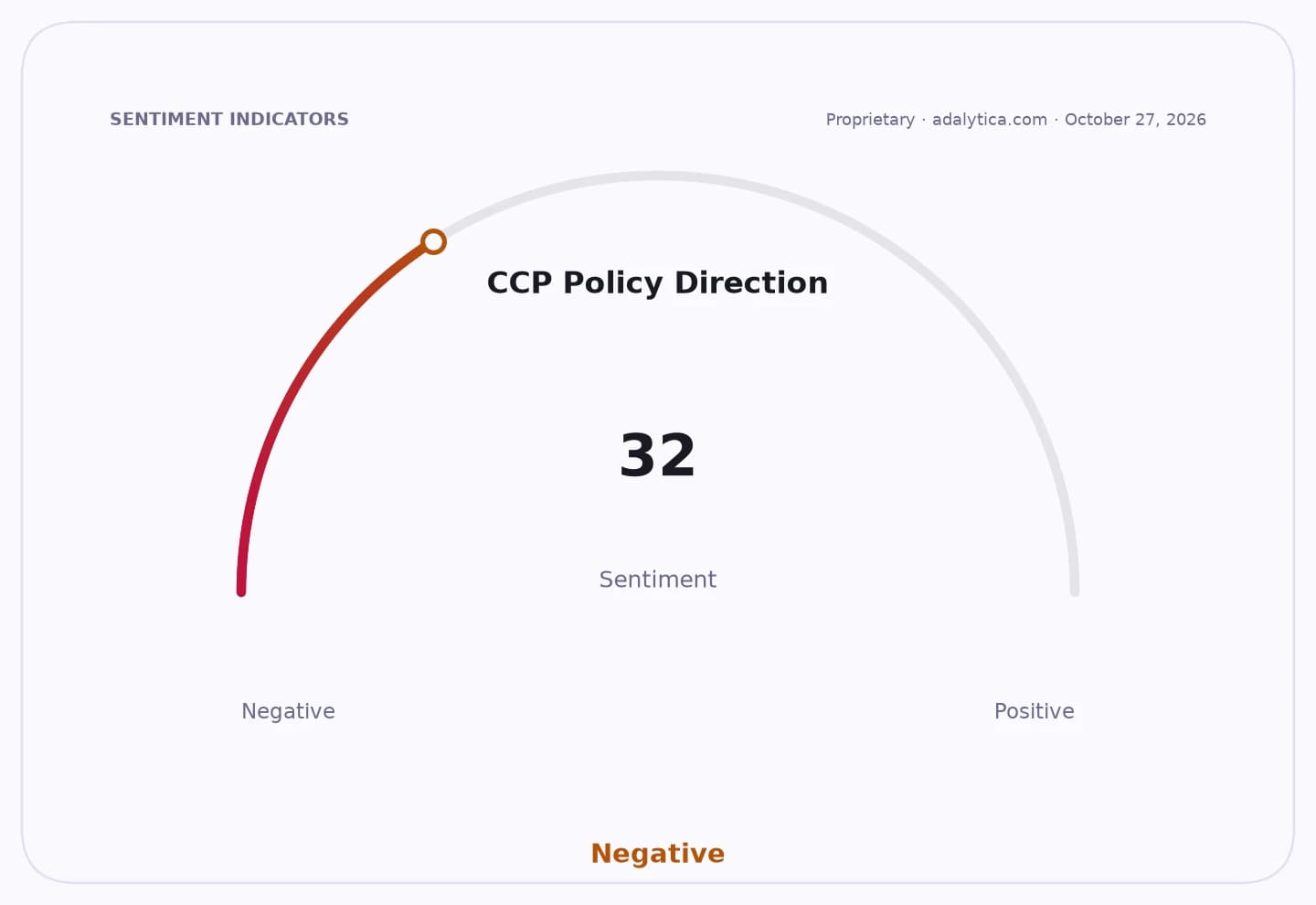
CCP Policy Direction
The five-year digital development plan, released by China’s cyberspace authorities, also calls for a timely commercial launch of 6G and a faster rollout of “smart internet” services. That matters because China is not just trying to catch up in connectivity. It is building the plumbing for a more automated economy, where networks, software tools and data systems are expected to work together at national scale. In other words, this is an industrial policy play with long time horizons, not a short-term policy headline.
Sentiment Indicators
The economic logic is straightforward. China wants digital technologies to play a larger role in modernization by 2030, while internet penetration rises to 85% from 80.1% in 2025 and 5G base stations increase to 50 per 10,000 people from 34. The Ministry of Industry and Information Technology projects information and communications industry revenue of 4.1 trillion yuan by 2030, underscoring how much revenue Beijing expects from the sector if the rollout gains traction. When a government this size commits to infrastructure, the spending can ripple through equipment makers, cloud providers, software developers and telecom operators for years.
The plan’s emphasis on deeper integration of AI with operating systems and developer tools is especially important. Blockchain is often discussed in crypto terms, but China’s version of the story is more about trusted infrastructure, data management and programmable networks. Pair that with stronger research in computational mathematics, communication networks and data science, and you get a policy blueprint aimed at reducing dependence on foreign technology while boosting domestic champions. Beijing also wants to widen telecom and internet access in an orderly way, which suggests more regulation alongside more opportunity.
For investors, the opportunity set is broad, but so are the risks. China’s push for stronger data security and personal information protection could benefit compliant domestic platforms while adding costs for firms that rely on loose data practices. Any opening of telecom and internet sectors will likely be tightly managed, which limits the chance of a free-for-all boom. Still, state support can be powerful when it is sustained, and China has a long history of turning national priorities into multi-year capex cycles.
That is why long-term investors should read this as a theme, not a trade. The real winners are likely to be companies that sell network hardware, enterprise software, cloud infrastructure, cybersecurity and AI tooling into China’s digital buildout. The likely losers are firms that depend on weaker regulation, fragmented standards or a slower rollout of next-generation networks. If Beijing follows through, the biggest payoff may not come from blockchain alone, but from the broader digitization of one of the world’s largest economies. Worth watching for investors with a multiyear horizon.
| Entity | Gains | Losses |
|---|---|---|
| Chinese telecom and network vendors | ▲More state-backed spending | ▼Slower if policy slips |
| AI and software developers | ▲Deeper platform integration | ▼Higher compliance costs |
| Cybersecurity firms | ▲More demand for protection | ▼None material |
| Foreign tech rivals | ▲Limited direct gains | ▼More domestic competition |