China is using next month’s COP31 climate summit in Turkey to try to turn its clean-energy dominance into diplomatic leverage against US and European tariffs, raising the prospect that trade policy will become a bigger obstacle to global decarbonisation.
China Uses COP31 to Press Tariff Critique
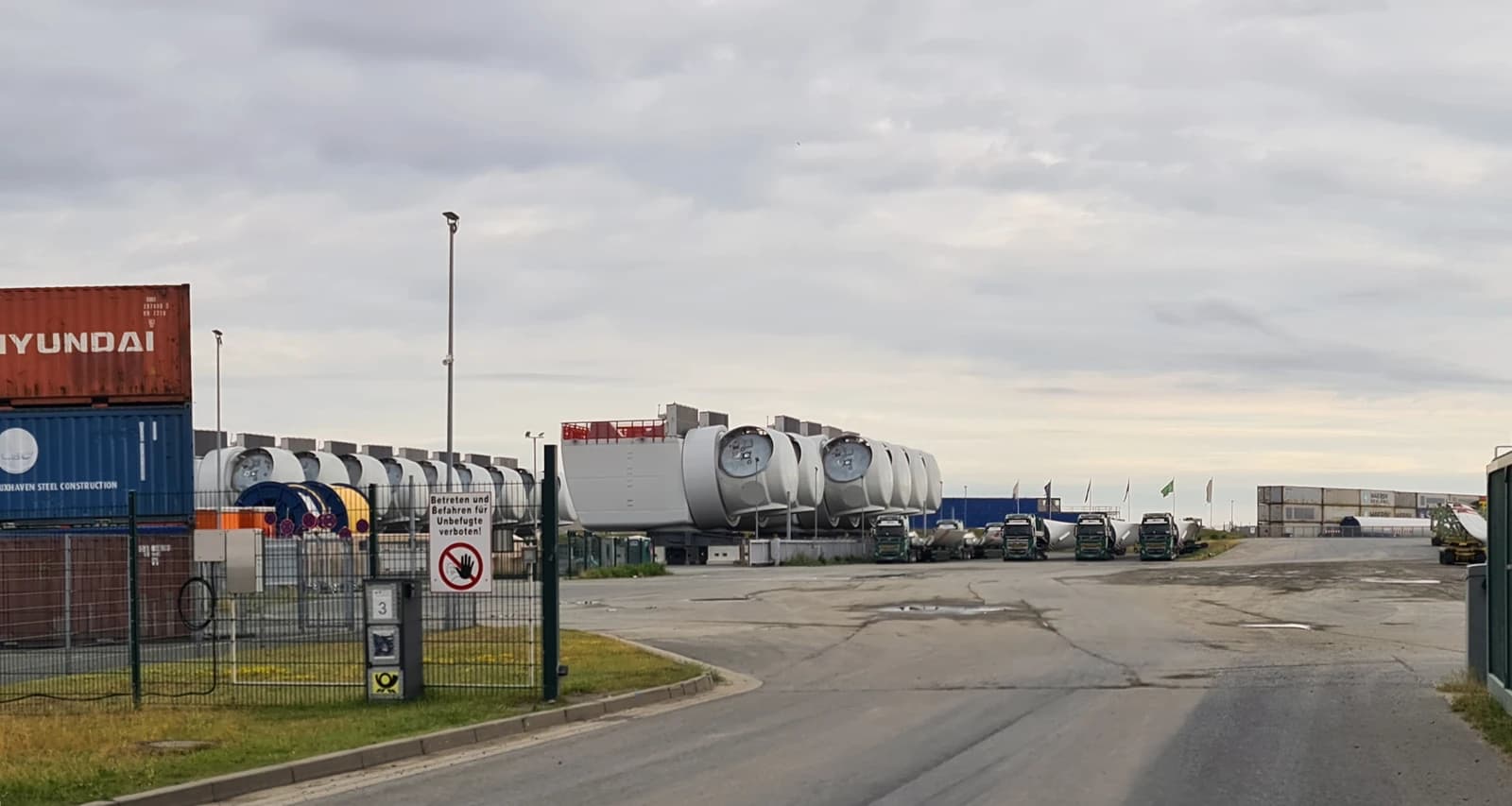
Beijing’s message matters because it links two forces that are now shaping the climate economy: governments’ need for cheap solar panels, batteries and electric vehicles, and their growing fear that Chinese manufacturing overcapacity is hollowing out domestic industry. China is the world’s largest producer of the equipment needed for the energy transition, yet the US has imposed steep tariffs on Chinese solar products and electric cars, while the European Union has also tightened barriers on autos, solar components and a Chinese wind company under investigation for unfair trade.
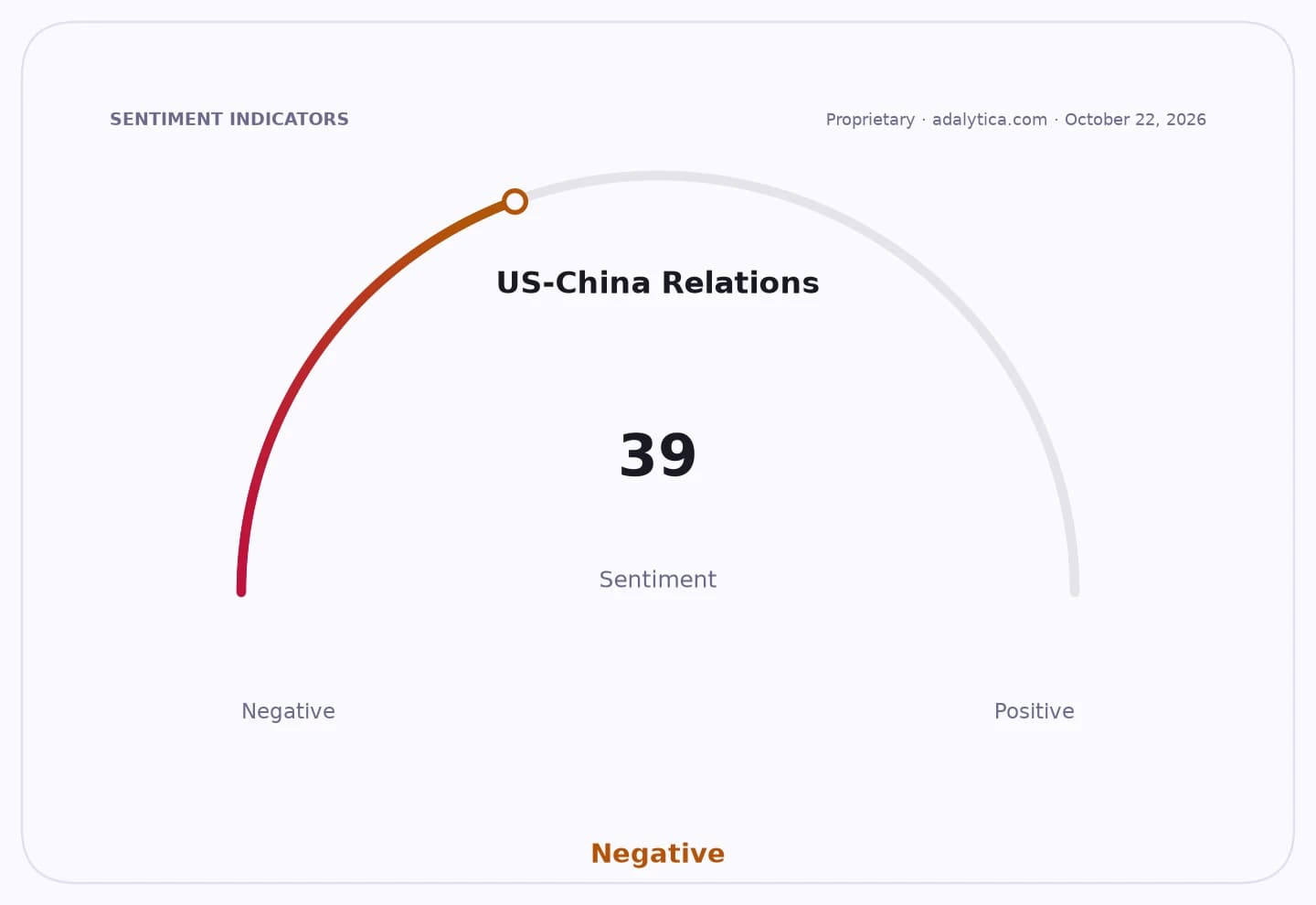
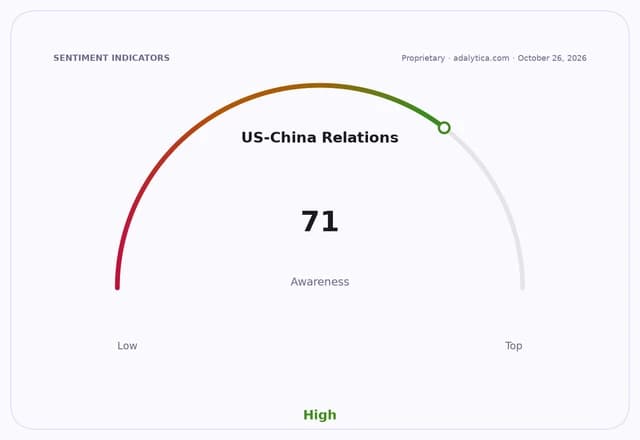
Sentiment IndicatorsⓘProprietary · adalytica.com · October 26, 2026
This is a snapshot — live sentiment, awareness and momentum for 130+ markets update continuously in the dashboard.Open AlphaPulse
At a press briefing, vice environment minister Li Gao said COP31 should address “unilateralism and protectionism” alongside climate finance for developing countries, framing tariff disputes as a threat to “global collective efforts.” That is a deliberate attempt to broaden the climate agenda beyond emissions targets and into industrial policy, where Beijing can argue that trade restrictions slow the rollout of low-cost green technology in emerging markets.
For investors, the stance underscores that policy risk around clean-tech supply chains is unlikely to fade even as the sector remains central to the energy transition. Chinese exporters want access to developed markets and more legitimacy for their manufacturers abroad; US and European producers want protection from cheaper imports. The conflict creates a two-sided investment case: tariffs may support local manufacturing and some non-Chinese peers, but they also raise costs for solar developers, automakers and utilities that depend on lower-priced equipment.
The market backdrop shows how sensitive clean-tech shares remain to trade headlines. The iShares Global Clean Energy ETF, which tracks the sector, has fallen to about $16.02 from $18.98 in late January, while the Invesco Solar ETF has dropped to roughly $41.07 from $58.10 over the same period. Both are trading below their 50-day and 200-day moving averages, a sign that the sector has lost momentum even as the policy debate intensifies. The weakness suggests investors are still discounting tariff pressure, margin compression and slower demand growth for internationally exposed clean-tech names.
China also wants COP31 to advance a roadmap for the $300 billion-a-year climate-finance pledge agreed in 2024, reinforcing the view that Beijing will pair trade complaints with demands for richer-country funding commitments. Turkey, which will host the summit in Antalya, has pushed for a broader electrification agreement, but China stopped short of explicitly backing it, saying only that the presidency should seek the “greatest common denominator.”
The likely outcome is not a dramatic reversal of trade policy, but a more openly politicised climate forum. If China succeeds in keeping tariffs on the agenda, COP31 could become another venue where the green transition is argued not just in environmental terms, but as a contest over industrial power, market access and who captures the value of the energy shift.
| Entity | Gains | Losses |
|---|---|---|
| Chinese cleantech exporters | ▲Stronger diplomatic cover | ▼Tariff pressure in US/EU |
| US and EU manufacturers | ▲Protection from imports | ▼Higher equipment costs |
| Solar developers and utilities | ▲Potentially cheaper tech if trade barriers ease | ▼Delayed rollout and thinner margins |
| Emerging-market climate agenda | ▲More focus on finance and access | ▼Risk of trade disputes overshadowing cooperation |