China’s unusually fast move to put its DF-61 intercontinental ballistic missile into regular training is another sign that Beijing is widening and hardening its nuclear deterrent faster than Washington expected.
China DF-61 Training Boosts Defense Demand
Geopolitical Risk
That matters because survivable, road-mobile ICBMs complicate any U.S. calculation about a first strike, weaken the logic of coercion, and raise the strategic premium on missile defense, early warning and counterforce systems. For investors, it is a reminder that the defense cycle is not a short-term trade but a multi-year capex supercycle driven by great-power competition, with the biggest beneficiaries likely to be the companies that build interceptors, sensors, command-and-control networks and hardened launch infrastructure.
Sentiment Indicators
Chinese state broadcaster CCTV said the DF-61 went from its public debut at Beijing’s 2025 military parade to regular training in little more than a year, a pace far faster than older Chinese ICBMs. A former PLA Rocket Force researcher said the transition was “much faster” than the traditional cycle for strategic missiles, while outside experts cautioned the weapon may simply be an upgraded DF-41 rather than a wholly new design. Even so, the timing is notable: Beijing has not disclosed the missile’s range or warhead loadout, and Western estimates vary from about 12,000 km to as much as 18,000 km, with some assessments suggesting it could carry multiple warheads.
The core market implication is not the DF-61 itself, but what it says about the direction of policy and procurement. China is signaling that its land-based nuclear force is becoming more mobile, more survivable and more quickly integrated into operational units. That reduces the credibility of any assumption that Chinese strategic forces can be neutralized on the ground, and it raises the odds that the U.S. and its allies will keep pouring money into missile defense, space-based sensing, secure communications and long-range strike.
Geopolitical Risk vs LMTadalytica.com
Explore this data interactively — full history, time series and cross-market comparisons.
That is where the investment opportunity is hiding in plain sight. Names like Lockheed Martin, Northrop Grumman and RTX sit at the center of the missile-defense stack, and the latest U.S. and allied orders for Patriot, THAAD, SM-3 and related systems show the spending cycle is already broadening. Lockheed’s 10-Q pointed to multi-year contracts to accelerate PAC-3 MSE and THAAD production; RTX highlighted large orders tied to Patriot, SM-3 and allied air defense demand; and Northrop has framed the current environment as one of heightened tensions and nuclear risk. The market underestimates how durable that demand is when China is making its strategic forces harder to deter and harder to target.
There is also a second-order effect investors should not miss: the more survivable China’s nuclear arsenal becomes, the more Washington will be pushed toward layered defenses and distributed command systems rather than a single silver-bullet solution. That supports the broader defense ecosystem, from missile seekers and propulsion to radar, C2, telemetry and space assets. In other words, the winners are not just the primes, but also the suppliers feeding the modern missile shield.
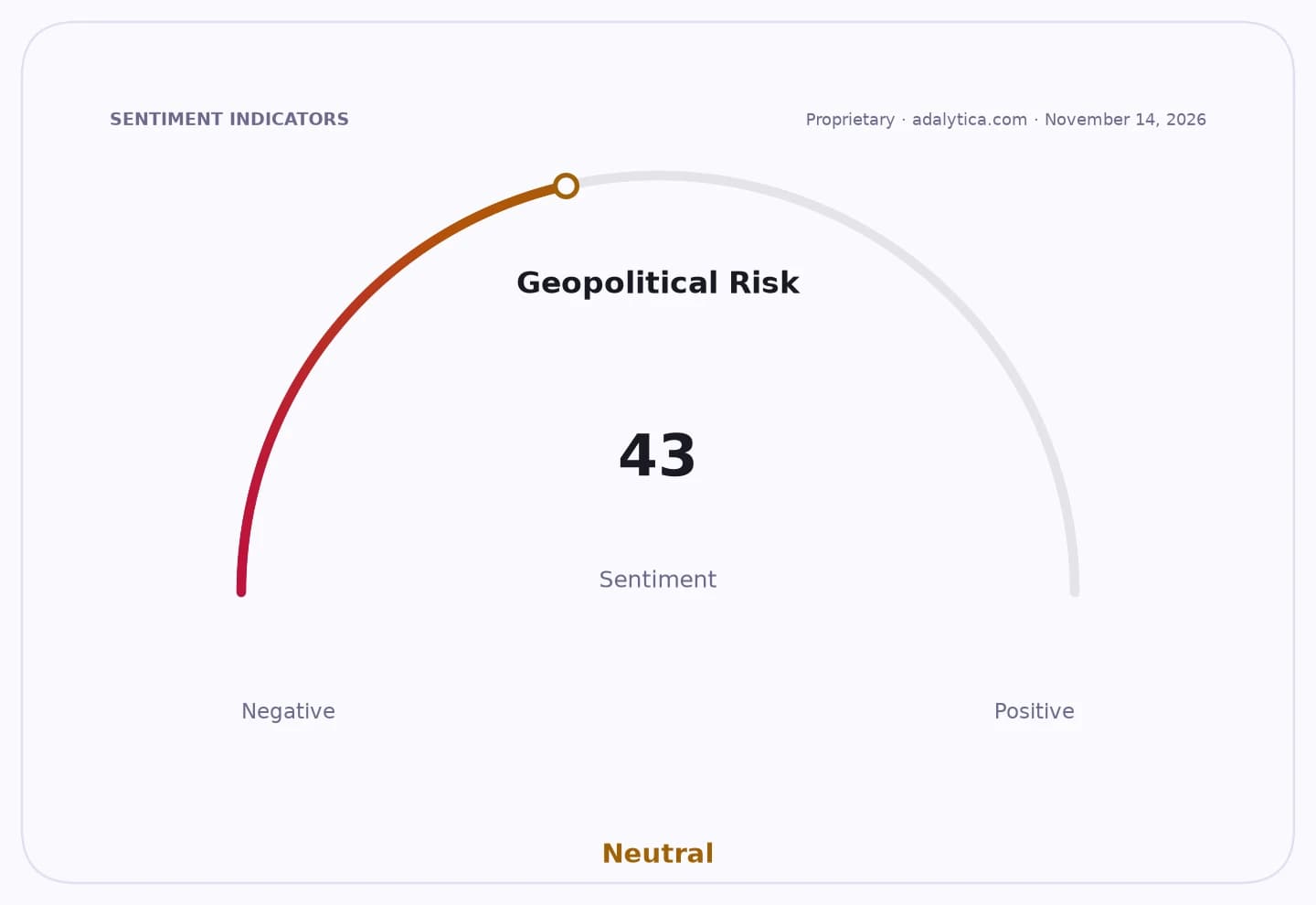
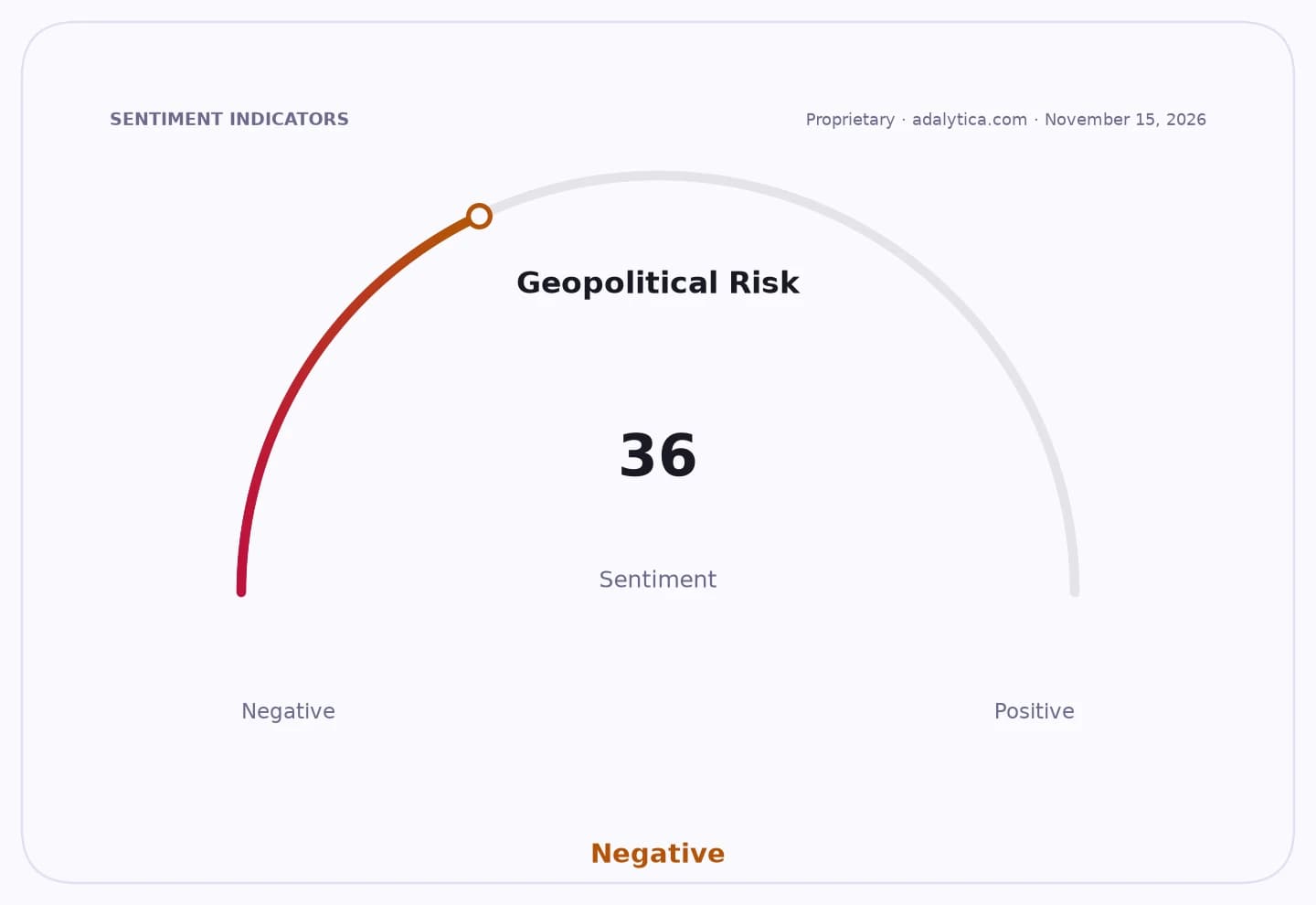
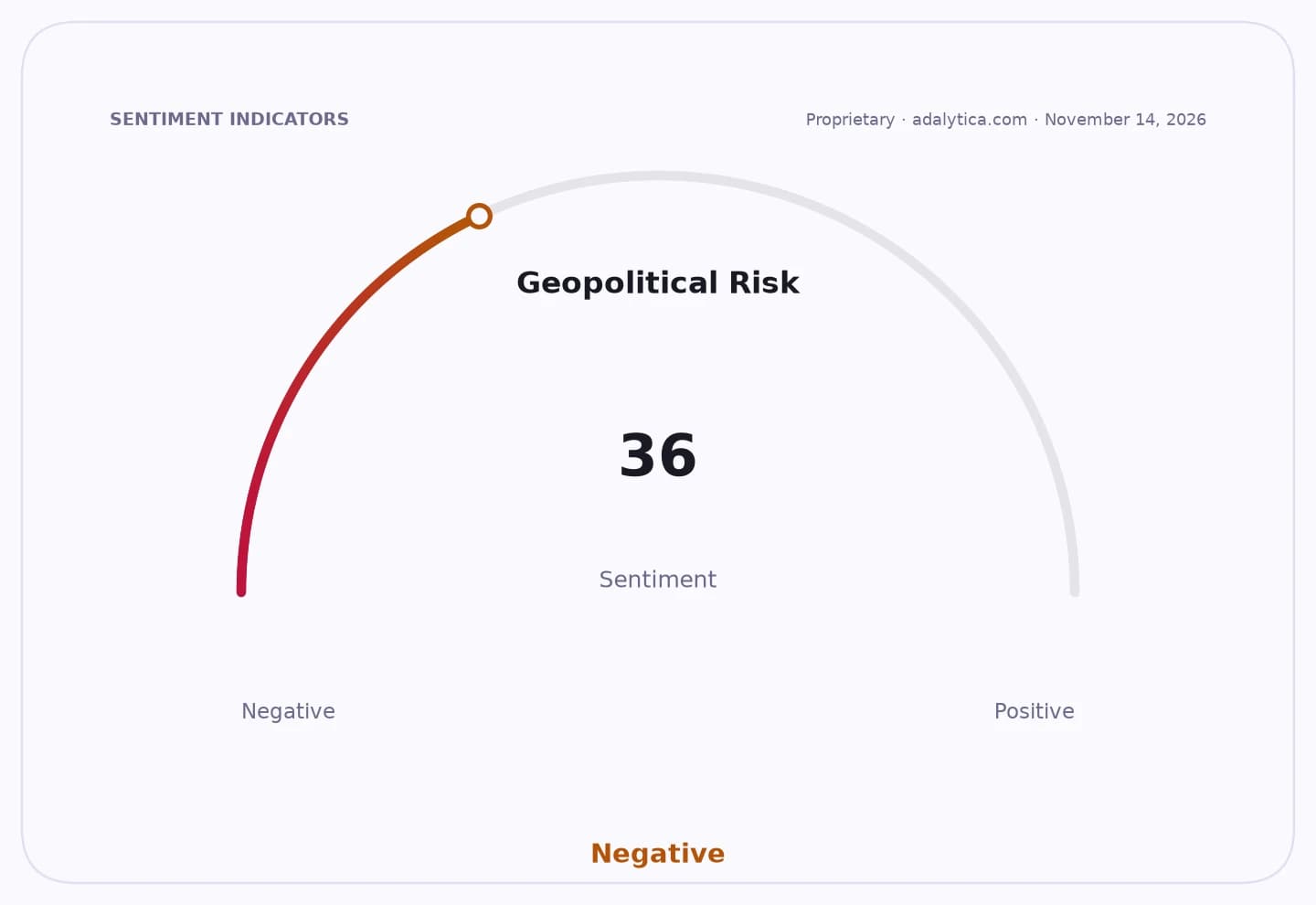
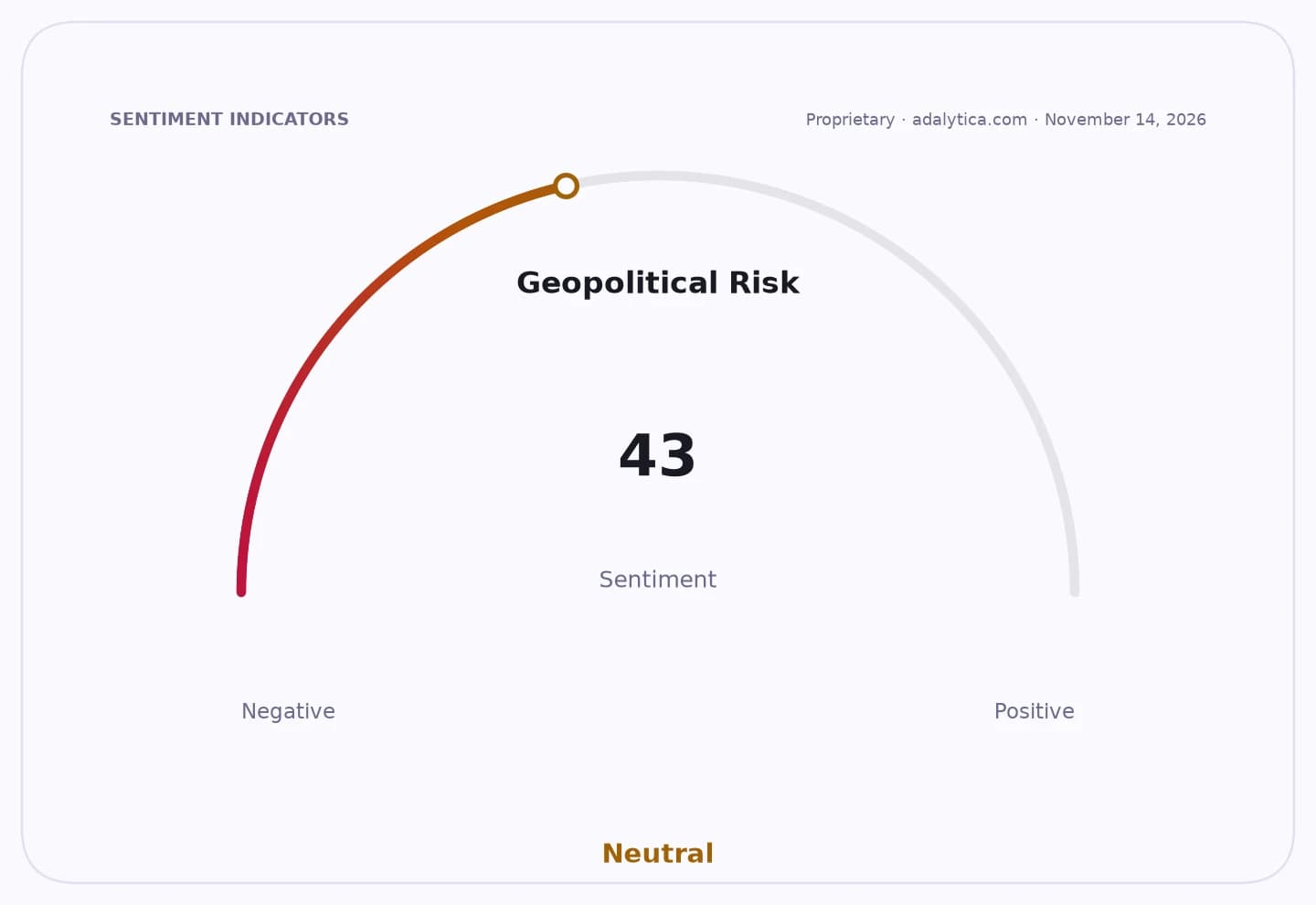
The geopolitical backdrop only strengthens the thesis. Tensions in the Western Pacific remain elevated, China and Japan are already in a sharper diplomatic standoff, and Beijing’s military buildup around Taiwan keeps nuclear signaling tightly linked to conventional risk. The Adalytica Global Stability Sentiment gauge has fallen to 36, with awareness at “Extreme Fear,” underscoring how quickly markets are absorbing geopolitical stress even while broader equity sentiment remains complacent.
The key takeaway: DF-61’s rapid training status is not a reason to panic, but it is a reason to stay overweight defense. The market is still pricing defense as if this is a temporary flare-up; I believe it is the start of a longer procurement wave. For investors, the asymmetric trade remains the same — own the companies that make it harder to attack, harder to detect and harder to defeat.
| Entity | Gains | Losses |
|---|---|---|
| Lockheed Martin | ▲Missile-defense demand | ▼Budget pressure risks |
| Northrop Grumman | ▲Nuclear deterrence spending | ▼Any arms-control easing |
| RTX | ▲Patriot/SM-3 orders | ▼Procurement delays |
| China’s PLA Rocket Force | ▲Deterrence credibility | ▼Strategic transparency |