China’s efforts to cool cities more efficiently are moving from pilot projects to infrastructure strategy, with abandoned mines, rivers and reclaimed wastewater being repurposed to cut power use, costs and emissions as rising temperatures drive cooling demand higher.
China district cooling expands with mine water and rivers
That matters because cooling is becoming a bigger economic load on households, office landlords and industrial parks just as China pushes to peak carbon emissions in the 2026-2030 period. The shift away from millions of standalone air conditioners toward district systems can lower electricity consumption at the margin, ease summer grid stress and reduce refrigerant leakage — a meaningful issue in a country that is trying to decarbonize without slowing urban activity.
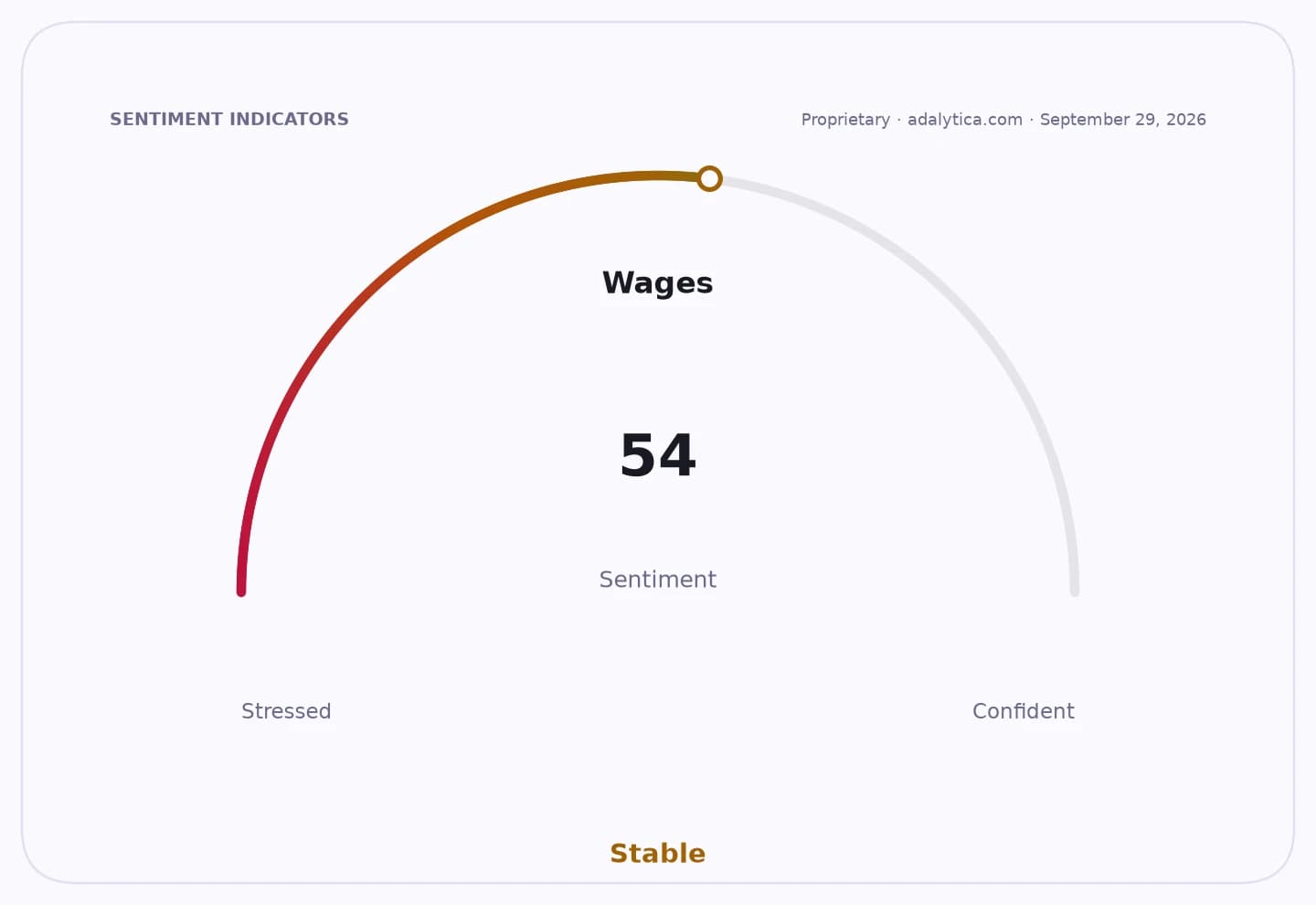
Sentiment IndicatorsⓘProprietary · adalytica.com · October 3, 2026
This is a snapshot — live sentiment, awareness and momentum for 130+ markets update continuously in the dashboard.Open AlphaPulse
In Xuzhou, in east China’s Jiangsu province, residents in one community can keep air conditioners off even when outdoor temperatures top 35C, relying instead on 19C mine water pumped through existing heating pipes to provide radiant cooling indoors at about 25C. The arrangement is a vivid example of how China is trying to turn stranded assets into climate infrastructure. Rather than building a conventional cooling plant that would consume more power, local partners tapped water left in abandoned mines and used existing pipe networks, limiting both capital spending and operating costs.
The broader policy backdrop is important. China’s action plan for reaching peak carbon emissions during the 15th Five-Year Plan period calls for accelerating the green and low-carbon transformation of heating and cooling systems. That gives district cooling a stronger policy tailwind, especially in dense urban areas where electricity demand spikes in summer and where air conditioning is a major contributor to peak load.
The economics of district cooling, however, are highly site-specific, which is why the model is spreading unevenly. Unlike district heating, which can serve customers over more than 20 kilometers, district cooling typically works within about 1.5 kilometers before losses rise sharply. That makes it best suited to compact commercial districts, industrial parks and dense mixed-use developments where demand is steady and large enough to justify the network. In Wuhan and Nanjing, projects using water from the Yangtze River have cut emissions and improved comfort. In Hangzhou, reclaimed wastewater cools about 300,000 square meters of buildings in an industrial park.
The largest example is in Qianhai, Shenzhen, where six cooling plants are already operating in what is expected to become the world’s biggest district cooling system. Once fully operational, the project is expected to cut refrigerant use by 13.74 tons and serve more than 5.78 million square meters under contract. That scale matters to investors and operators because district cooling tends to reward high utilization and dense load profiles: the bigger and steadier the customer base, the better the economics. The downside is equally clear — idle equipment can become a stranded cost if demand forecasts prove too optimistic.
For investors, the story reaches beyond utilities and infrastructure developers. It points to potential demand for equipment suppliers, pipe networks, pumps, heat-exchange systems, control software and energy-efficient building products. It also reinforces the market for Chinese HVAC exports, particularly in Europe, where the article says air-conditioner exports to the EU rose 43.2% year on year in the first half, helped by portable split units designed for older buildings and difficult installations. Chinese manufacturers that can supply quieter, more efficient systems — or integrate with district networks — stand to benefit as cities look for lower-carbon ways to manage heat.
The macro significance is that China is adapting to hotter summers without treating cooling as a purely consumer appliance market. It is reframing cooling as a systems business tied to land use, urban planning and energy policy. That favors cities with dense demand and ready cooling sources, but leaves many other places dependent on conventional air conditioning and the power grid. The next phase will hinge on whether local governments can pick the right sites, avoid overbuilding and prove that low-carbon cooling can scale without sacrificing economics.
| Entity | Gains | Losses |
|---|---|---|
| Chinese cities with dense demand | ▲Lower emissions and power use | ▼Less room for inefficient retrofits |
| District cooling developers | ▲Policy support and larger projects | ▼Risk of stranded assets |
| HVAC and equipment makers | ▲Demand for efficient systems | ▼Standalone AC-only suppliers |
| Power grids and carbon goals | ▲Lower summer peak stress | ▼Conventional cooling load growth |