China’s unveiling of its first domestically built boring and blasting machine for complex tunnels is more than a construction headline — it is another step in Beijing’s push to localize advanced industrial machinery in sectors tied to infrastructure, energy and national resilience.
China builds first domestic tunneling machine
That matters because tunnels are not a niche market. They are a strategic capex category that runs through rail, hydropower, metro systems, mining and defense logistics, and the ability to build them with homegrown equipment reduces China’s dependence on imported high-spec machines at a time when geopolitical risk is fragmenting supply chains. For investors, the message is clear: the global market for heavy construction and tunneling equipment is still large, but the profit pool is becoming more contested as Chinese manufacturers climb the technology curve.
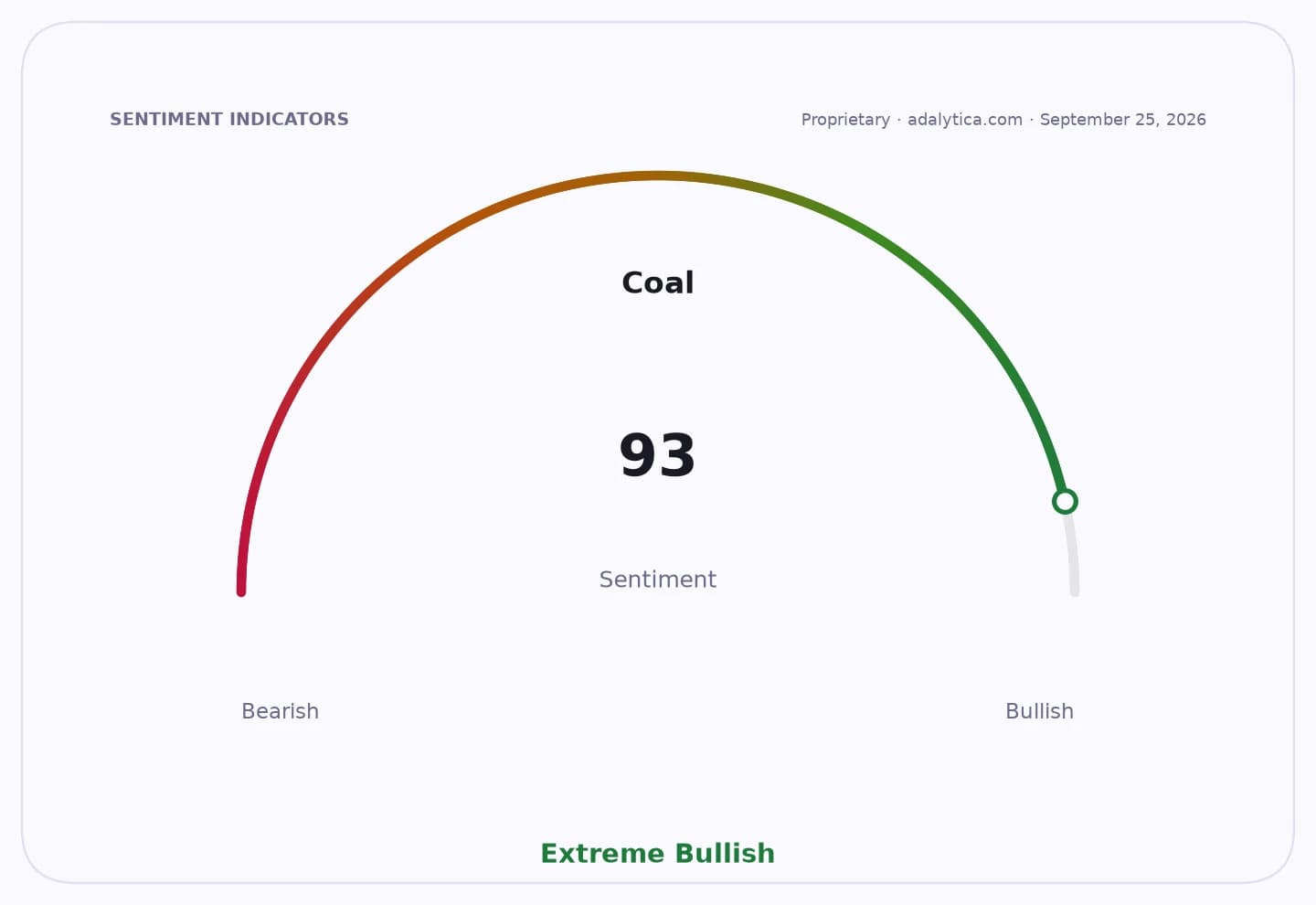
Sentiment IndicatorsⓘProprietary · adalytica.com · August 3, 2026
This is a snapshot — live sentiment, awareness and momentum for 130+ markets update continuously in the dashboard.Open AlphaPulse
The development also lands in a market that has been rewarding infrastructure-linked industrial names. Caterpillar, Otis and Emcor have all shown strong share-price momentum over the past year, reflecting investor enthusiasm for AI data centers, grid buildout and critical infrastructure spending. But the same capex cycle that is lifting Western equipment makers is also encouraging China to develop its own tools, not only to save costs but to build industrial sovereignty in areas where imported machinery can become a bottleneck.
That is the real investable narrative here: the world’s largest infrastructure builder is working to replace foreign machinery with domestic alternatives in complex underground engineering. If that effort scales, it could pressure some imported equipment categories over time while benefiting Chinese industrial champions, local contractors and the broader ecosystem tied to tunnel construction, blasting systems and maintenance services. It also reinforces a familiar pattern across Chinese heavy industry — technology transfer followed by rapid localization.
The market backdrop suggests investors are underpricing how fast that shift can happen. Adalytica’s US–China Relations Sentiment gauge is in “Extreme Fear,” underscoring how fragile the policy and trade environment remains. In that setting, Beijing has every incentive to accelerate self-reliance in sectors that support transport, energy security and emergency infrastructure. That is especially relevant as governments worldwide lean harder into resilient supply chains, underground transit, utility hardening and strategic civil works.
For global investors, the opportunity is less about chasing a single machine and more about recognizing the second-order winners and losers. U.S. and European equipment makers may still benefit from the broad capex cycle, but they face a longer-term risk that China’s industrial base keeps moving up the value chain. The bigger asymmetry may lie in picks-and-shovels adjacent to China’s domestic buildout — components, controls, materials, sensors, explosives and maintenance services — where localization can still leave room for specialized suppliers.
The takeaway: China’s first homegrown tunneling machine is a sign that infrastructure technology is becoming another front in the industrial competition between China and the West. Investors should look beyond the headline machine and position for the broader shift toward domestic manufacturing, underground infrastructure and strategic capex winners on both sides of the Pacific.
| Entity | Gains | Losses |
|---|---|---|
| Chinese equipment makers | ▲Localization gains | ▼Import dependence |
| Chinese contractors | ▲Lower procurement risk | ▼Foreign supplier leverage |
| Global incumbents like CAT | ▲Near-term capex tailwind | ▼Long-term market share pressure |
| Foreign tunneling suppliers | ▲Current demand | ▼China’s self-reliance push |