China’s economy is still growing fast enough to hit this year’s lowered target, but the composition of that growth is becoming the real story: exports are carrying the expansion while weak household demand, a prolonged property slump and a shrinking workforce keep domestic momentum fragile.
China economy shifts toward exports and manufacturing

That matters because China’s ability to sustain a 4.5% to 5% growth rate now depends less on the old engines of property and credit and more on external demand, industrial upgrading and state-backed investment. Beijing cut its 2026 growth target to 4.5% to 5% in March, the slowest official goal since 1991 and a long way from the double-digit pace that once seemed to define the world’s second-largest economy. The downgrade is not just symbolic. It reflects a structural shift in how China grows, and how vulnerable that growth has become to trade barriers, deflationary pressure and demographics.
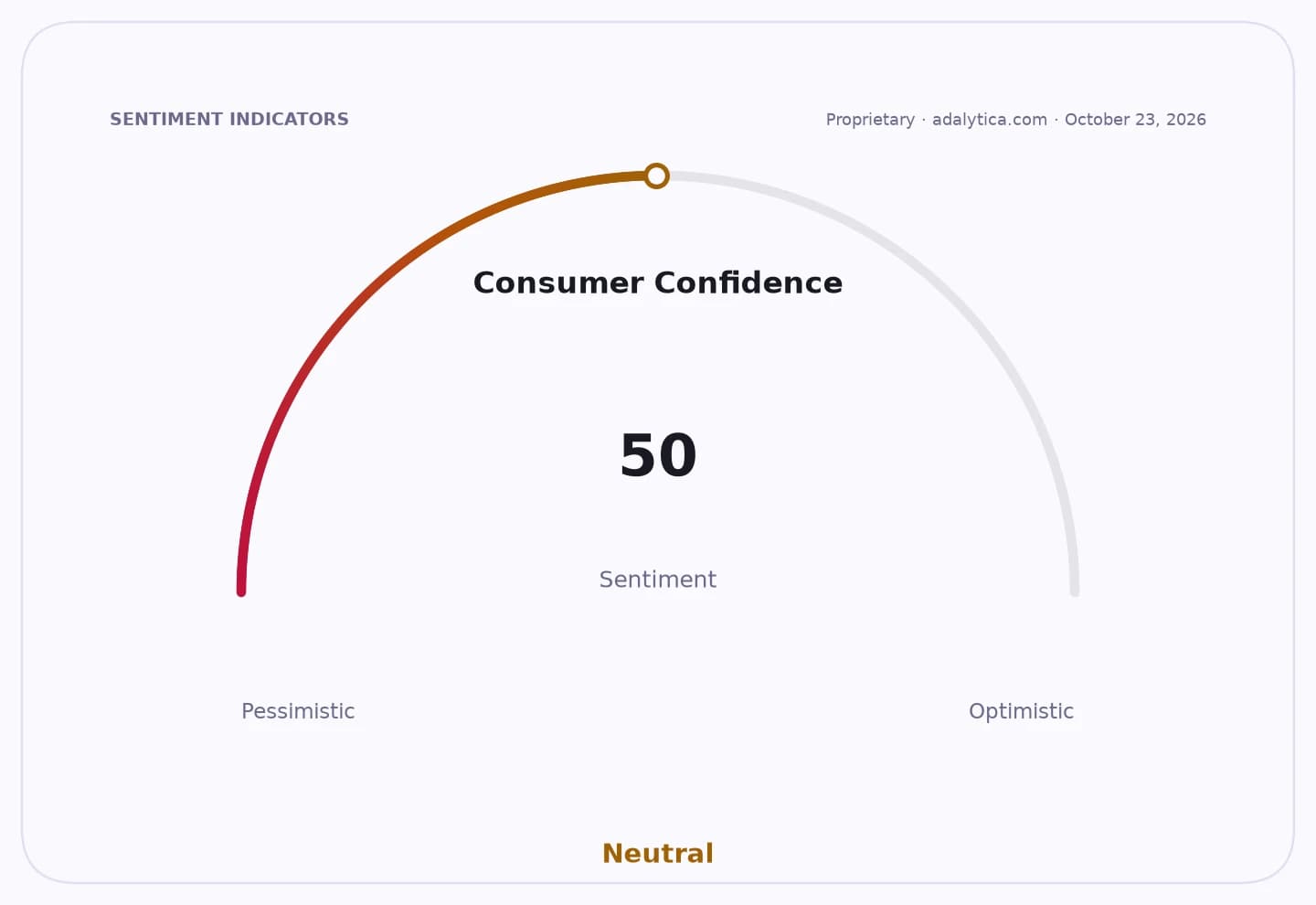
Sentiment IndicatorsⓘProprietary · adalytica.com · October 28, 2026
This is a snapshot — live sentiment, awareness and momentum for 130+ markets update continuously in the dashboard.Open AlphaPulse

Exports are the clear counterweight. Chinese shipments rose nearly 52% from 2018 to 2025, and were up 21% in the first nine months of this year compared with the same period in 2025, helped by sales to Europe and emerging markets even after US tariffs on Chinese goods at one point hit 145% early in 2025. The country’s trade surplus reached a record $1.2 trillion in 2025 and is still widening, underscoring how much of the economy’s current resilience is being generated abroad. Production of 3D printers, lithium-ion batteries and industrial robots has also surged, reinforcing Beijing’s push to move further up the manufacturing chain.
For investors, that makes China a more export-led, more policy-managed story than before. Companies tied to electric vehicles, solar equipment, industrial machinery, batteries and automation are benefiting from the country’s manufacturing shift. But the same model also raises the risk of more trade friction, especially as the EU considers limits on Chinese plug-in hybrids and other markets look for ways to curb import surges. The more China leans on exports to offset weak domestic demand, the greater the chance that foreign governments respond with tariffs, quotas or anti-dumping measures.

The drag from within China remains substantial. Property prices are estimated to be about 30% below their 2021 peak, eroding household wealth and discouraging new home purchases. Even after support measures including mortgage rate cuts, looser purchase rules and lower transaction taxes, the housing market has only stabilized briefly. Bloomberg Economics says property and related industries once accounted for about a quarter of GDP at their peak; by 2030 that share is expected to fall below 15% as Beijing shifts toward high-tech manufacturing and green industries. Those sectors may be strategically important, but they are less labor-intensive and do not produce the same broad-based lift to incomes and consumption.
That is the central economic problem. Weak housing wealth, cautious consumers and pressure from “involution,” or destructive price competition, are keeping prices soft and profits under strain. China has emerged from a period of outright deflation, but much of the recent price pickup has come from imported costs rather than a convincing rebound in domestic spending. Retail demand for big-ticket items such as cars and building materials has remained soft, and companies continue to face pressure to cut prices rather than raise wages.
Demographics add a longer-term layer of pressure. China recorded just 7.93 million births in 2025, the lowest since at least 1949, while the working-age population has shrunk to about 61% of total residents from more than 70% a decade ago. A smaller, older labor force means slower potential growth, weaker consumption and less room for the kind of broad-based expansion that once powered global demand for commodities, luxury goods and consumer brands.
The labor market is reinforcing that slowdown. Youth unemployment has risen as millions of graduates enter an economy still dominated by manufacturing rather than white-collar hiring. A mismatch between the jobs young workers want and the jobs available is curbing income growth and household confidence, making it harder for Beijing to engineer the consumer-led rebalancing it has long said it wants.
The bullish case is that China can keep outrunning its structural problems through manufacturing gains, automation and continued export market diversification. The bearish case is that those same strengths deepen dependence on trade at a moment when the rest of the world is increasingly resistant to China’s industrial surplus. For now, the charts point to an economy that is still expanding, but on a narrower and more contested base than before.
| Entity | Gains | Losses |
|---|---|---|
| Chinese exporters | ▲Higher sales, wider reach | ▼Tariff and quota risk |
| China’s industrial champions | ▲Share gains in EVs, batteries, robots | ▼Margin pressure from price wars |
| Households | ▲Some policy support | ▼Falling home wealth, weak confidence |
| Foreign competitors and importers | ▲Cheaper inputs in some sectors | ▼Loss of market share, trade friction |