China's blunt rejection of accusations that it meddled in a US election is less about the merits of the claim than about how quickly election rhetoric is spilling into already fragile US-China relations, with investors now forced to price a higher probability of policy escalation, trade retaliation and renewed scrutiny of cross-border technology ties.
China Election Rhetoric Weighs on Risk Sentiment

Beijing's description of the allegations as a "complete falsehood" comes as Washington and Beijing are already navigating a relationship defined by tariffs, export controls, sanctions risk and persistent distrust. When either side turns electoral politics into a China issue, the economic cost is not confined to headlines: it raises the odds of tougher screening on Chinese capital, tighter limits on data and technology flows, and a more hostile backdrop for multinational companies reliant on both markets.
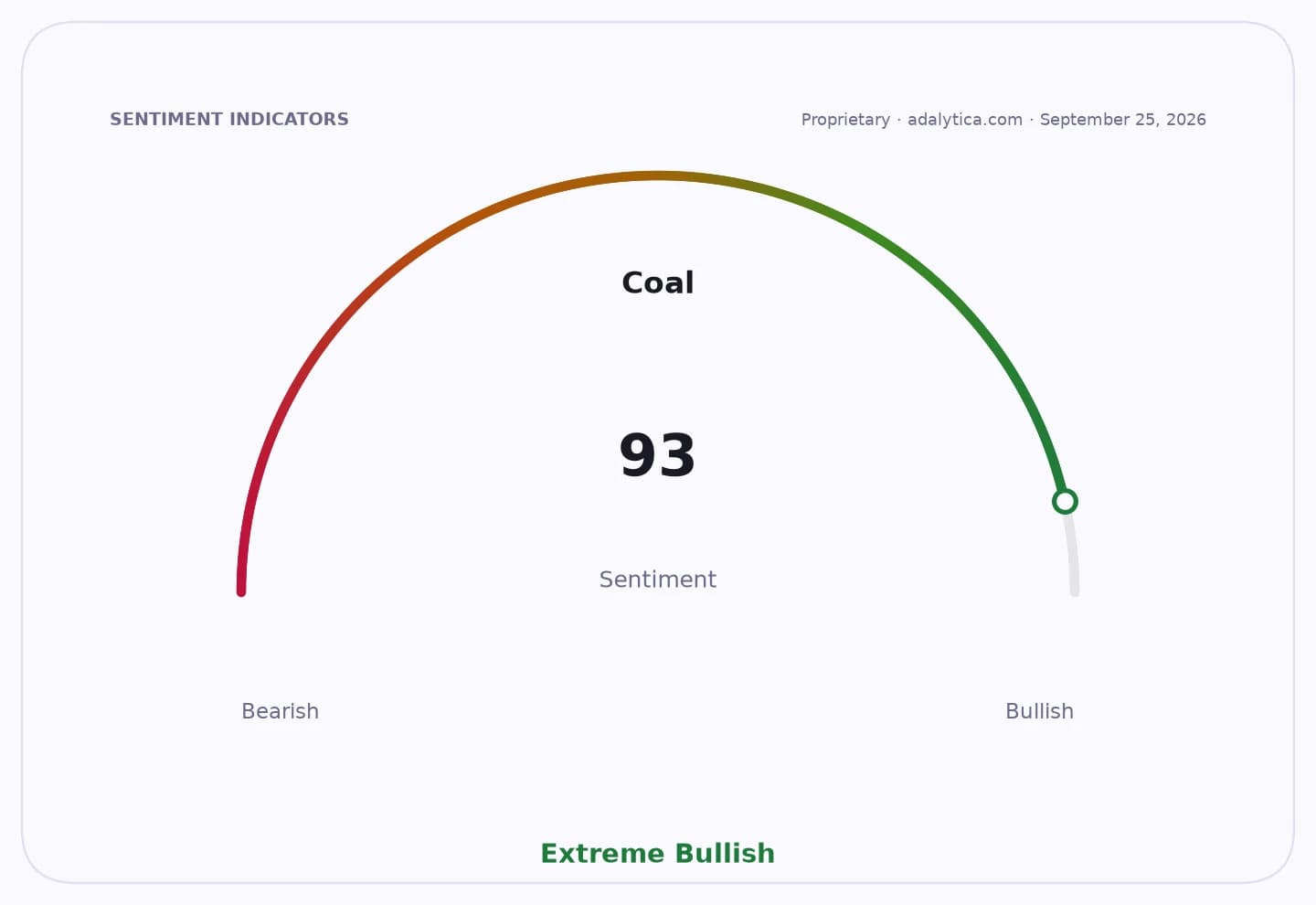
Sentiment IndicatorsⓘProprietary · adalytica.com · July 17, 2026
This is a snapshot — live sentiment, awareness and momentum for 130+ markets update continuously in the dashboard.Open AlphaPulse

That matters for investors because markets do not need proof of election interference to react; they need only a sharper probability of deterioration in bilateral ties. The Adalytica US-China Relations Sentiment gauge jumped to 100, or "Extreme Greed," in the latest snapshot, while the Global Stability Sentiment gauge collapsed to 4, in "Extreme Fear," indicating a sudden swing in perceived geopolitical risk. China CCP Policy Direction Sentiment remains in "Extreme Fear" at 15, suggesting policy visibility from Beijing is still limited even as the rhetoric intensifies.
The market action in China-linked assets reflects that tension, though not in a straight line. The iShares China Large-Cap ETF, FXI, has fallen to $33.99 from $40.87 on Sept. 17 and sits below its 50-day moving average of 34.50 and its 200-day average of 37.19, a technical backdrop that points to persistent selling pressure. The KraneShares CSI China Internet ETF, MCHI, has dropped to $52.75 from $64.58 over the same period, also below both its 50-day and 200-day averages, while the Direxion Daily FTSE China Bull 3X Shares, YINN, has been cut to $26.43 from $55.90, underscoring how aggressively traders have de-risked leveraged China exposure.

The technical picture is important because it shows investors are not merely watching for the next statement from Beijing or Washington; they are already reducing exposure to the broader China trade. FXI's RSI reading of 64.0 and MCHI's 64.0 suggest neither market is in distressed oversold territory, but both remain well below their longer-term trend lines, leaving room for further downside if rhetoric hardens into policy.
The economic stakes are broader than equity prices. A more confrontational campaign-season narrative can complicate efforts to stabilize trade, delay any easing in tariff regimes and keep a lid on sentiment toward Chinese consumer, internet and semiconductor names. For US companies, the risk is reciprocal: China can answer with regulatory pressure, procurement restrictions or informal barriers that hit American exporters and multinationals already facing slower demand in the world’s second-largest economy.
The bull case for investors is that this is still primarily a political volley, not a new policy regime. Trump's allegations lack evidence, and Beijing's denial was immediate and forceful, which could keep the issue contained if neither side chooses to escalate beyond words. Under that scenario, the market impact may remain concentrated in sentiment-sensitive ETFs and leverage products rather than spreading into broader risk assets.
The bear case is that campaign-season accusations become a durable template for confrontation, especially if they feed into stricter US technology and capital rules or if Beijing decides to respond symbolically. In that environment, China-related equities would remain under pressure, the renminbi could face fresh strain, and investors would likely continue rotating toward less geopolitically exposed regions and sectors.
For now, the key signal is not that a single accusation has changed the fundamentals, but that it has reinforced a market already trading with very little margin for error. If the rhetoric deepens, the next move will likely be measured not in statements from either capital but in whether investors push China proxies through support levels on the charts and whether policymakers convert political noise into tangible economic restrictions.
| Entity | Gains | Losses |
|---|---|---|
| US political hardliners | ▲Election-year attention | ▼Policy credibility |
| China policymakers | ▲Chance to deny allegations | ▼Trust with Washington |
| China-linked ETFs | ▲Tactical trading volume | ▼Trend-following investors |
| Multinational firms | ▲None | ▼Cross-border planning visibility |