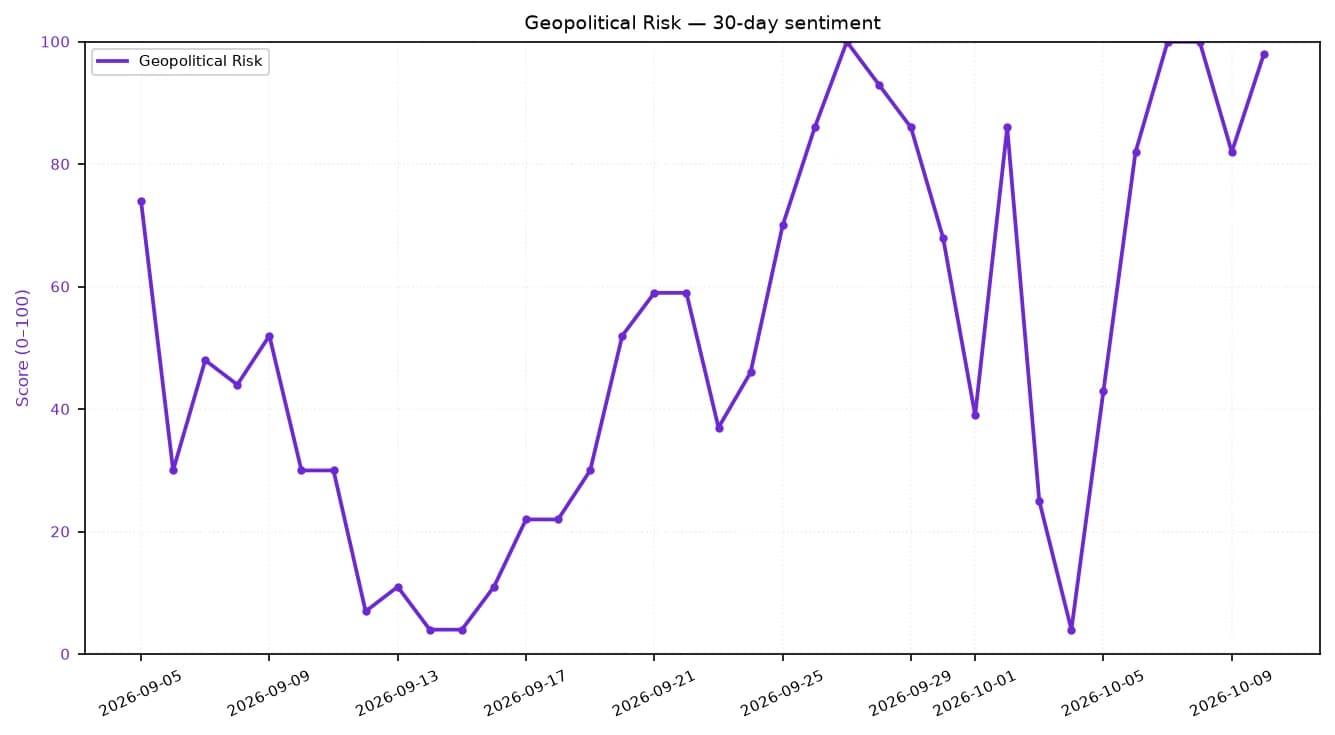
China’s announcement that it has reached an agreement with the European Union on hybrid-car trade is the clearest sign yet that both sides want to contain a wider confrontation that could hit automakers, battery suppliers and industrial supply chains.
China EU Hybrid-Car Trade Deal, Auto and Rare Earths
That matters because the hybrid segment has become the pressure valve in the China-Europe auto dispute. The EU’s 2024 tariffs on Chinese electric vehicles pushed Chinese manufacturers to lean harder into hybrids in Europe, keeping the trade friction alive even as policymakers tried to avoid a full-blown rupture. A deal framed by Beijing as WTO-compliant and involving company price commitments suggests Brussels and Beijing are trying to manage market access without escalating into a new round of punitive duties.
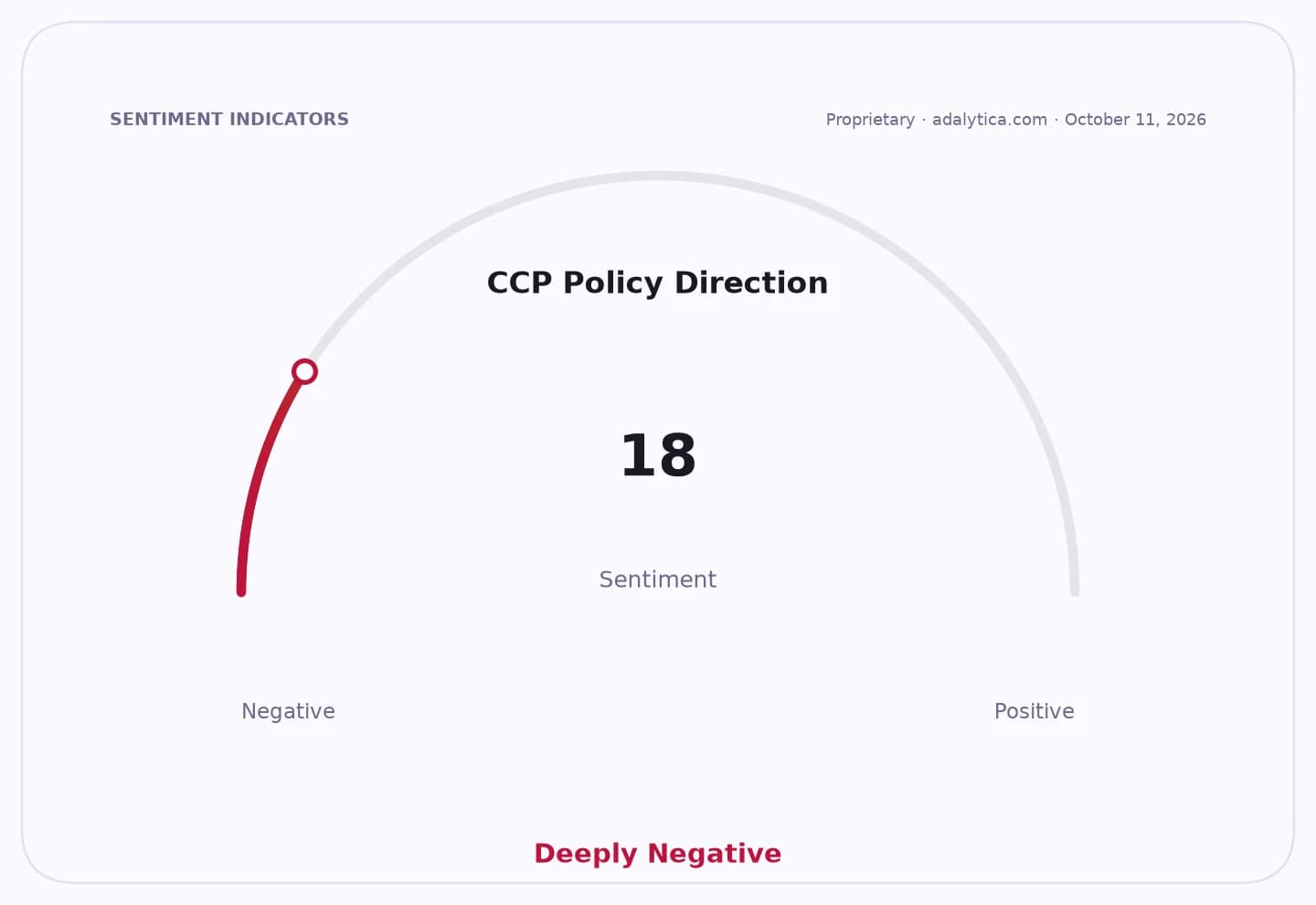
Sentiment IndicatorsⓘProprietary · adalytica.com · October 11, 2026
This is a snapshot — live sentiment, awareness and momentum for 130+ markets update continuously in the dashboard.Open AlphaPulse
For investors, the immediate read-through is mixed but important. Chinese EV and hybrid makers, led by BYD, gain a more predictable route into Europe if the agreement holds. European carmakers and suppliers may get less near-term disruption, but they still face the structural challenge of competing with lower-cost Chinese vehicles in a region where pricing remains under pressure. The bigger macro prize is that trade can keep moving, even if grudgingly, instead of becoming another channel for decoupling.
The timing is notable because it comes alongside China’s signal that it is willing to ease licensing for rare earths and permanent magnets to the EU. That is not a trivial side note: Europe’s auto, industrial and clean-energy sectors depend on Chinese inputs, and export controls have become one of Beijing’s most effective levers in trade negotiations. If those licenses become easier to obtain, the benefit could extend beyond autos into broader manufacturing and power equipment supply chains.
CCP Policy Direction vs BYDDFadalytica.com
Explore this data interactively — full history, time series and cross-market comparisons.Open AlphaPulse
The market has already been telling a story of stress rather than collapse. BYD shares have been volatile and remain well below recent highs, with technical indicators such as the 50-day moving average and RSI readings showing a bruised but not broken trend. Tesla, meanwhile, remains far better supported, reflecting investors’ willingness to pay for scale and brand strength even as global trade politics stay messy. Volkswagen and other European incumbents sit in the middle, exposed to both imported competition and the need to preserve access to Chinese inputs.
The key point is that this is not just an auto headline. It is a template for how China and the EU may try to compartmentalize trade conflict: one dispute at a time, with targeted concessions on prices, volumes and licensing rather than sweeping détente. That approach reduces the odds of an all-out trade war, but it does not remove the strategic rivalry underneath it.
For investors, the opportunity is to own the toll roads, not the traffic wars. That means focusing on companies and suppliers that benefit from cross-border industrial demand, battery materials, magnet supply chains and EV scale, while staying cautious on names that rely on uninterrupted access to Europe without pricing power. If the hybrid deal sticks, it may be the first sign that China and the EU are choosing managed competition over escalation — and that is the more investable outcome.
| Entity | Gains | Losses |
|---|---|---|
| BYD and Chinese hybrid makers | ▲More predictable EU access | ▼Risk of tighter pricing discipline |
| European automakers | ▲Fewer immediate tariff shocks | ▼Continued Chinese competition |
| Rare earth and magnet suppliers | ▲Easier EU licensing flows | ▼Less leverage from export controls |
| EU consumers/industry | ▲More stable vehicle and input supply | ▼Limited protection from low-cost imports |