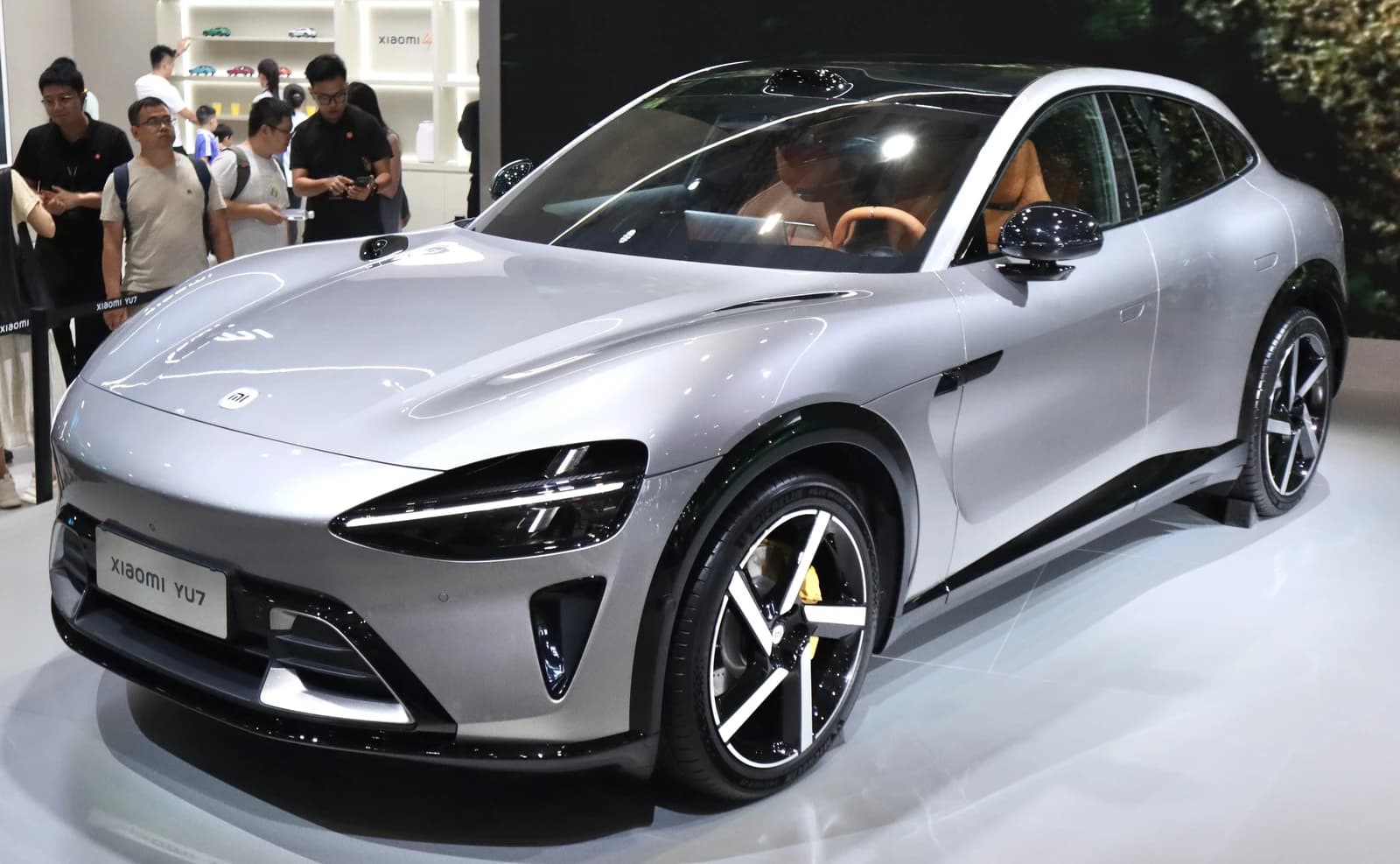
China’s manufacturing excess is forcing a broader trade response as 15 countries, including South Korea, the U.S. and Japan, move to counter electric-vehicle overcapacity that is spilling into Europe and emerging markets.
China overcapacity pressures Korean exporters
That is the central economic risk behind South Korea’s warning that its main industries are “on the brink”: Chinese exporters blocked by U.S. tariff barriers are redirecting discounted cars, batteries and industrial goods into third-country markets, intensifying price pressure, eroding market share and squeezing margins for local producers.
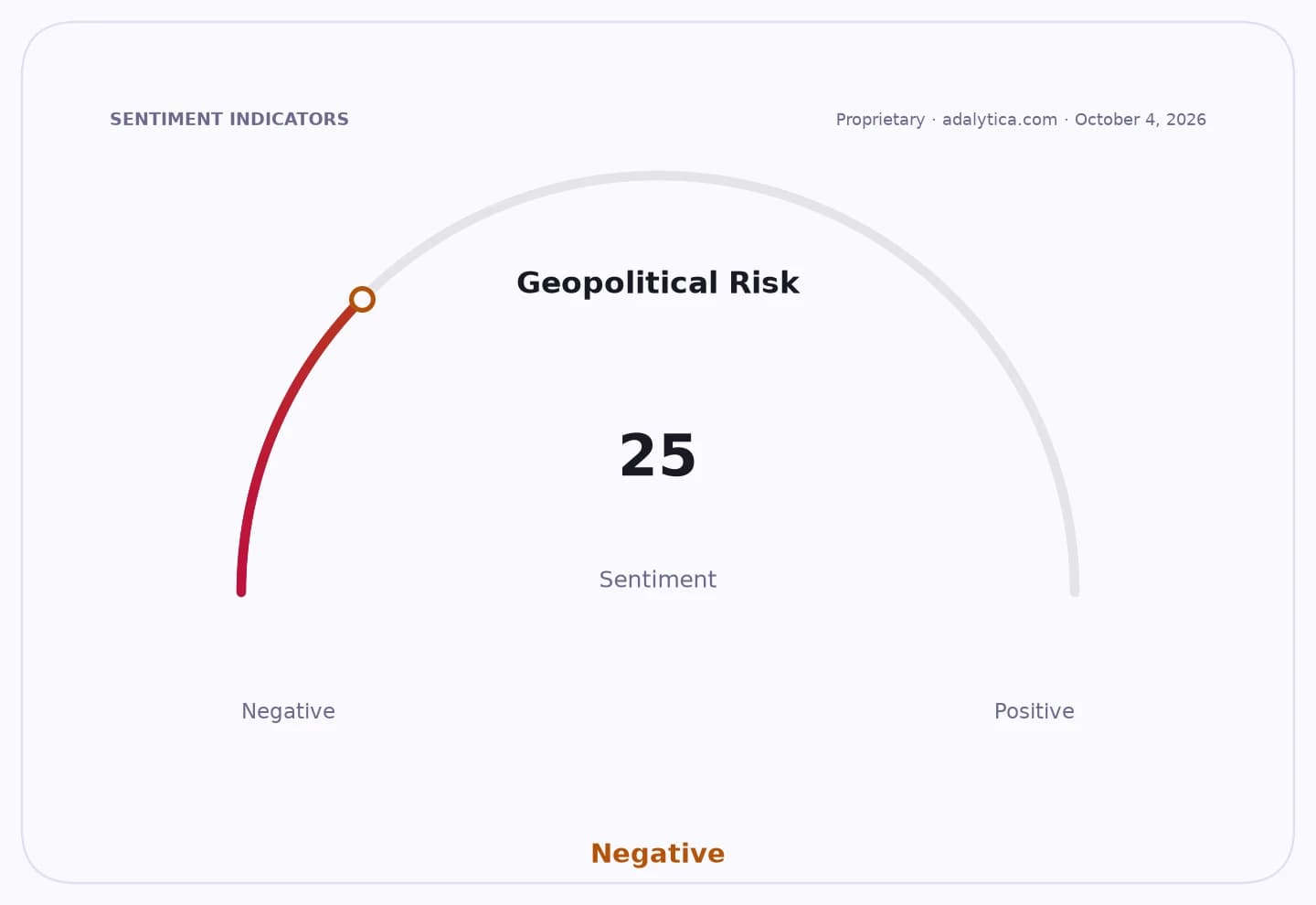
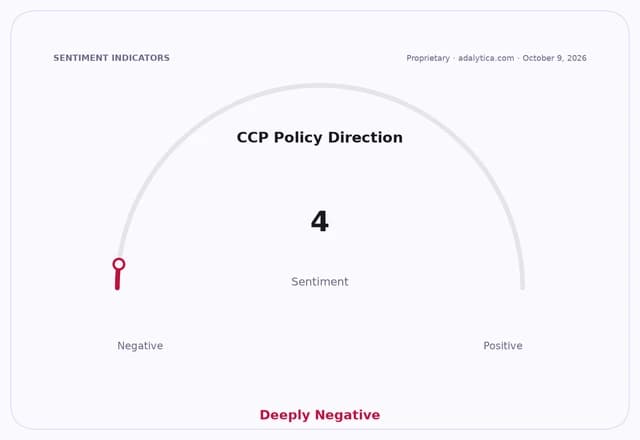
Sentiment IndicatorsⓘProprietary · adalytica.com · October 9, 2026
This is a snapshot — live sentiment, awareness and momentum for 130+ markets update continuously in the dashboard.Open AlphaPulse
A Korean government-backed study on Thursday described the shift as a “China Redwave,” arguing that U.S. trade restrictions have not slowed Chinese industrial expansion so much as rerouted it. The result, researchers said, is a faster encroachment on the markets most important to Korea’s exporters — especially Southeast Asia, the Middle East, Latin America, Africa and parts of Europe.
The numbers point to how deep that penetration has become. In eight emerging markets, Chinese battery imports accounted for 80% in Saudi Arabia and Vietnam, 86% in India and 71% in the Philippines. In home appliances, China held 77% in Malaysia, 76% in Thailand and 75% in Indonesia and Brazil. Chinese vehicles also gained traction, taking 42% of Indonesia’s import market and 41% each in Thailand and Malaysia.
Europe is proving little different. Over the past decade, EU imports from China more than doubled to $724.8 billion from $356.4 billion, while China has effectively dominated batteries and solar panels. After the bloc imposed extra tariffs on battery electric vehicles, Chinese exporters have shifted harder into hybrids, extending the competitive squeeze across the region.
For investors, the message is that China’s EV and industrial overcapacity is no longer just a China story — it is a global pricing story. Korean and Japanese automakers, battery makers, appliance suppliers and industrial companies face a tougher mix of weaker pricing power, lower utilization and more aggressive local-content and anti-dumping responses in overseas markets.
The implications reach beyond autos. Korea’s researchers said the country can preserve only limited share in a handful of protected markets such as shipbuilding, U.S.-Mexico-Canada Agreement-compliant production in Mexico and India’s import-substitution regime. They urged Seoul to protect advanced chipmaking capacity, improve cost competitiveness across industry and expand direct investment in emerging markets to defend market access.
The stock-market angle is clearest in autos and EV supply chains, where the winners are Chinese exporters that can still undercut rivals abroad, while the losers are Korean, Japanese and European manufacturers already dealing with weaker demand and tighter margins. The next catalyst is whether the 15-country response turns into coordinated trade barriers, local-investment rules or further anti-dumping action against Chinese EVs and related industrial goods.
| Entity | Gains | Losses |
|---|---|---|
| Chinese EV and battery makers | ▲Export volumes, market share | ▼Risk of tariffs and probes |
| South Korean exporters | ▲Limited protected niches | ▼Market share, pricing power |
| European automakers and suppliers | ▲Temporary tariff shelter | ▼Hybrid and EV competition |
| Emerging-market buyers | ▲Lower-priced imports | ▼Domestic industry margins |