China has established a new Media Center of the Global South with partners from Cuba, Brazil and Ghana, a move that widens Beijing’s effort to shape how emerging-market audiences consume coverage of China and the wider geopolitical order.
China launches Global South media center
The center, announced at a forum in China, is designed to pool reporting resources from teleSUR, Cuba’s Prensa Latina, Brazil de Fato and Ghana’s Pan Africa TV, according to participants. Its backers say the goal is to increase joint content production, expand the reach of China-focused stories across the Global South and challenge narratives they see as dominated by Northern media outlets.
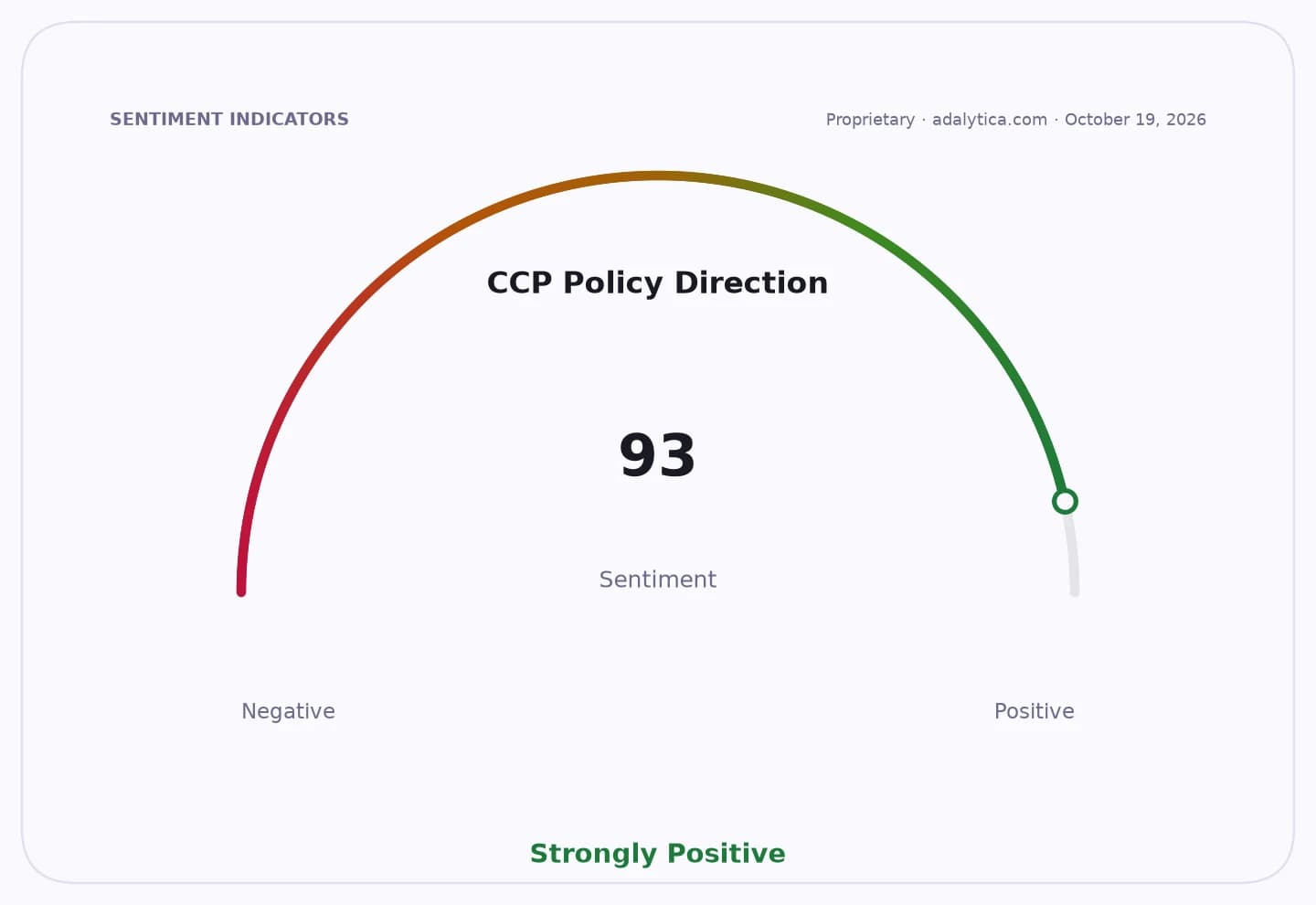
Sentiment IndicatorsⓘProprietary · adalytica.com · October 22, 2026
This is a snapshot — live sentiment, awareness and momentum for 130+ markets update continuously in the dashboard.Open AlphaPulse
The development matters because media influence has become a strategic tool in China’s broader push to deepen ties across developing economies, where it is competing not just on trade and infrastructure but on messaging, technology and political alignment. By building a cross-regional media network, Beijing is adding a softer layer to its foreign policy at a time when information flows are increasingly shaped by algorithms and platform control.
For investors, the immediate market impact is limited, but the story adds to the case that China is stepping up its long-term influence campaign even as tensions with the U.S. and its allies remain elevated. That matters for companies with exposure to China-sensitive advertising, content moderation, social media regulation and cross-border digital infrastructure, especially platforms that face scrutiny over how political content travels online.
Participants framed the initiative as part of a wider effort to strengthen “information sovereignty” and reduce dependence on external technology platforms. Prensa Latina’s Alejandro Gómez called for a permanent AI training mechanism for journalists from the Global South, while teleSUR President Patricia Villegas warned about the influence of algorithms on content distribution.
The media project also fits into a broader geopolitical backdrop in which China is facing accusations of influence operations, cyber activity and election interference from regional rivals, including Taiwan. That makes the new center more than a branding exercise: it is part of a contest over who sets the narrative on China, the West and the emerging world.
The next test will be whether the alliance draws in more outlets and whether Beijing can turn the forum into a durable media pipeline with real audience reach, especially as AI tools reshape newsroom economics and information competition.
| Entity | Gains | Losses |
|---|---|---|
| China | ▲Greater soft power reach | ▼Narrative control from rivals |
| Global South media partners | ▲Shared content and training | ▼Reliance on external platforms |
| U.S.-aligned media narratives | ▲Less dominance in emerging markets | ▼Influence over China coverage |
| Social media platforms | ▲More cross-border content traffic | ▼More scrutiny over algorithms |