China is stepping up its claim to leadership in global development just as the final five years of the U.N.’s 2030 agenda begin, promising another 2,000 “small but high-impact” projects in developing countries and sharpening a pitch that blends aid, infrastructure, training and technology.
China Expands Global Development Initiative
That matters because Beijing is not simply talking about solidarity; it is building an institutional framework that now spans more than 130 countries and international organizations, with nearly 100 partners signing cooperation documents and 88 joining its “Group of Friends” for the Global Development Initiative. In economic terms, China is using development cooperation to deepen trade links, shape supply chains and expand its influence across fast-growing markets where the next decade of demand will be formed.
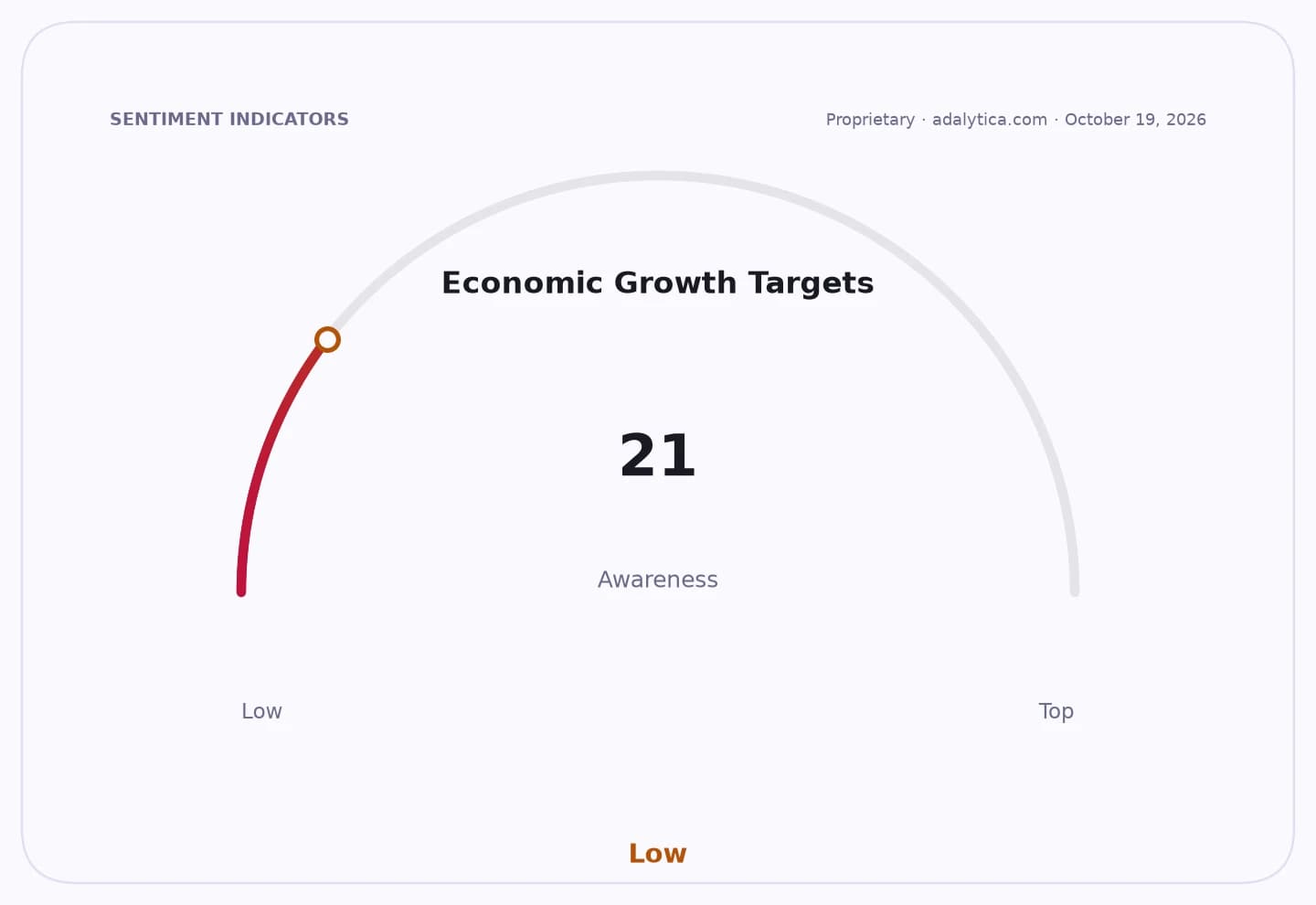
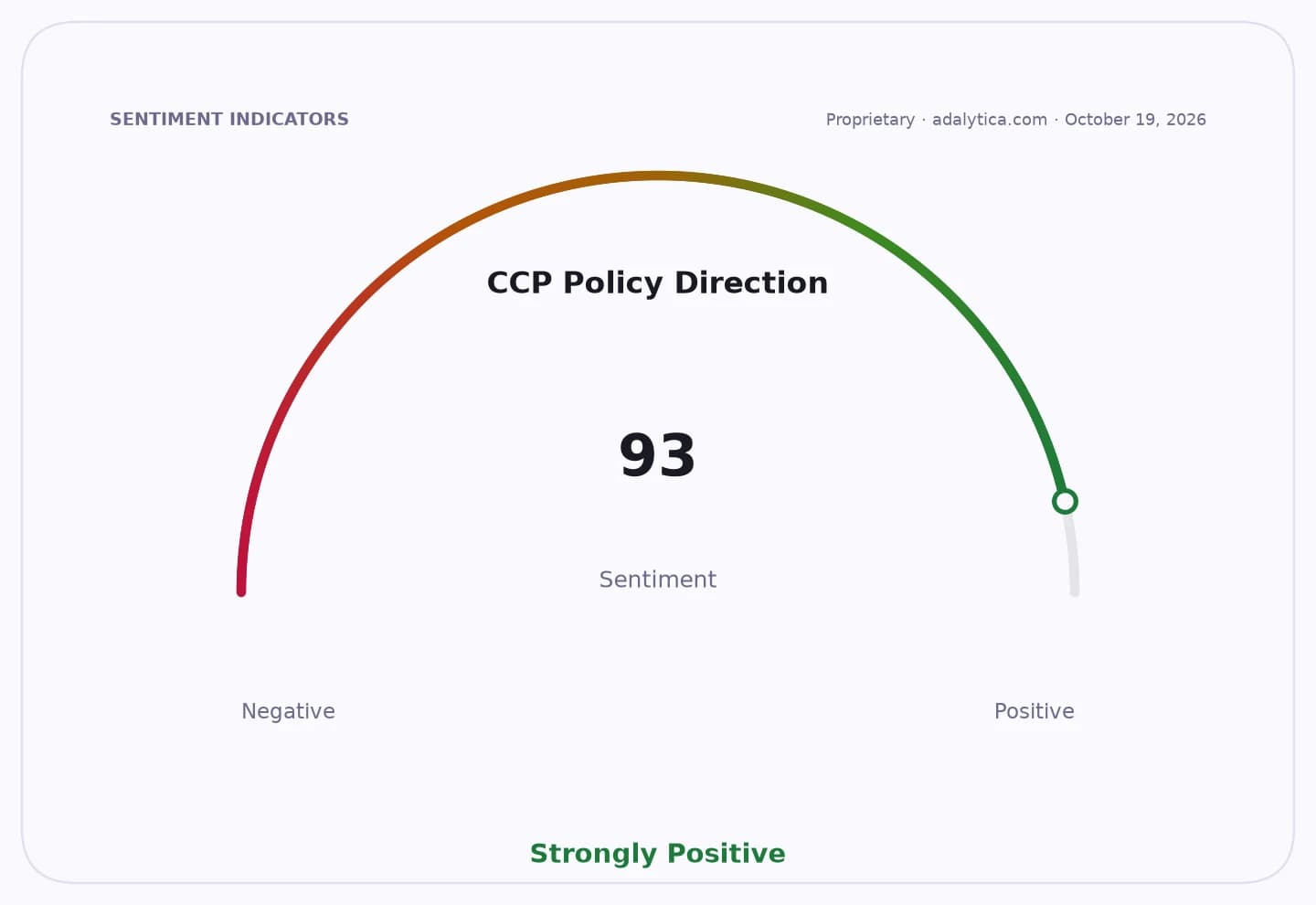
Sentiment IndicatorsⓘProprietary · adalytica.com · October 19, 2026
This is a snapshot — live sentiment, awareness and momentum for 130+ markets update continuously in the dashboard.Open AlphaPulse
The scale is what makes the strategy investable to watch. China says its Global Development Initiative has already backed more than 2,000 projects in over 120 countries, mobilized more than $23 billion in project financing and benefited more than 40 million people. It has also lifted the Global Development and South-South Cooperation Fund to $4 billion, signaling that Beijing intends to keep funding this model even as the developed world grows more selective on foreign aid.
For investors, the message is that China’s overseas development push is increasingly tied to sectors with commercial spillovers: agricultural technology, health systems, vocational training, digital infrastructure and artificial intelligence. That creates a long runway for Chinese contractors, equipment makers, telecom suppliers, industrial automation firms and education and training platforms positioned to sell into the Global South. It also reinforces the case for looking beyond domestic China growth and toward companies exposed to cross-border infrastructure and services demand.
The policy angle is especially important because Beijing is pairing development with standards-setting. The China-backed “Mazu” weather early-warning system has been deployed in seven countries and is being piloted in more than 40 others, while China has promoted a global AI cooperation body with 38 founding members. That is not just diplomacy; it is an effort to export technical ecosystems, lock in standards and create future demand for Chinese hardware, software and cloud infrastructure.
The timing also fits a broader geopolitical shift. As global stability weakens and the West remains focused on security, China is filling a vacuum with development financing and capacity-building. That helps explain why the market keeps treating China as a cyclical trade story while underestimating the strategic value of its overseas network. The real opportunity is in the second-order effects: the companies that build, digitize, train and maintain the infrastructure of emerging economies.
Vietnam’s legislative outreach to Beijing and China’s expanding cooperation with African and Asian partners show this is not a one-off campaign but a durable state-backed growth model. The next catalyst will be whether more countries translate political support into contracts, procurement and long-term policy alignment.
For investors, the actionable takeaway is clear: China’s development diplomacy is becoming a commercial moat. The best-positioned names are not the headline aid beneficiaries, but the pick-and-shovel suppliers to infrastructure, electrification, industrial automation, logistics, telecom and AI infrastructure across the emerging world.
| Entity | Gains | Losses |
|---|---|---|
| China | ▲Wider global influence | ▼Less strategic space for rivals |
| Emerging-market partners | ▲Funding and training | ▼Dependence on Chinese standards |
| Chinese industrial and tech suppliers | ▲New overseas demand | ▼Western competitors |
| Western aid blocs | ▲Pressure to match scale | ▼Soft-power leverage |