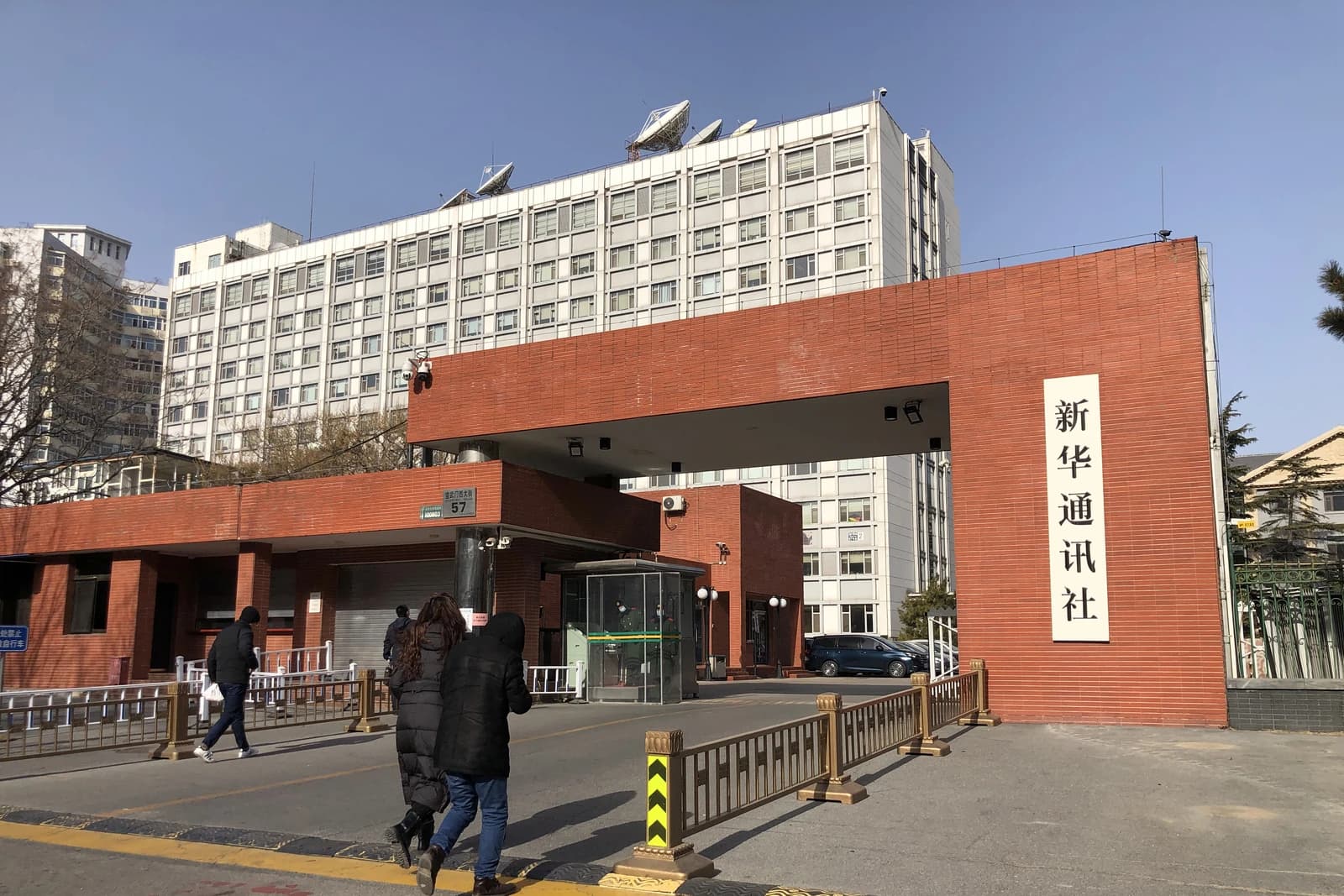
China’s state-backed media is arguing that being reclassified as a “developed country” would be less a promotion than a trap, because the label could be used to strip Beijing of developing-nation advantages while loading it with heavier global obligations.
China Nears World Bank High-Income Threshold
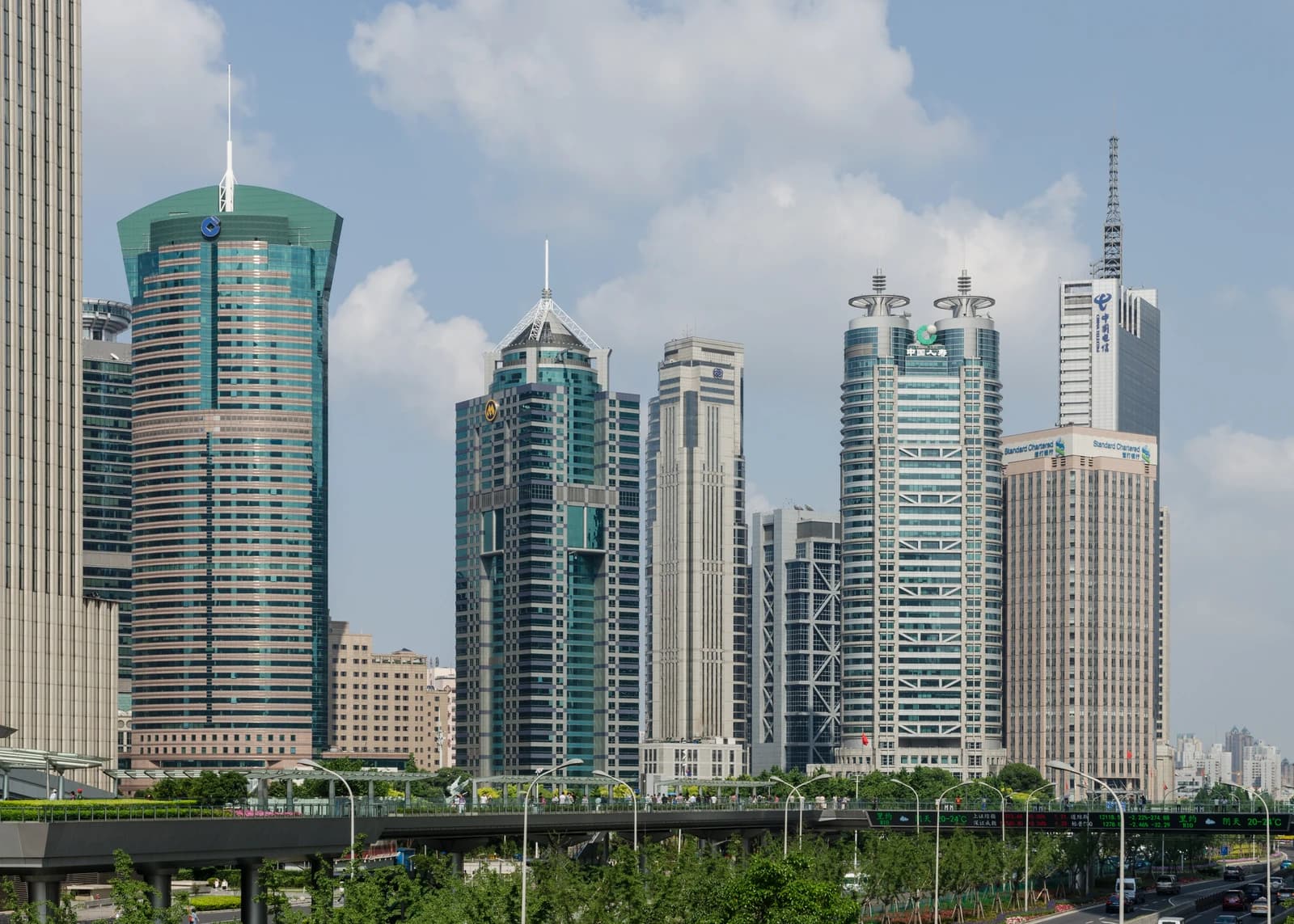
The dispute matters because the distinction is not semantic. In trade, climate talks and multilateral lending, “developing country” status affects who gets flexibility, who pays more and who faces stricter rules. For China, which remains the world’s second-largest economy but still has a far lower income per person than the US and Europe, the label is tied to negotiating leverage, access to policy room and its broader alignment with the Global South.
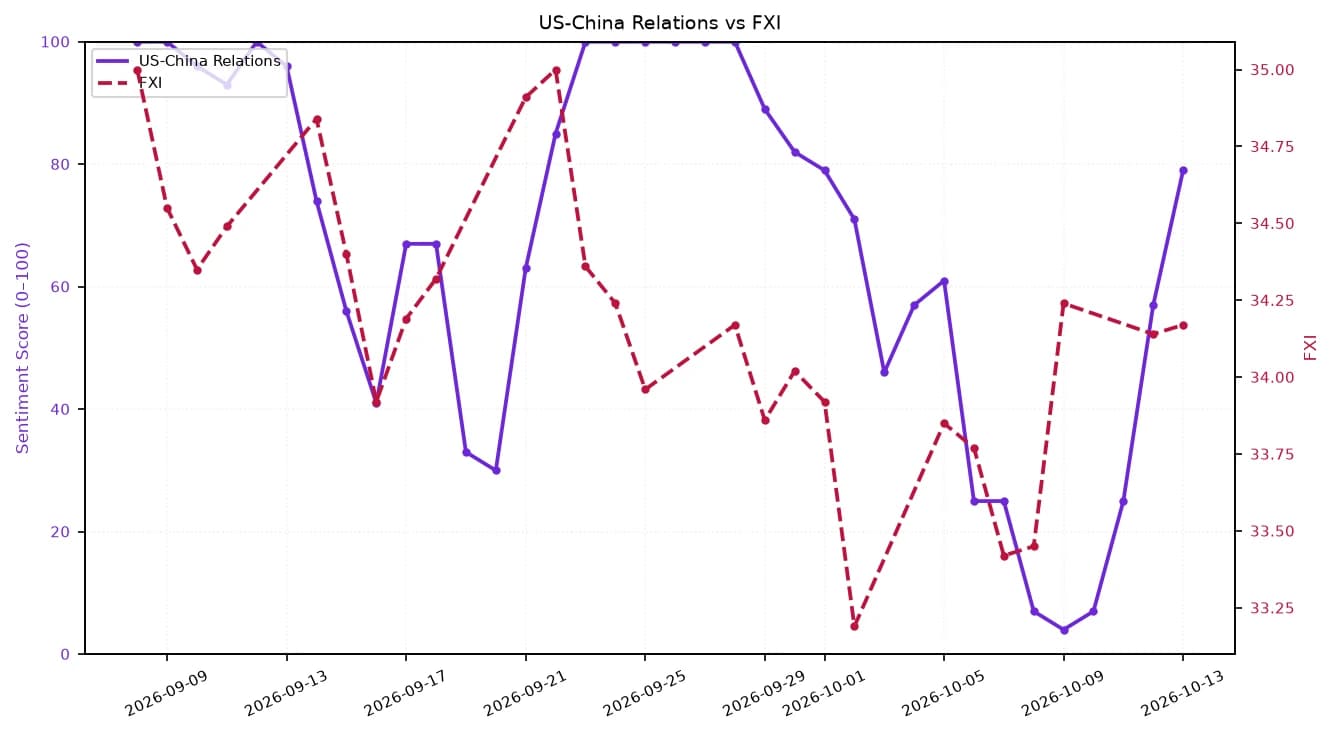
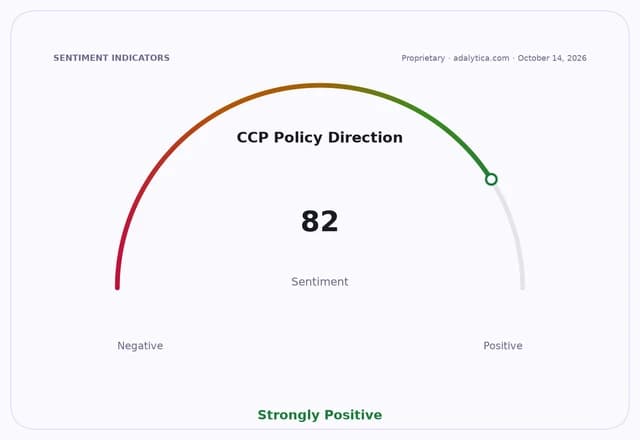
Sentiment IndicatorsⓘProprietary · adalytica.com · October 14, 2026
This is a snapshot — live sentiment, awareness and momentum for 130+ markets update continuously in the dashboard.Open AlphaPulse
The Global Times editorial, picking up on recent Wall Street Journal reporting that China is nearing the World Bank’s high-income threshold, said income alone does not define a developed economy. The World Bank estimates China’s gross national income per capita at $14,230 in 2025, just below the $14,375 high-income cutoff. But the Chinese commentary argues that crossing that line would not erase structural gaps in productivity, public services, social safety nets and regional development.
That distinction is economically consequential. A change in perception could feed pressure on Beijing to contribute more in multilateral forums, accept steeper climate commitments and narrow the policy flexibility it has long defended as necessary for an economy still in transition. The editorial explicitly warns that some countries want China to “graduate” not out of respect for its progress, but to isolate it from other developing nations and make it shoulder obligations beyond its current stage.
For investors, the message is that China’s self-definition remains part of its economic strategy. Beijing is signaling it will continue to resist any attempt to recast it as a mature industrial power on Western terms, even as it stresses that it already contributes around 30% of global growth, sends more peacekeepers than any other permanent U.N. Security Council member and promotes its own global initiatives.
That stance has practical implications for policy risk. If China leans harder into the developing-country identity, it may preserve room to support growth, manage industrial policy and defend its position in climate and trade negotiations. But it also keeps alive frictions with advanced economies that want Beijing treated as a systemically important power, especially when it comes to market access, emissions and state support.
The broader narrative is a contest over status that is really a contest over obligations. China wants the economic benefits of scale without being boxed into developed-world responsibilities before its domestic development is complete. Western governments, by contrast, increasingly see a country of China’s size and influence as one that should not retain the same exemptions as poorer emerging markets.
For markets, the key question is whether this debate hardens into a wider policy divide. If it does, the result could be more tension in trade talks, climate finance and multilateral rule-making, but also greater continuity in China’s domestic policy stance, as Beijing frames its development path as unfinished and non-negotiable.
| Entity | Gains | Losses |
|---|---|---|
| China | ▲Policy flexibility | ▼Developed-country obligations |
| Western governments | ▲Pressure leverage | ▼China’s negotiating exemptions |
| Global South peers | ▲Shared status | ▼Beijing’s possible distancing |
| Investors in China | ▲Policy continuity | ▼Higher geopolitical friction |