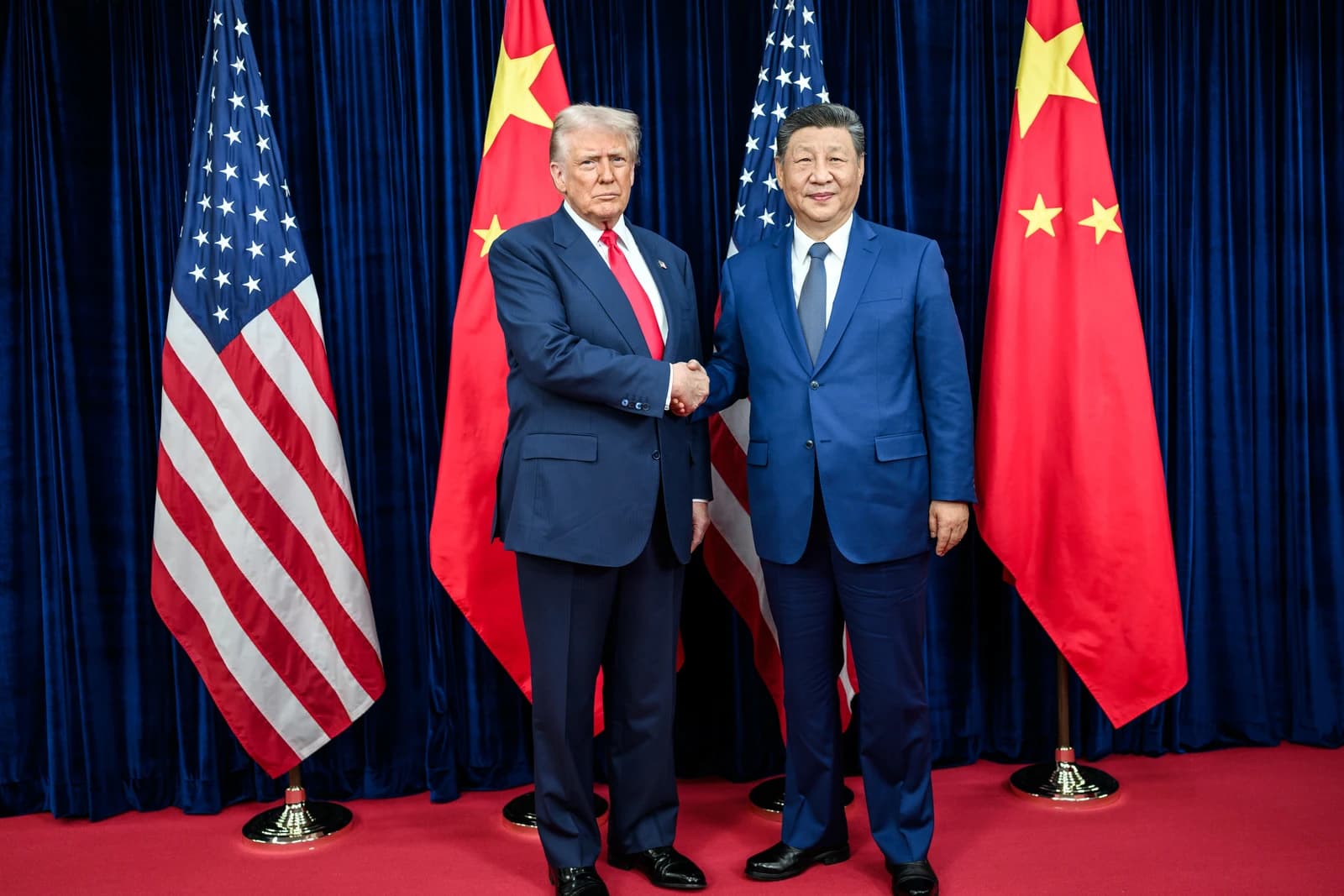
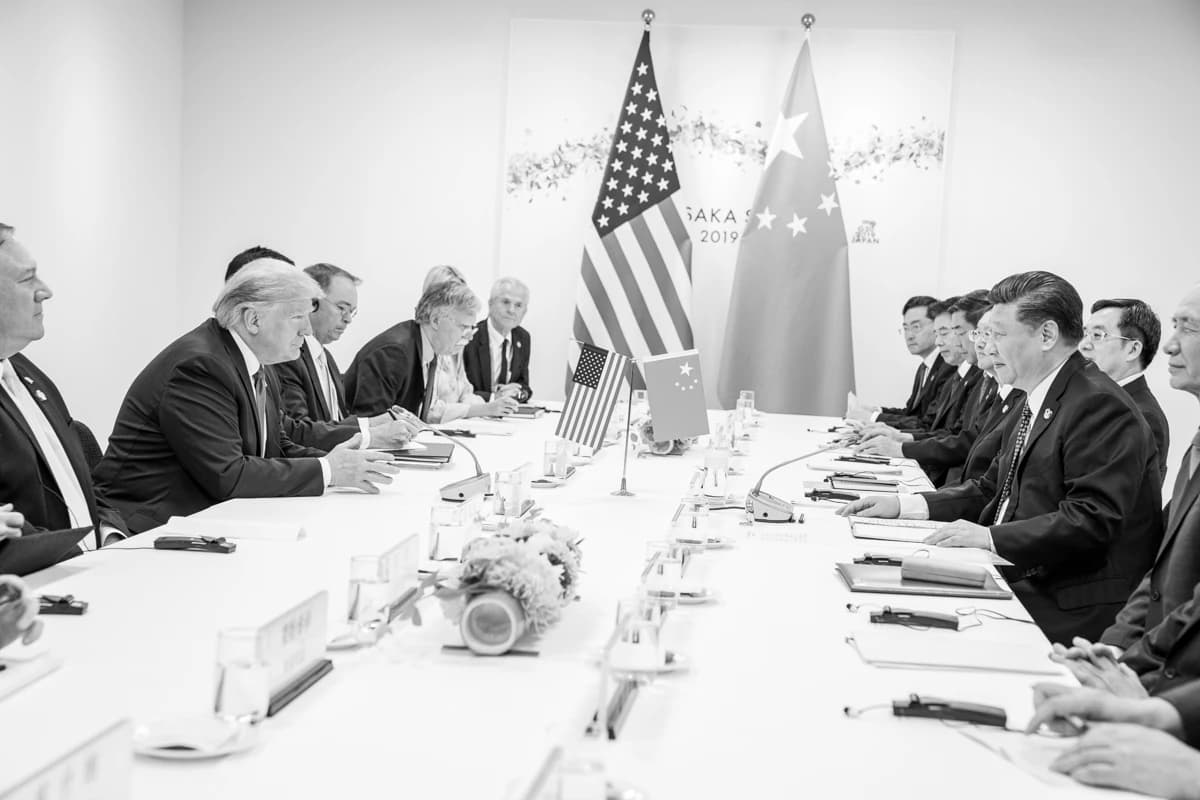
The United States and China have agreed to a new set of words to frame their relationship, a small but revealing diplomatic shift that shows how far apart Washington and Beijing remain on the rules of engagement.
U.S. and China agree on new diplomatic wording
According to people familiar with the matter, the two sides settled on language that includes both “fairness and reciprocity” — a U.S. priority — and “respect,” which China had insisted on, after months of back-and-forth over how to define the world’s most consequential bilateral relationship.
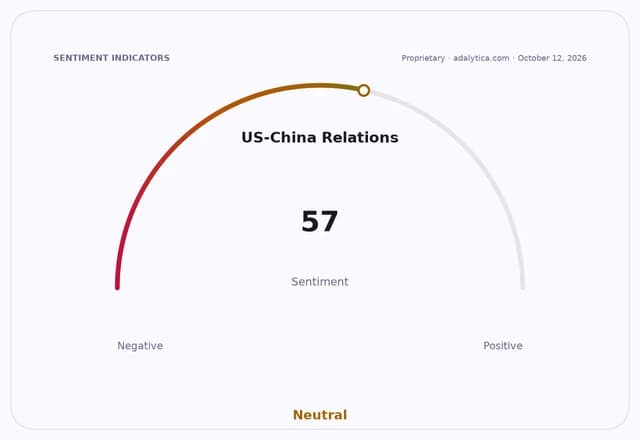
Sentiment IndicatorsⓘProprietary · adalytica.com · October 12, 2026
This is a snapshot — live sentiment, awareness and momentum for 130+ markets update continuously in the dashboard.Open AlphaPulse
That wording matters because it does not signal a breakthrough so much as a managed truce in rhetoric, one that reflects the two governments’ competing political and strategic priorities. Washington wants a framework that can justify tougher scrutiny of trade, technology and security ties, while Beijing is seeking language that implies equal status and restraint from what it sees as coercive U.S. pressure.
For investors, the significance lies less in the phrasing itself than in what it says about the policy trajectory: neither side is preparing to abandon competition, but both are still trying to preserve channels that reduce the risk of escalation. That keeps a floor under market expectations for trade, supply chains and cross-border capital flows, even as it leaves tariffs, export controls and investment restrictions firmly in place as live risks.
The new formulation also suggests that diplomacy remains tied to bargaining over concrete economic interests. “Respect” has long been a Chinese demand in talks with Washington, used to underscore sovereignty and oppose what Beijing views as unilateral pressure. “Fairness and reciprocity,” by contrast, has become a shorthand for the U.S. push to level market access, investment rules and treatment of American firms.
The fact that both phrases made it into the same description underscores how fragile the relationship remains. Rather than resolving disagreements, the wording papered over them, allowing both capitals to claim progress without conceding core positions. That is typical of the current phase of U.S.-China ties: operational contact continues, but strategic distrust still defines the relationship.
The economic relevance is wider than diplomacy. U.S.-China tensions continue to influence global supply chains, technology transfer, the direction of the yuan and the dollar, and the degree of risk premium investors assign to Asian assets. Recent sentiment readings on U.S.-China relations show a sharp swing from extreme fear toward more neutral territory, but the still-low awareness score points to a market that is highly sensitive to abrupt policy shifts rather than convinced of a lasting thaw.
Broader geopolitical conditions keep that caution in place. China has simultaneously been deepening engagement with partners such as Vietnam, where trade and parliamentary ties are expanding, even as Beijing continues to use sanctions and Taiwan-related pressure to signal resolve elsewhere. That wider pattern suggests China is pursuing diversification of influence while managing the U.S. relationship with carefully calibrated language.
For markets, the key question is whether this new phrasing is the prelude to more substantive talks or simply a diplomatic convenience. A genuine easing would have to show up in fewer export-control escalations, clearer rules for American and Chinese firms, and more predictability around technology and tariffs. Until then, the main investment takeaway is that the relationship may be being described with softer words, but it is not becoming structurally less competitive.
| Entity | Gains | Losses |
|---|---|---|
| U.S. government | ▲Leverage on reciprocity demands | ▼Faster diplomatic thaw |
| China government | ▲Recognition via “respect” language | ▼U.S. policy restraint |
| Global investors | ▲Slightly lower tail risk | ▼Certainty on policy direction |
| Multinational firms | ▲More predictable dialogue | ▼Fewer trade/tech restrictions |