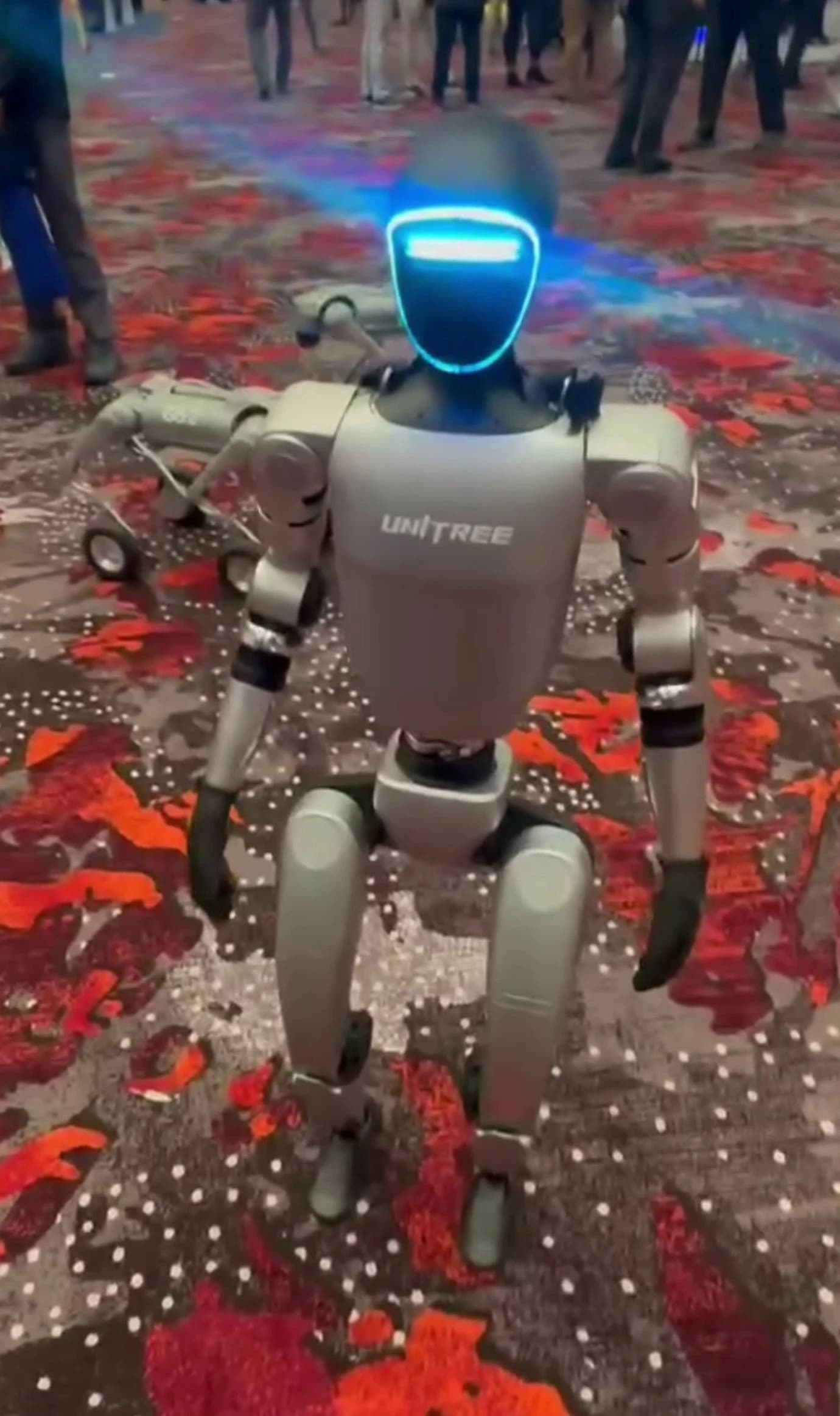
China has grabbed nearly the entire global humanoid robot market, with domestic manufacturers shipping 97% of units in the first half of 2026, underscoring how quickly Beijing is turning robotics from lab project into industrial scale business.
China humanoid robot shipments reach 97%
The shipment share is more than a bragging right: it points to an emerging supply-chain moat in a sector investors increasingly view as a long-duration automation trade. Humanoid robots are expected to play roles in factories, warehouses, logistics and eventually consumer and care settings, with the global market projected to exceed $5 trillion by 2050.
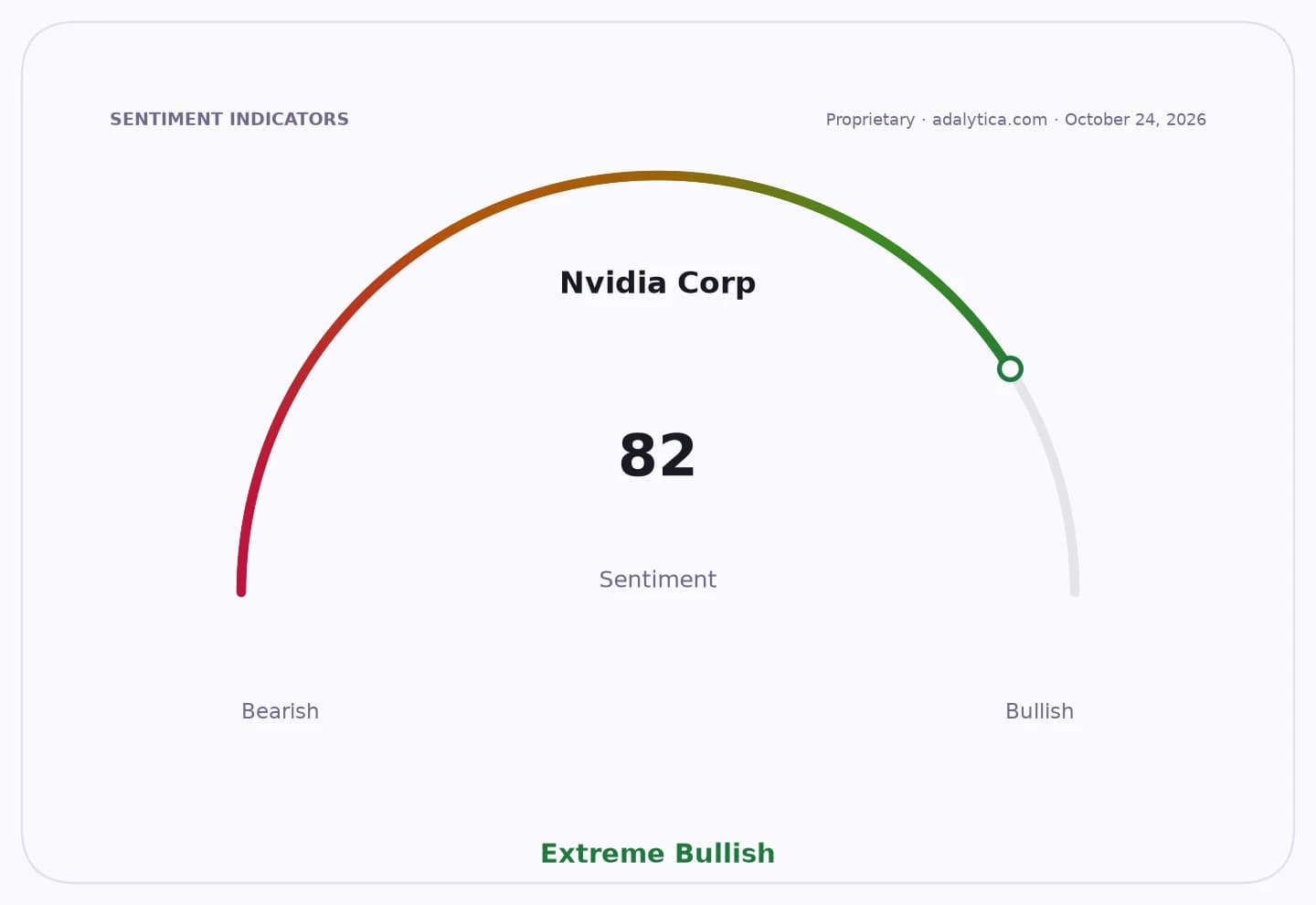
Sentiment IndicatorsⓘProprietary · adalytica.com · October 24, 2026
This is a snapshot — live sentiment, awareness and momentum for 130+ markets update continuously in the dashboard.Open AlphaPulse
China’s lead rests on three advantages that matter economically — manufacturing scale, control over rare earth-based permanent magnets and heavy state support. Those inputs are critical for the electric motors that give humanoid robots speed, balance and lifting power, and they help Chinese makers iterate faster and sell at lower cost than rivals in the U.S. and Europe.
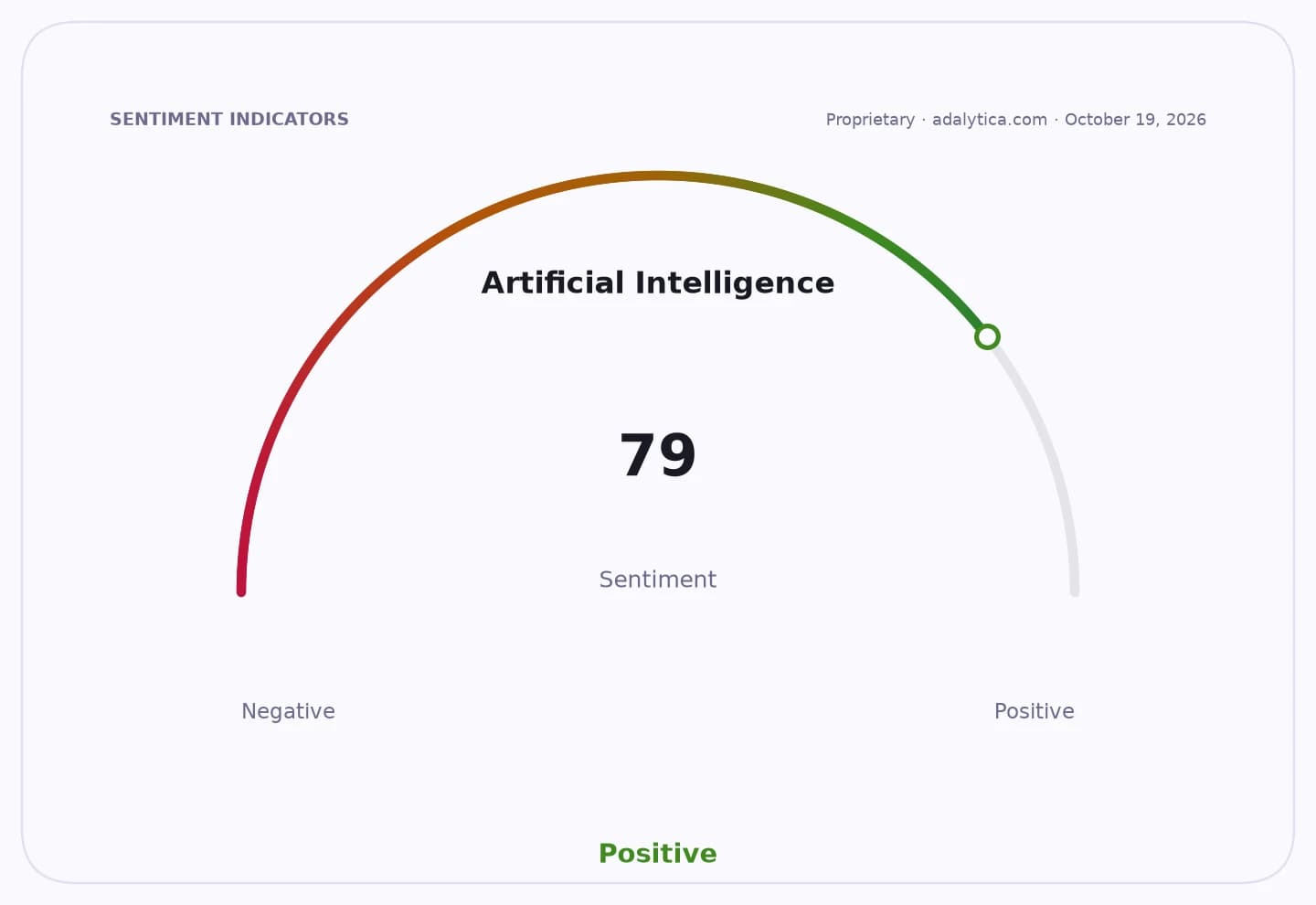
The market also has a software race embedded in it. Reuters-like industry tracking shows Chinese firm Unitree Robotics is pushing AI systems that could let humanoid robots self-code, simulate and optimize their own operations, a step that would reduce the need for manual programming and accelerate commercialization. That matters because the winner in humanoids may not just be the company with the best robot, but the one that can improve models fastest from real-world deployments.
For investors, the implication is that China is not just competing on hardware volume; it is building the feedback loop that can lock in pricing power, data advantage and customer adoption. U.S. and European firms are still racing to close the gap, but the hardware manufacturing deficit may prove harder to bridge than software alone, especially as Chinese suppliers keep tightening costs and delivery times.
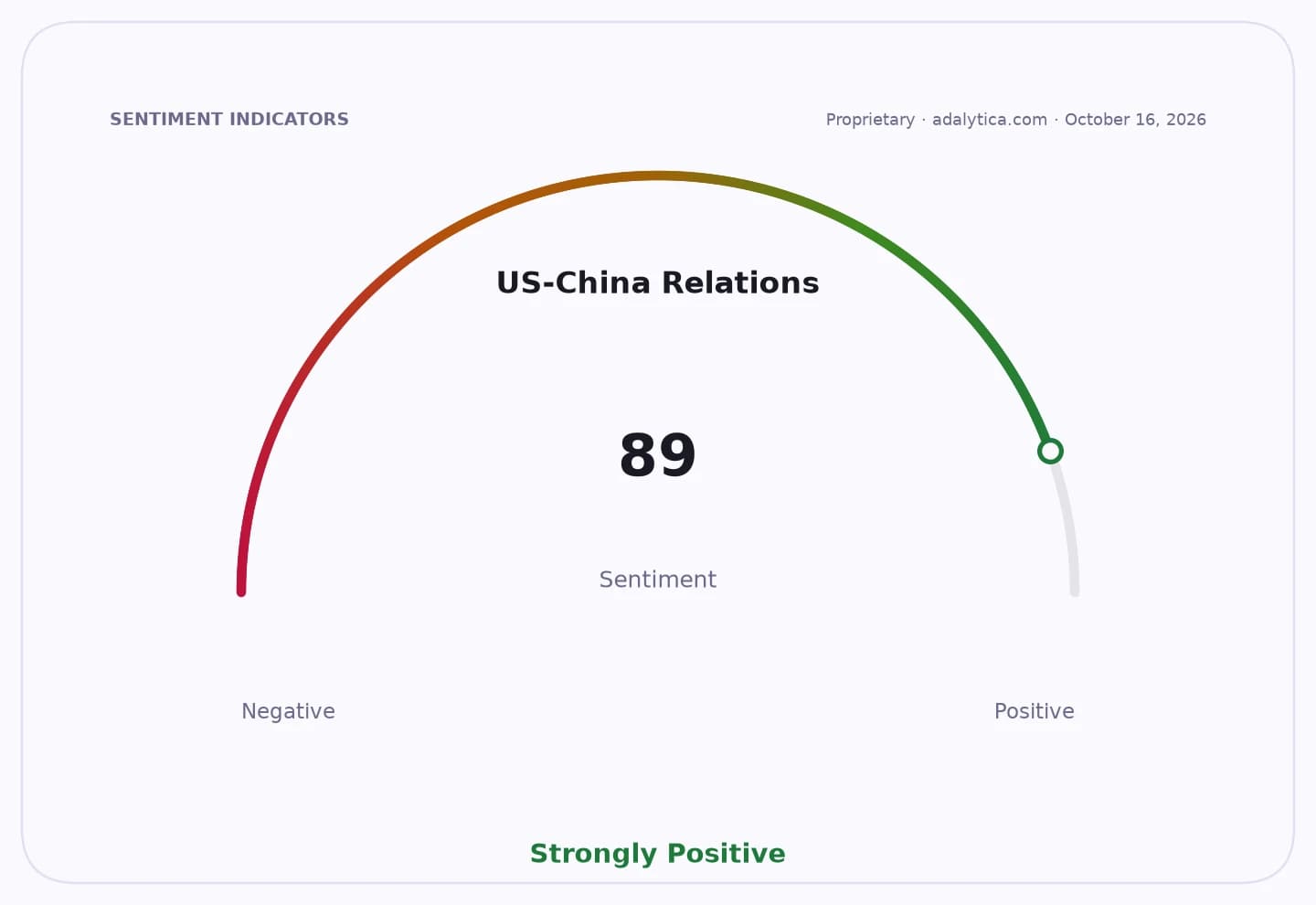
The geopolitical angle is also becoming more pronounced. Adalytica’s US–China relations sentiment gauge remains neutral at 46, but awareness is flagged at an extreme fear level, reflecting how strategic technologies such as robotics, AI and advanced materials are becoming a flashpoint for trade, industrial policy and supply-chain security.
Shares of China-linked tech names have already shown how quickly investor sentiment can swing around robotics and AI narratives, and the next catalysts will likely come from product launches, large industrial contracts and any export or materials restrictions that could alter access to motors, magnets or chips. If Chinese manufacturers keep shipping at this pace, the humanoid robot race may increasingly be defined less by prototypes than by who can mass-produce at scale.
| Entity | Gains | Losses |
|---|---|---|
| Chinese robot makers | ▲Market share, pricing power | ▼Scrutiny from rivals |
| Unitree Robotics | ▲AI autonomy lead | ▼Pressure to commercialize fast |
| U.S./European rivals | ▲Technology race urgency | ▼Scale and cost disadvantage |
| Rare earth suppliers in China | ▲Strategic leverage | ▼Rising geopolitical attention |