Artificial intelligence and robotics are shifting from conference-floor demonstrations toward commercial deployment, and that is the real significance of the International Robot Business Conference in Goyang next month.
NVIDIA, Qualcomm and Hyundai Join Robotworld 2026
The two-day event, to be held Nov. 4-5 alongside Robotworld 2026 at KINTEX, will bring together NVIDIA, Qualcomm Korea, Hyundai Motor and other global and domestic players for 36 sessions spanning manufacturing automation, humanoids, physical AI and mobility. For investors, the importance is less the conference itself than the signal it sends: robotics is becoming a capital-allocation theme, not just a technology showcase.
That matters economically because the industry is moving into the phase where AI must prove it can raise productivity, reduce labor bottlenecks and scale beyond pilot projects. Korean organizers say the conference is designed around “Manufacturing, Reimagined by AI and Robotics,” with sessions focused on manufacturing transformation, humanoid systems and robot mobility. The framing underlines a broader industrial push to link AI models with factory floors, logistics networks and service operations.
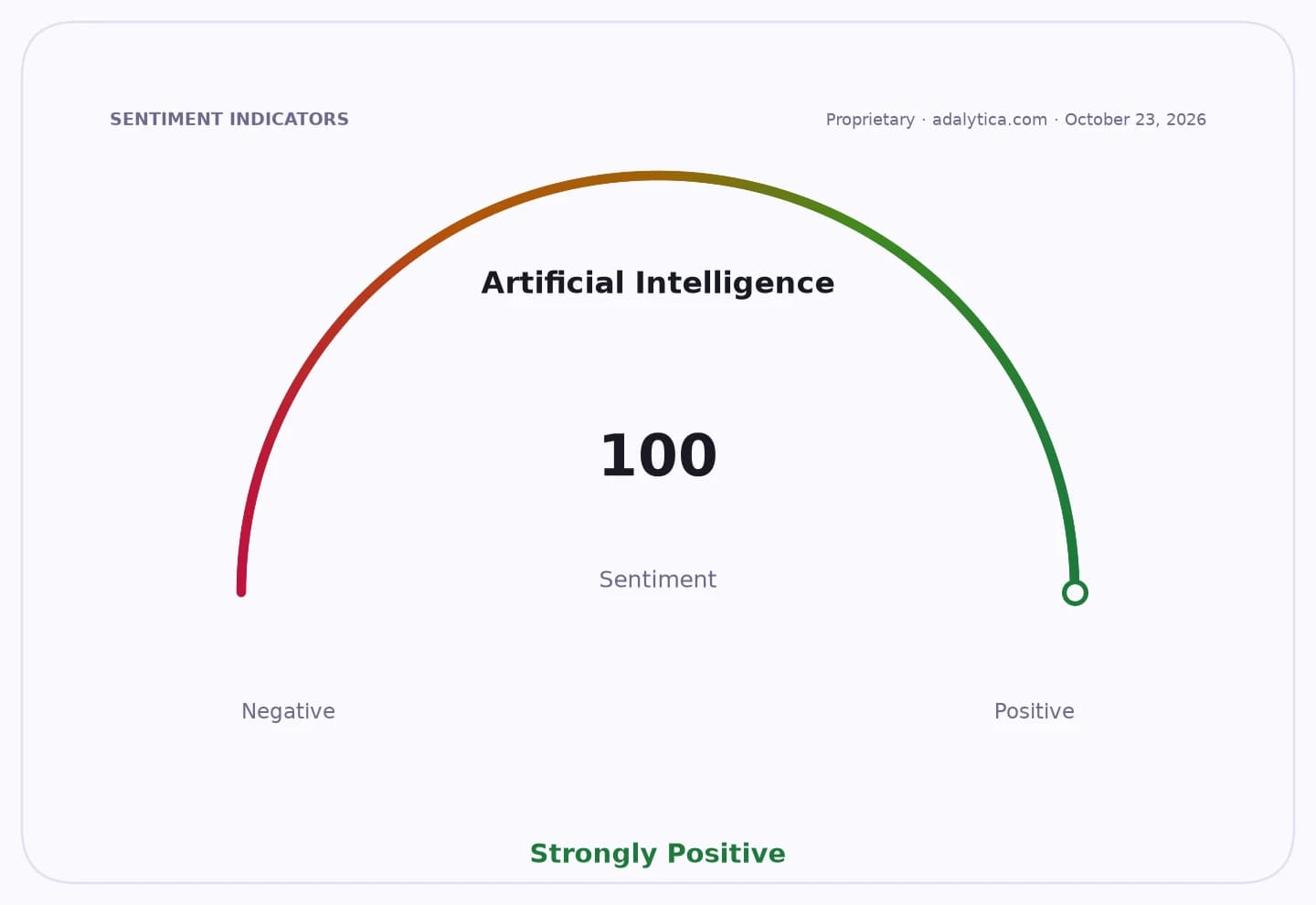
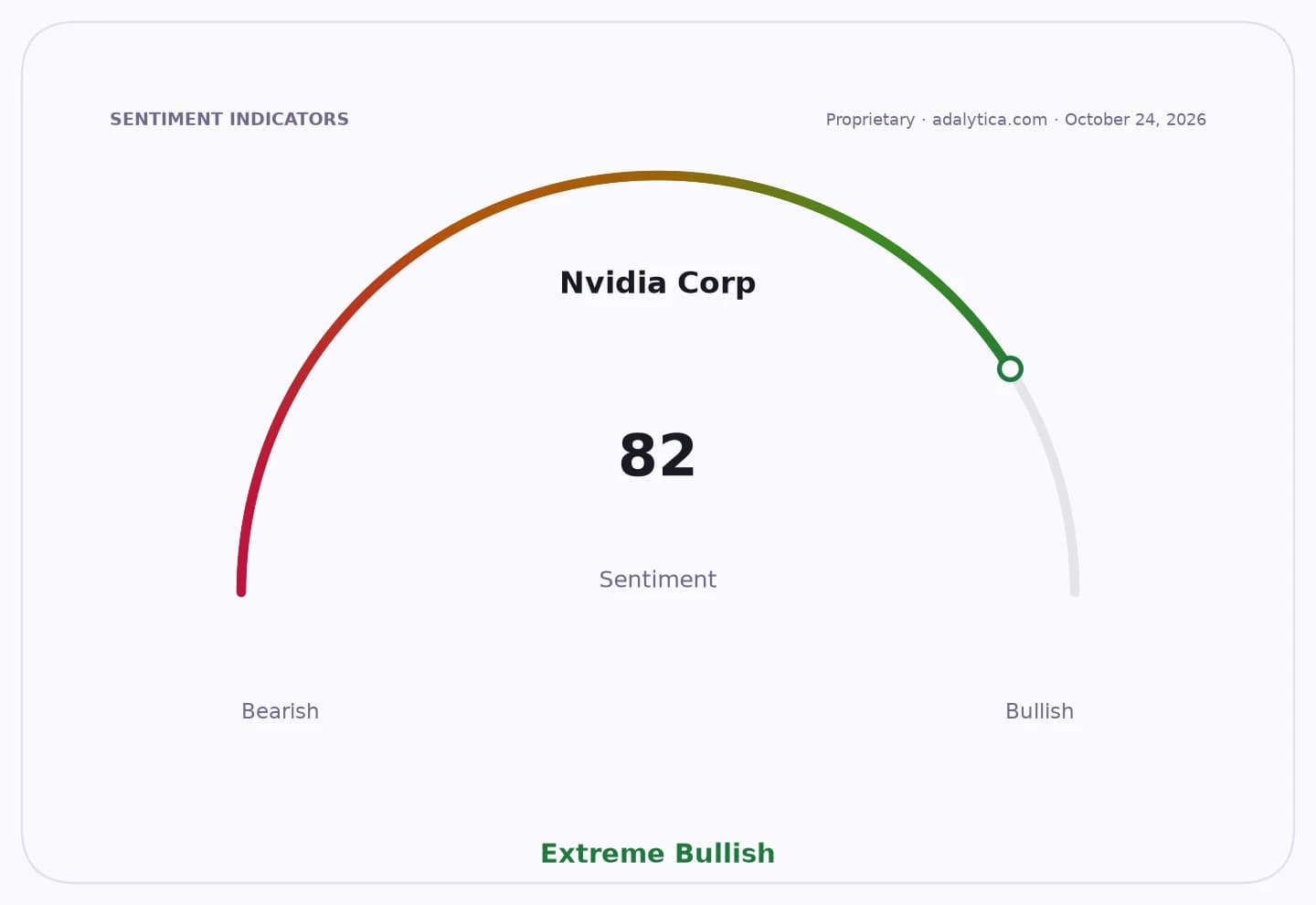
NVIDIA’s presence is especially notable given the company’s expanding exposure to robotics and digital twin applications alongside its core data center AI business. Its stock has been volatile but remains above its 200-day moving average, even as the 50-day average has flattened and recent trading has pushed the shares into oversold territory on the RSI, suggesting the market is waiting for fresh catalysts. In Adalytica’s proprietary sentiment gauge, NVIDIA still scores high at 82, indicating strong investor attention even after recent pullback.
Qualcomm’s participation points to another commercial angle: edge computing and on-device AI. The chipmaker has already told investors it is investing beyond mobile handsets into high-performance and low-power computing and on-device AI. That is directly relevant to robotics, where latency, power efficiency and local inference are critical. Qualcomm shares have also been consolidating after a sharp run-up earlier this year, with recent price action sitting near the 50-day moving average, reflecting a market that is still weighing the durability of its AI diversification story.
Hyundai Motor’s involvement broadens the story beyond semiconductors into mobility and industrial automation. The company has been pushing robotics and future mobility as part of its long-term manufacturing strategy, and its role in a conference centered on robot mobility suggests Korean industrial groups see a convergence between factories, logistics and autonomous systems. That could support future orders for components, platforms and software, while also sharpening competition among automakers, chipmakers and robotics specialists for industrial contracts.
The timing also fits a wider sector backdrop. Recent collaborations, including industrial physical AI partnerships announced elsewhere in the market, have reinforced the view that robotics is entering a more commercial phase. The bull case is that conferences like this accelerate ecosystem-building, standards-setting and pilot-to-production conversion. The bear case is that the sector remains years away from broad profitability, with many projects still dependent on expensive hardware, custom integration and unclear payback periods.
For investors, the key takeaway is that robotics is moving closer to the center of the AI investment cycle. The companies on stage are not just discussing future possibilities; they are positioning for where manufacturing, mobility and physical AI spending may go next.
| Entity | Gains | Losses |
|---|---|---|
| NVIDIA | ▲More robotics visibility | ▼Near-term valuation pressure |
| Qualcomm | ▲Edge-AI use-case expansion | ▼Reliance on execution |
| Hyundai Motor | ▲Future mobility positioning | ▼Faster competition for automation deals |
| Traditional labor-intensive manufacturers | ▲Productivity gains | ▼Higher automation pressure |