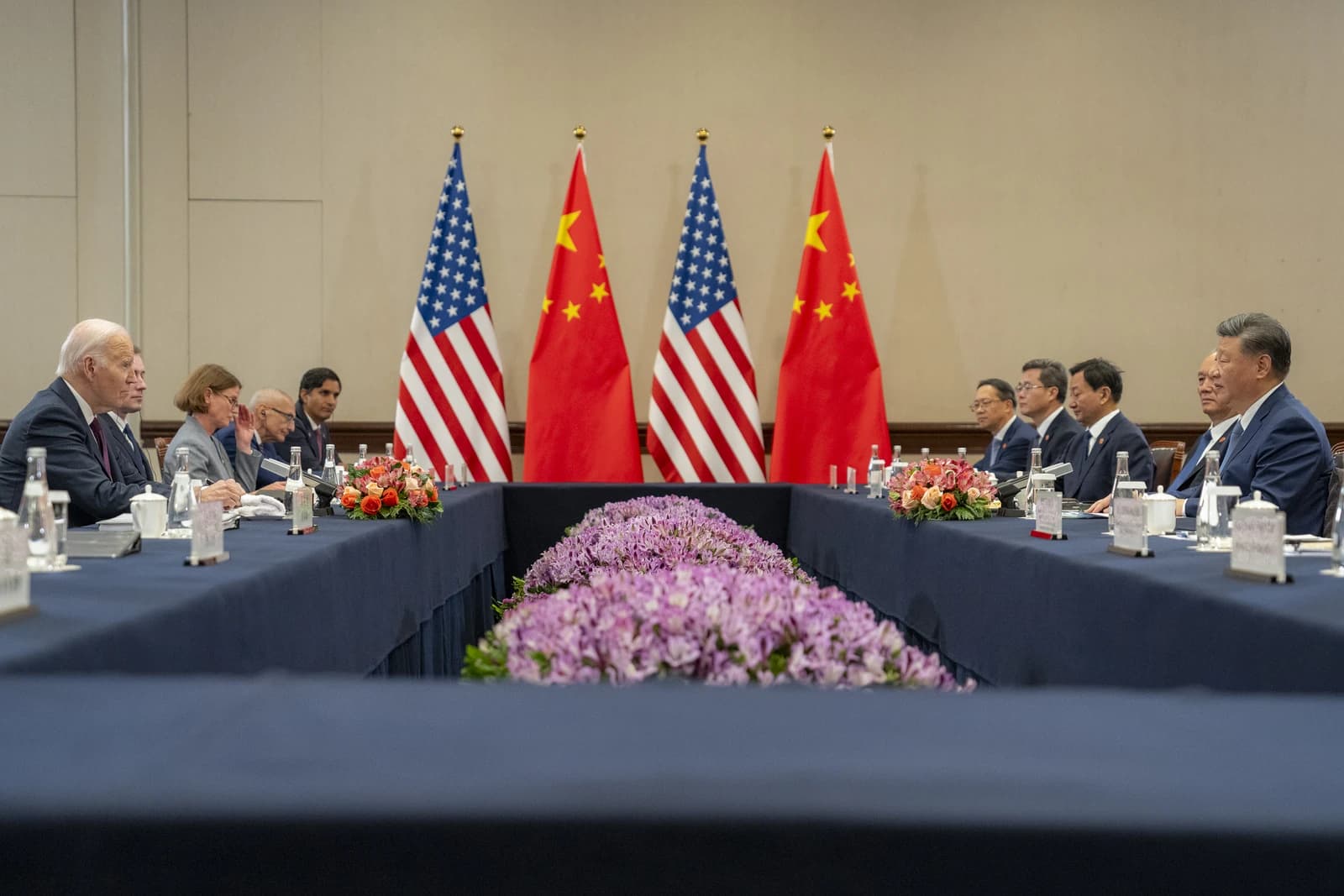
China’s state and commercial press is presenting Mexico, Chile and Peru as countries that can still work with both Beijing and Washington without fully siding with either, but the room to do so is narrowing as trade and technology rivalry deepens.
China, Mexico, Chile and Peru balance U.S. ties
US Dollar
That matters because the three economies sit at a sensitive junction in the Americas-China relationship: all three want Chinese investment, market access and supply-chain links, while also needing to preserve ties with the U.S., their largest economic and security partner. The balance is increasingly difficult to maintain, and that could shape everything from infrastructure funding and commodity exports to technology procurement and foreign policy coordination.
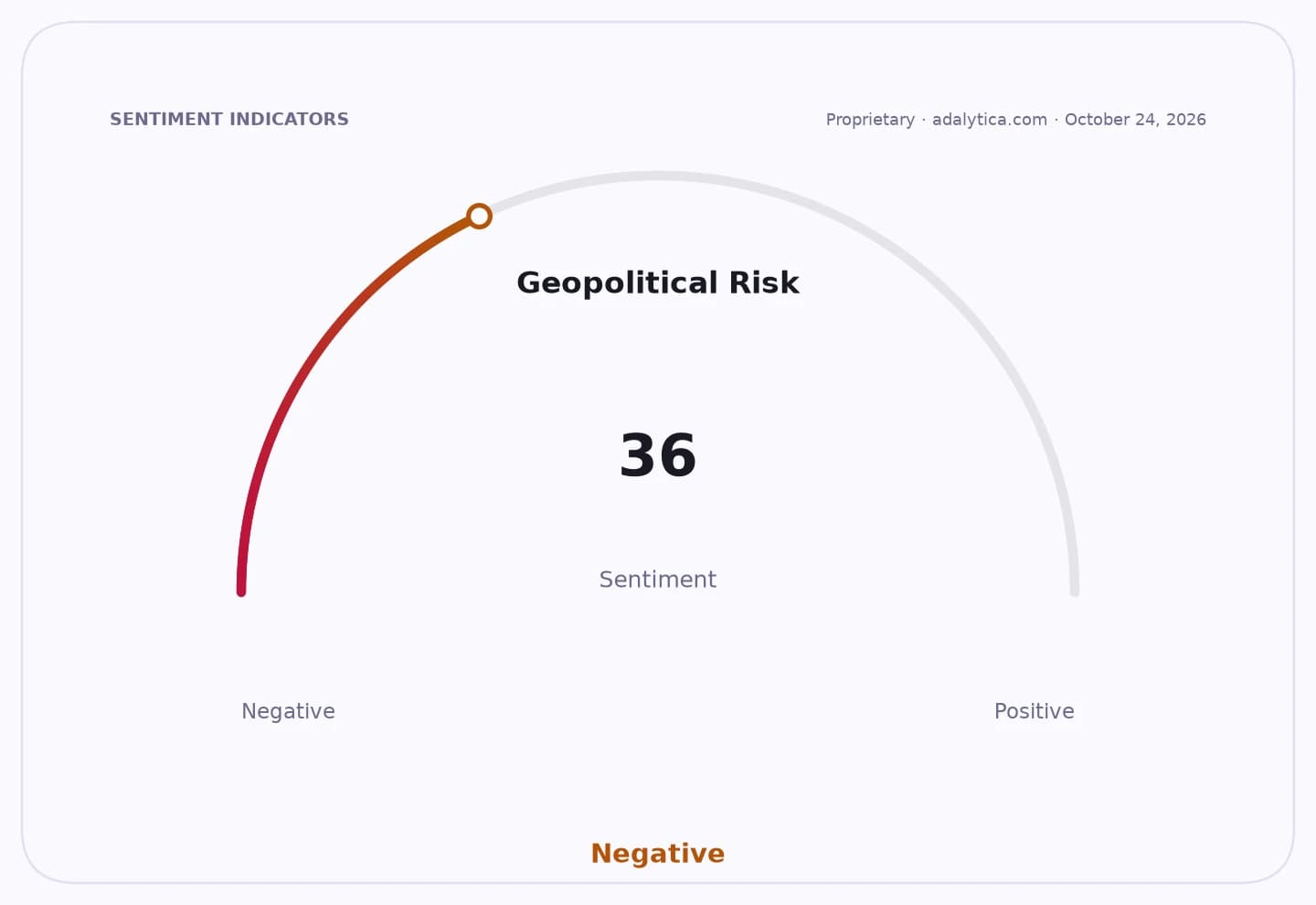
Sentiment Indicators
The latest reading came after the APEC summit in Shenzhen, where Chinese outlets treated the meeting as evidence that Latin American economies still want strategic flexibility. The Paper, a Shanghai-based site, said APEC remains one of the few forums where Lima can speak regularly with both powers at the highest level without being trapped in a bilateral dispute. Luis Miguel Castilla, Peru’s former economy minister, warned that “compared with two years ago, Latin American countries find it harder to maintain the balance between the great powers.”
Peru’s Chancay port became the clearest symbol of that tension. Castilla cited it in arguing for clear rules to assess investment, while China News Service highlighted it as a maritime link that has cut the fastest shipping time between Peru and China to 23 days. For investors, that is the core economic story: Beijing is not just pursuing political influence, but hard logistics that can shorten trade routes, lower transport costs and deepen regional integration around Chinese capital and engineering.
China’s coverage also stressed that cooperation has not stalled because of political change. A Shanghai Daily analysis said the rightward shift in Chile and Peru has not altered cooperation with China, pointing to meetings in Shenzhen between President Xi Jinping and Chile’s José Antonio Kast and Peru’s Keiko Fujimori. The implication is that Beijing believes commercial ties can survive electoral turnover, even in governments that may sound more skeptical in campaign season.
That message runs directly into the U.S.-China competition over technology, standards and supply chains. José Luis Bernal, Mexico’s former ambassador to China, told the Shanghai paper that Latin American countries must define their own position, separating room to diversify trade from the harder choices posed by U.S.-China tech rivalry. In other words, commodity and infrastructure deals may remain feasible, but semiconductors, telecoms, ports and data-sensitive investment are becoming more politicized.
For Mexico, the issue is especially consequential because its economy is far more exposed to the U.S. through manufacturing, exports and nearshoring than Chile or Peru are. That limits how far Mexico can lean toward China, even if it wants more leverage. Chile and Peru, by contrast, have more room to expand commodity trade and investment links with Chinese buyers, especially in minerals, ports and agriculture. But even there, any perception of excessive dependence on Beijing could trigger domestic political pushback or friction with Washington.
Chinese officials are framing the region’s priorities in economic terms. Xinhua said APEC should promote free and open trade and investment, while Rosario Navarro, head of Chile’s Sofofa industrial group, said Chile and China can develop new industries together. That suggests the next phase of the relationship is less about ideology than about who finances infrastructure, who controls logistics and who sets the terms for strategic sectors.
For investors, the practical read-through is that Latin American assets tied to Chinese demand, shipping routes and resource exports remain supported by Beijing’s engagement, but the political discount is rising. Deals such as Chancay may continue to reshape trade flows, yet they also invite greater scrutiny from regulators and from Washington. The countries that can keep both channels open may capture the most capital; those that are forced to choose could face slower investment and more volatile market access.
| Entity | Gains | Losses |
|---|---|---|
| China | ▲Deeper trade and logistics ties | ▼Greater scrutiny from Washington |
| Mexico | ▲More bargaining room with both powers | ▼Limits from U.S. dependence |
| Chile and Peru | ▲Chinese investment and market access | ▼Rising geopolitical risk premium |
| Investors in ports and commodities | ▲Faster trade routes and new projects | ▼Policy and alignment uncertainty |