Peru’s push to turn Corio into a Pacific mega-port has run into its most important problem: neither the United States nor China has put up cash, leaving an $844.5 million project with no operator, no secured financing and no cargo contracts.
Peru Corio Port Lacks Funding and Operator
That matters because Corio is being sold not just as a port, but as a strategic piece of infrastructure that could redraw trade routes between South America and Asia. Without committed capital, the project remains a political talking point rather than an investable asset, and the gap between ambition and execution is widening just as Peru seeks to position itself between Washington and Beijing.
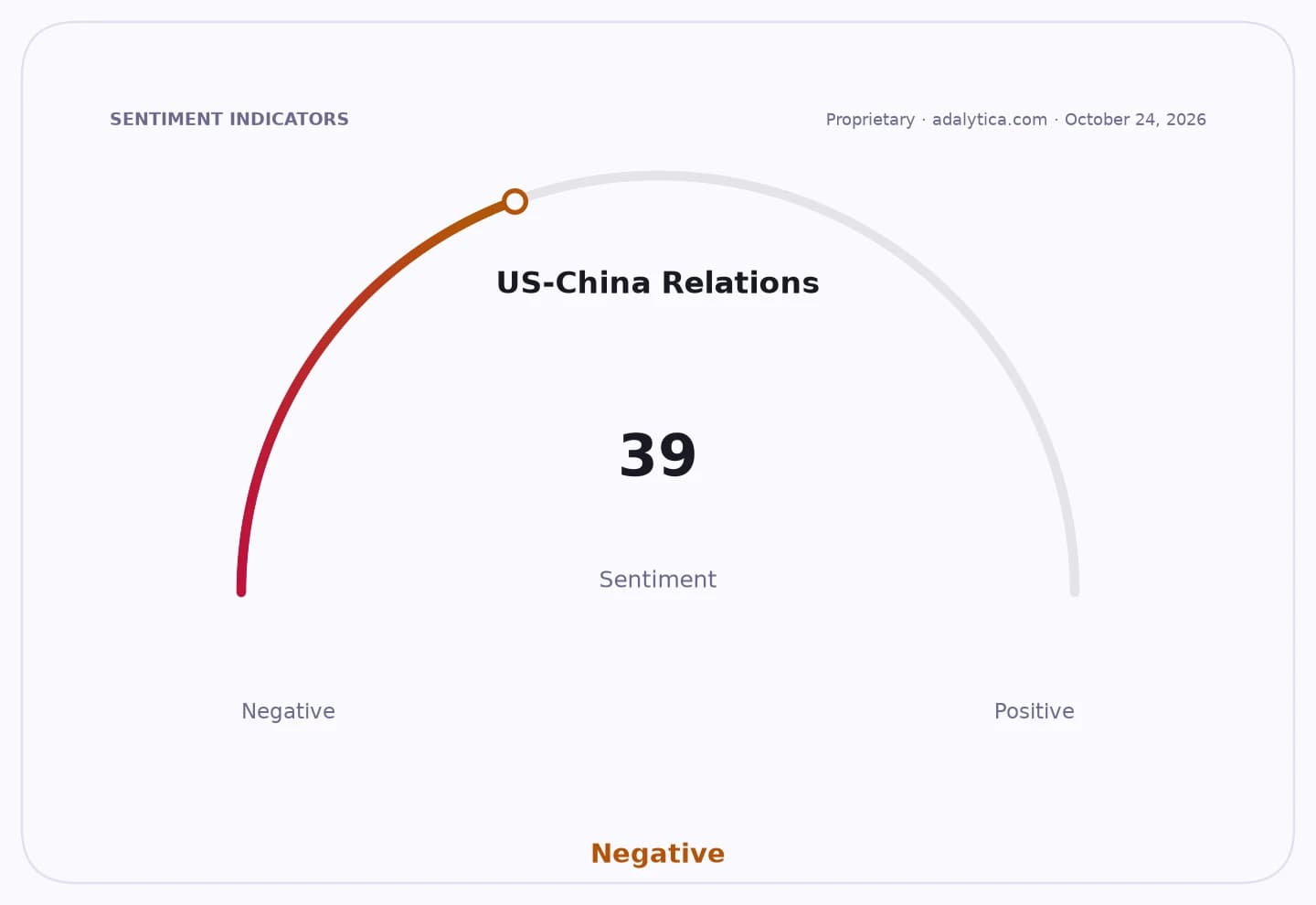
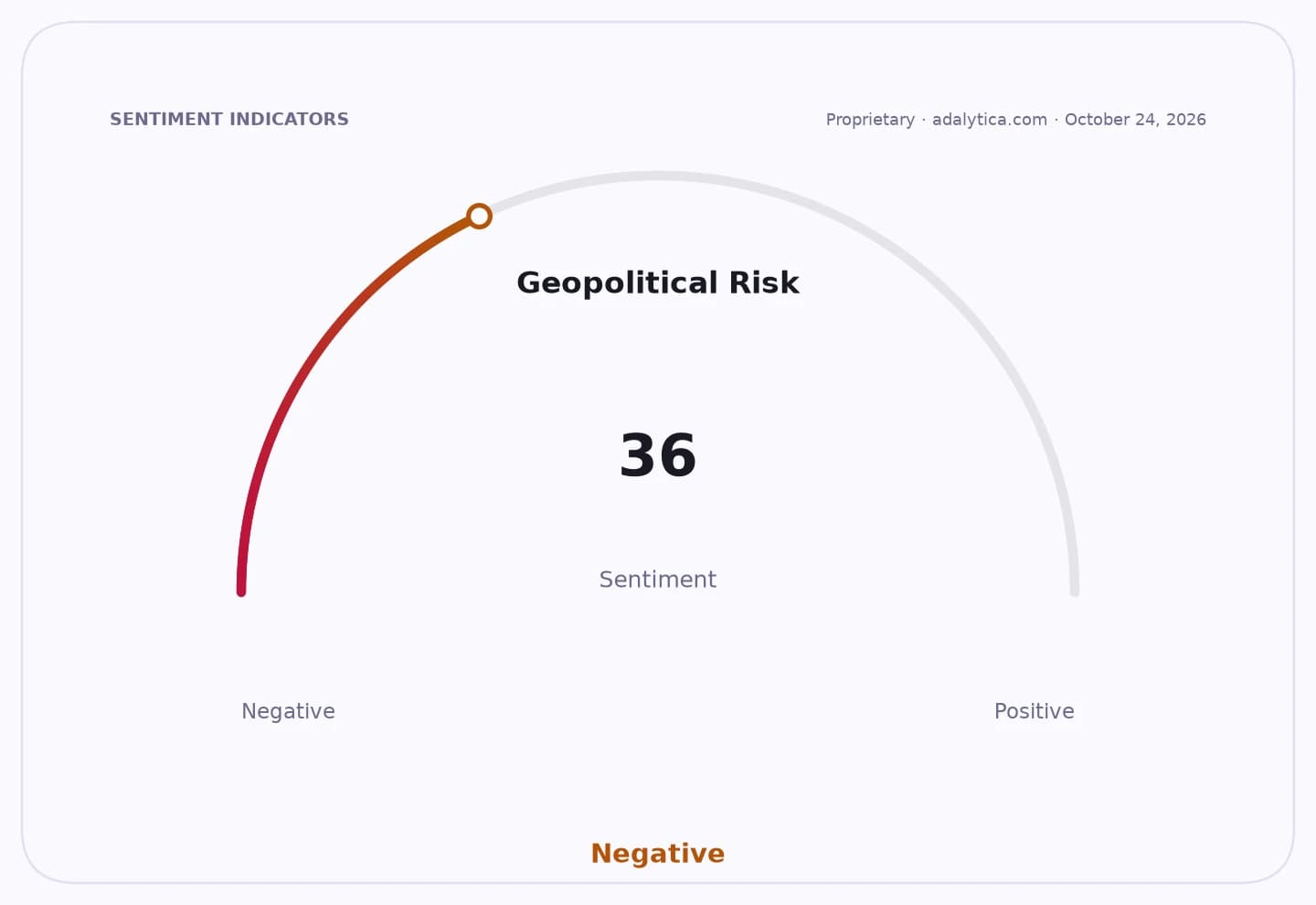
Sentiment IndicatorsⓘProprietary · adalytica.com · October 24, 2026
This is a snapshot — live sentiment, awareness and momentum for 130+ markets update continuously in the dashboard.Open AlphaPulse
The state investment agency ProInversion signed yet another marketing agreement on Oct. 12 with the Arequipa regional government, but the deal only opens a channel for investment. It does not deliver the money, cargo or regulatory clarity needed to build the terminal in Peru’s southern Arequipa region. The first phase alone is budgeted at $652 million, and the wider city-and-industrial concept has no consolidated cost estimate.
For investors, the real issue is not the rhetoric around a port. It is whether Corio can ever become a functioning logistics corridor. Officials say the terminal could eventually handle cargo from Brazil and Bolivia and shave Asia-bound voyages to 26-27 days, versus about 46 days from Brazil’s Atlantic ports. But that time saving means little if exporters still have to cross continents over incomplete roads, border bottlenecks and uncertain rail links to reach Peru’s coast.
The numbers underscore how speculative the project remains. Peru’s most optimistic scenario now has Corio handling 19 million tonnes of bulk cargo and 932,000 tonnes of general cargo a year by its 30th year of operation, far short of earlier talk of a 100 million-tonne hub. No binding cargo commitments from Brazilian or Bolivian shippers have been announced, and even the APN’s demand study was still unfinished in September.
That leaves Corio in a crowded field where rivals already have clearer economic logic. China-backed Chancay north of Lima is operating, while other projects in Peru have identifiable cargo bases. Corio, by contrast, is still trying to prove the demand case before it has proved the financing case.
The geopolitical overlay is what makes this more than a local infrastructure story. Peru has pitched Corio to Washington as a counterweight to China’s influence, and to Beijing as an open door for Chinese capital. Yet the US has only announced a $5 million mining investment through the Development Finance Corporation — money that does not touch Corio — while Chinese interest remains unnamed and uncommitted.
That tells investors something important about the current cycle in Latin American infrastructure: strategic value alone is not enough. Ports need cargo, not just headlines; financing, not just memorandums; and a regulatory framework, not just political endorsements. Corio has none of the three at scale.
The next catalyst will not be another pitch meeting. It will be whether Peru can name an operator, secure a meaningful anchor investor and show that the port can connect to the Interoceanic Highway, border crossings and power supply on a credible timeline. Until then, Corio remains a story of optionality, not execution — and that usually means the best gains belong to the early suppliers, engineering firms and adjacent logistics players, not the port itself.
| Entity | Gains | Losses |
|---|---|---|
| Peru / Arequipa officials | ▲Political leverage | ▼Credibility gap |
| China / US suitors | ▲Strategic influence | ▼Capital deployment risk |
| Nearby logistics and engineering firms | ▲Project optionality | ▼Delay uncertainty |
| Competing ports like Chancay | ▲Clearer cargo pipeline | ▼Less scrutiny on financing |