China’s opening of a military training centre at a new airfield in Laos gives the People’s Liberation Army a rare forward operating foothold in mainland Southeast Asia, intensifying concerns that Beijing is expanding its overseas military reach beyond the South China Sea and Djibouti.
China opens military training centre in Laos
The base matters because it changes the geography of China’s military posture. Ban Keun airport, about 50 km north of Vientiane, is inland, close to China’s southwestern flank and within reach of Vietnam, Thailand, Cambodia and Myanmar. That gives the PLA a runway in the middle of the region rather than on a disputed reef or a coastal naval site, increasing its ability to support aircraft, trainers or logistics activity without the visibility of a larger formal overseas base.
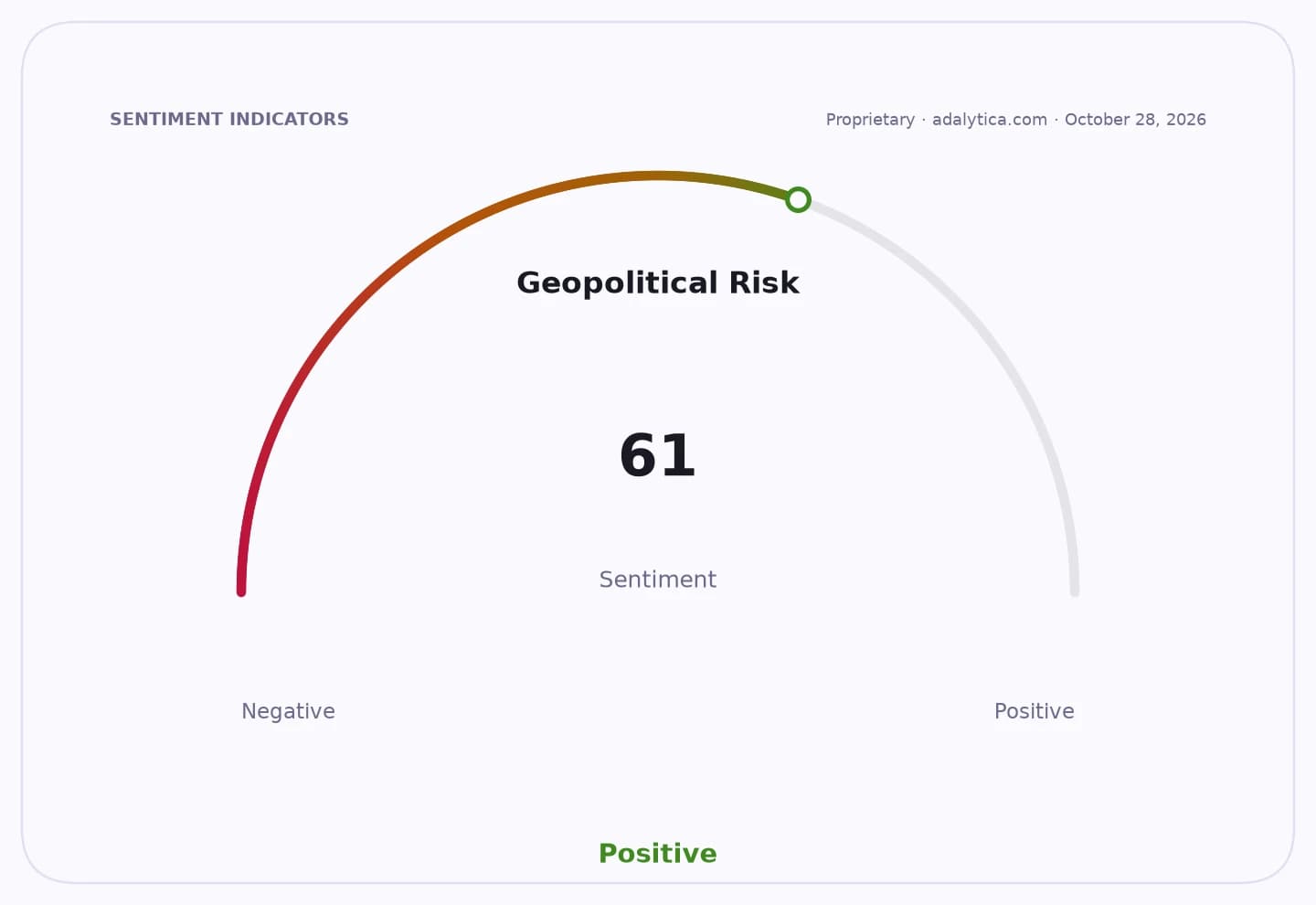
Sentiment Indicators
Beijing and Vientiane have described the site as a joint support and training centre and an aviation academy, saying it is intended to help Laos train pilots and is not aimed at any third party. But regional analysts say the label is itself revealing. Rachel Vandenbrink of the Australian Strategic Policy Institute said the wording suggested the PLA could be seeking persistent access to a logistics hub that can support rotating forces. Collin Koh of Singapore’s S. Rajaratnam School of International Studies went further, calling it the first full-fledged PLA overseas base in Southeast Asia.
The opening deepens a pattern that has unnerved Washington and its allies. China already operates a logistics base in Djibouti, its first acknowledged foreign military base, and has a joint support centre at Cambodia’s Ream naval base, where Phnom Penh denies any permanent Chinese presence. It also controls three militarized outposts in the South China Sea. Ban Keun is different because it places Chinese military infrastructure on the mainland, in a country that shares borders with five states and sits astride key overland routes.
For investors, the significance is broader than regional posturing. A more assertive Chinese security footprint in Southeast Asia raises the premium on geopolitical risk across supply chains, trade corridors and capital flows that run through the region. Laos is already tightly tied to China through the 1,035 km China-Laos Railway and a new digital yuan payment link. The military layer now being added to that economic relationship suggests Beijing is fusing infrastructure, finance and security into a single strategic architecture.
The move also complicates the regional balance for ASEAN members, especially Thailand, which said it respected Laos’s sovereign right to make decisions while closely monitoring developments. The United States, which has long tracked Chinese efforts to secure access agreements abroad, had not listed Laos among the countries where Beijing might seek facilities. That omission now looks less reassuring.
For now, the immediate military impact may be limited if the base hosts only a small support element and training personnel. But the strategic signal is unmistakable: Beijing has moved from influence to infrastructure in a part of Asia that sits on the fault line between Chinese power and its rivals. That is the kind of development that tends to outlast the headlines, because once a runway is in place, the question is no longer whether China can project power there, but how much it chooses to use it.
| Entity | Gains | Losses |
|---|---|---|
| China / PLA | ▲Forward access in Southeast Asia | ▼Strategic transparency |
| Laos | ▲Chinese security backing | ▼Sovereignty concerns |
| ASEAN neighbors | ▲More reason to coordinate | ▼Higher regional tension |
| US and allies | ▲Clearer read on Beijing’s posture | ▼Greater containment challenge |