China’s attempt to muscle into the Pacific Islands Forum has backfired for now, but the episode underlines a harder truth for investors and policymakers: the South Pacific has become a live arena in the contest between Beijing, Washington and their allies, with real implications for security spending, aid flows and regional access.
China Pacific Islands Forum Clash Over Taiwan

At the forum in Palau, China’s Pacific envoy threatened “consequences” over Taiwan’s participation, only to retreat after leaders pushed back. The result matters because the Pacific islands are no longer a diplomatic sideshow. They sit on critical sea lanes, host U.S. military infrastructure and are increasingly exposed to climate shocks, giving every pledge, port upgrade and security pact a strategic edge.

The clearest signal was the communique’s language on “growing uncertainty” and intensifying geopolitical competition, which reflected how Pacific leaders are trying to hold the region together against outside pressure. Palau, one of only three Pacific states still recognising Taiwan, used its chairmanship to assert that island nations, not larger powers, set the agenda. That was echoed by New Zealand’s Winston Peters, who said the group did not take instructions from countries outside it.
Beijing’s frustration is structural. It has already cut Taiwan’s diplomatic footprint to just 12 countries worldwide, and reducing that number further remains a core objective. In the Pacific, China is leaning on a mix of diplomacy, infrastructure lending, debt relief and coercive signalling. The July launch of a submarine-based intercontinental ballistic missile into the South Pacific, without what regional leaders view as adequate notice, sharpened the sense that military competition is moving deeper into waters the islands want treated as a zone of peace.
That is important economically because the region’s governments are small, aid-dependent and highly sensitive to shifts in external financing. The U.S. proposal for a 90% cut to USAID programs globally, and what the Center for Global Development said would amount to a 100% cut in funding for Papua New Guinea, Vanuatu, Palau, Fiji and Solomon Islands, creates room for China to fill gaps with targeted projects. Washington has responded with new embassies and a promised $50 million port upgrade in the Cook Islands, but the policy inconsistency is giving Beijing an opening.
The market relevance is less about immediate trade flows — Pacific Island-US bilateral trade is only about $1 billion a year — and more about where influence translates into contracts, access and defence positioning. Guam and the Mariana Islands are central to U.S. deterrence planning, while Chinese seabed surveys in nearby waters raise concerns about submarine navigation and undersea warfare. For defence contractors, infrastructure suppliers and logistics players, the region is increasingly tied to strategic spending rather than conventional commerce.
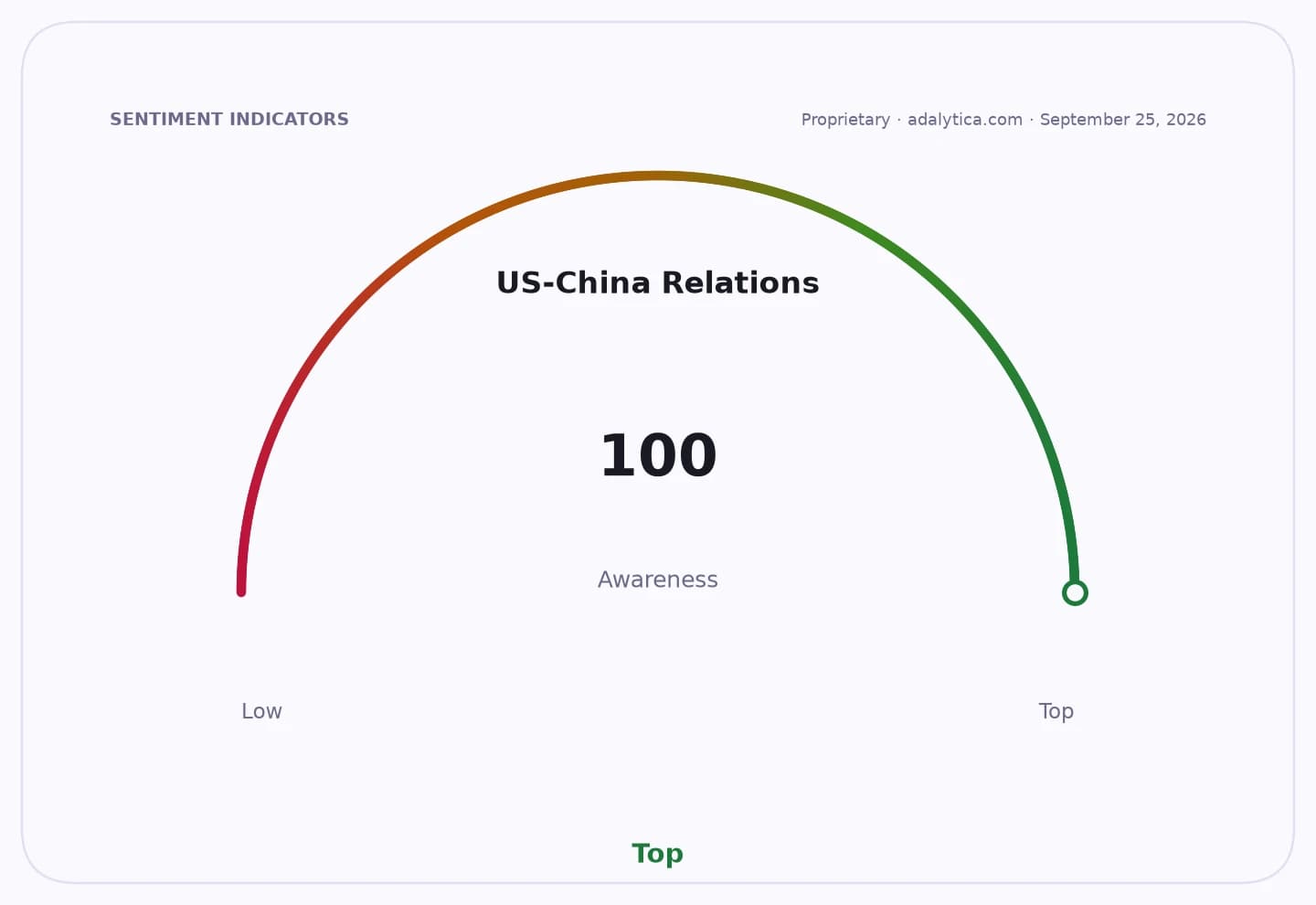
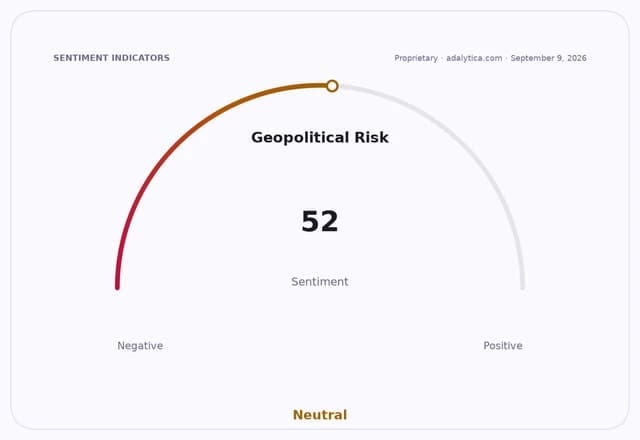
Investors should also watch the indirect market effects. Greater Pacific competition tends to support U.S., Australian and New Zealand security engagement, while raising the odds of episodic friction with China. That has helped keep geopolitical risk premia elevated in the region. Adalytica’s Global Stability Sentiment sits at neutral, but awareness is high, consistent with investors paying attention without fully pricing in a crisis. Chinese policy-direction sentiment remains neutral as well, reflecting a market that sees Beijing as assertive but not yet in a new escalation phase.
The bull case for China is that Pacific states continue hedging, taking money and projects from multiple suitors while avoiding outright alignment. The bear case for Beijing is that coercive tactics are pushing even small states to coordinate more closely with Australia, New Zealand, the U.S. and Taiwan-friendly partners such as Palau. That is already visible in Australia’s A$600 million anti-smuggling initiative and a run of new security partnerships across the region.
The immediate question is whether the forum’s unity holds and whether Washington can turn recent diplomatic reopenings into durable influence. If not, Beijing’s patient strategy of turning aid into leverage will keep gaining ground. For investors, the key watchpoints are defence budgets, port and telecom contracts, aid reallocations and any sign that South Pacific states are shifting further toward Chinese financing as U.S. policy becomes less reliable.
| Entity | Gains | Losses |
|---|---|---|
| China | ▲Influence leverage | ▼Taiwan recognition goals |
| Pacific Islands Forum states | ▲Bargaining power | ▼Exposure to pressure |
| U.S. and allies | ▲Strategic urgency | ▼Regional credibility |
| Taiwan | ▲Diplomatic visibility | ▼Isolation risk |