China’s central bank bought more than 20 tons of gold in August, its biggest monthly purchase in nearly three years, underscoring how official institutions are still building bullion reserves even after prices have risen sharply.
China PBOC buys over 20 tons of gold in August

The People’s Bank of China said on Sept. 7 it added 650,000 ounces to reserves last month, bringing holdings to 76.73 million ounces, or about 10% of total foreign-exchange reserves. At current prices, the stockpile is worth more than $350 billion. The purchase extended China’s buying streak to 22 straight months and reinforced a broader shift among central banks that are treating gold less as a trading asset than as strategic insurance.
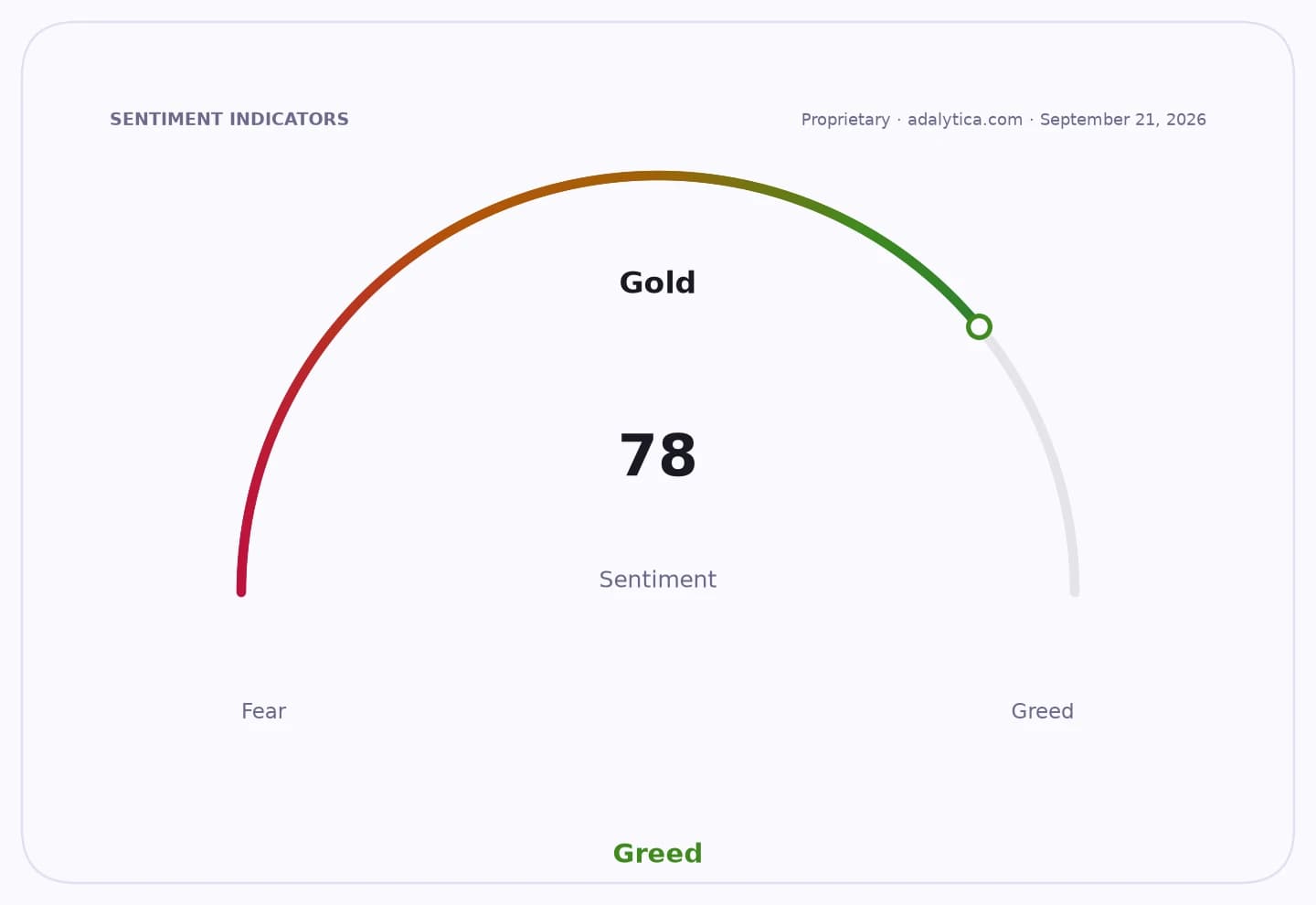
Sentiment IndicatorsⓘProprietary · adalytica.com · September 9, 2026
This is a snapshot — live sentiment, awareness and momentum for 130+ markets update continuously in the dashboard.Open AlphaPulse
That matters for the global monetary system because official-sector demand has become a structural support for bullion at a time when other macro forces are more mixed. The World Gold Council said central banks bought 130 tons in the first seven months of the year, 30 tons more than a year earlier. Poland has been the largest official buyer this year, seeking to raise gold to 30% of reserves, while China is using accumulation to diversify away from the dollar and broaden the asset base behind the yuan.
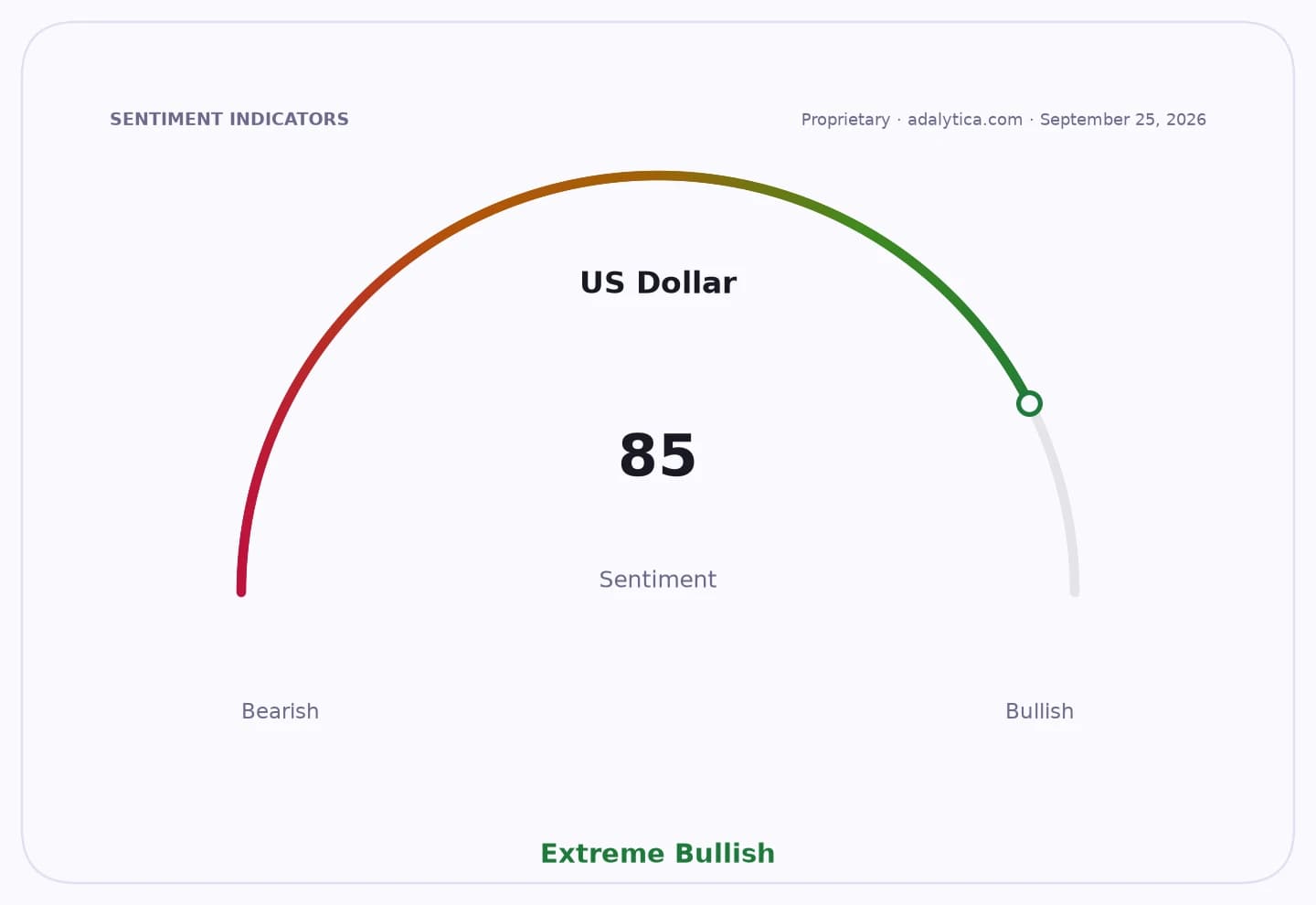
The timing is also important. Gold has been under pressure for much of the past six months as geopolitical shocks and higher Treasury yields pulled in opposite directions. Yet bullion rose nearly 10% in August alone, helped by concerns that a planned increase in US government bond issuance could keep inflation expectations alive and weigh on the dollar. Adalytica’s US Dollar Trade Signals show sentiment in the greenback still elevated, but the recent moves in gold suggest markets are not fully comfortable with that backdrop.
For investors, the message is that the long-term gold case is being underwritten by buyers who are less price-sensitive than private funds. That supports gold miners, bullion-backed ETFs and related producers when real demand is firm, but it does not eliminate the short-term headwind from rising bond yields, which increase the opportunity cost of holding non-yielding assets.
China’s pace of accumulation also fits a wider policy narrative. Beijing is trying to deepen gold storage infrastructure in Shanghai and Hong Kong and position itself as a more important hub for bullion custody, potentially drawing reserves from foreign institutions. That would strengthen China’s role in the international monetary system while reducing reliance on Western financial plumbing.
The near-term risk is that higher yields keep capping upside even as central banks buy. But as long as official demand stays persistent, every pullback in gold is likely to find a floor more quickly than in past cycles — a dynamic that keeps bullion relevant as both a geopolitical hedge and a reserve-management tool.
| Entity | Gains | Losses |
|---|---|---|
| China PBOC | ▲Larger reserve buffer | ▼Higher carrying costs |
| Gold prices | ▲Official-sector support | ▼Yield-driven pressure |
| Gold miners/ETFs | ▲Stronger long-term demand | ▼Near-term volatility |
| US dollar/Treasuries | ▲None | ▼Reserve diversification pressure |