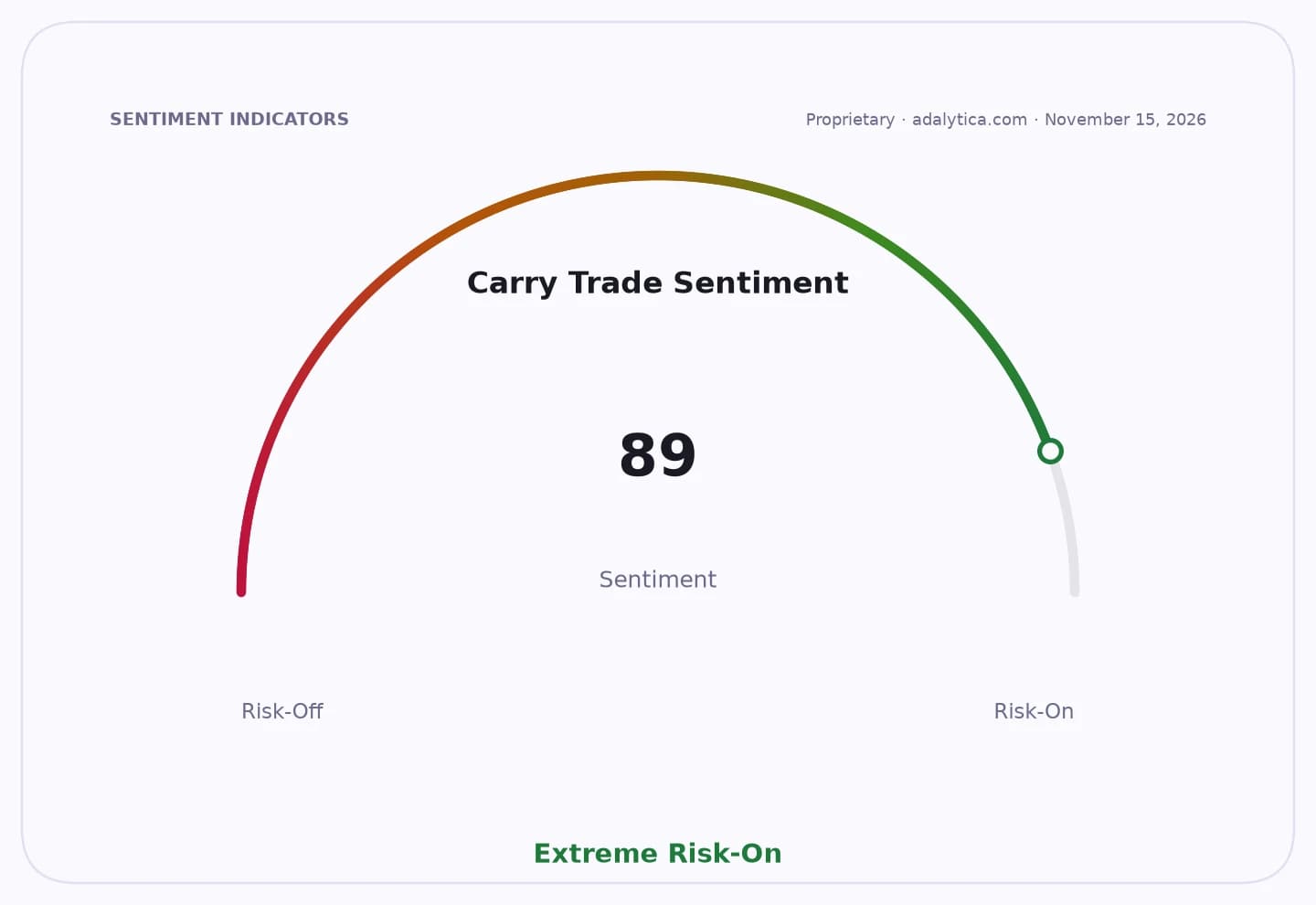
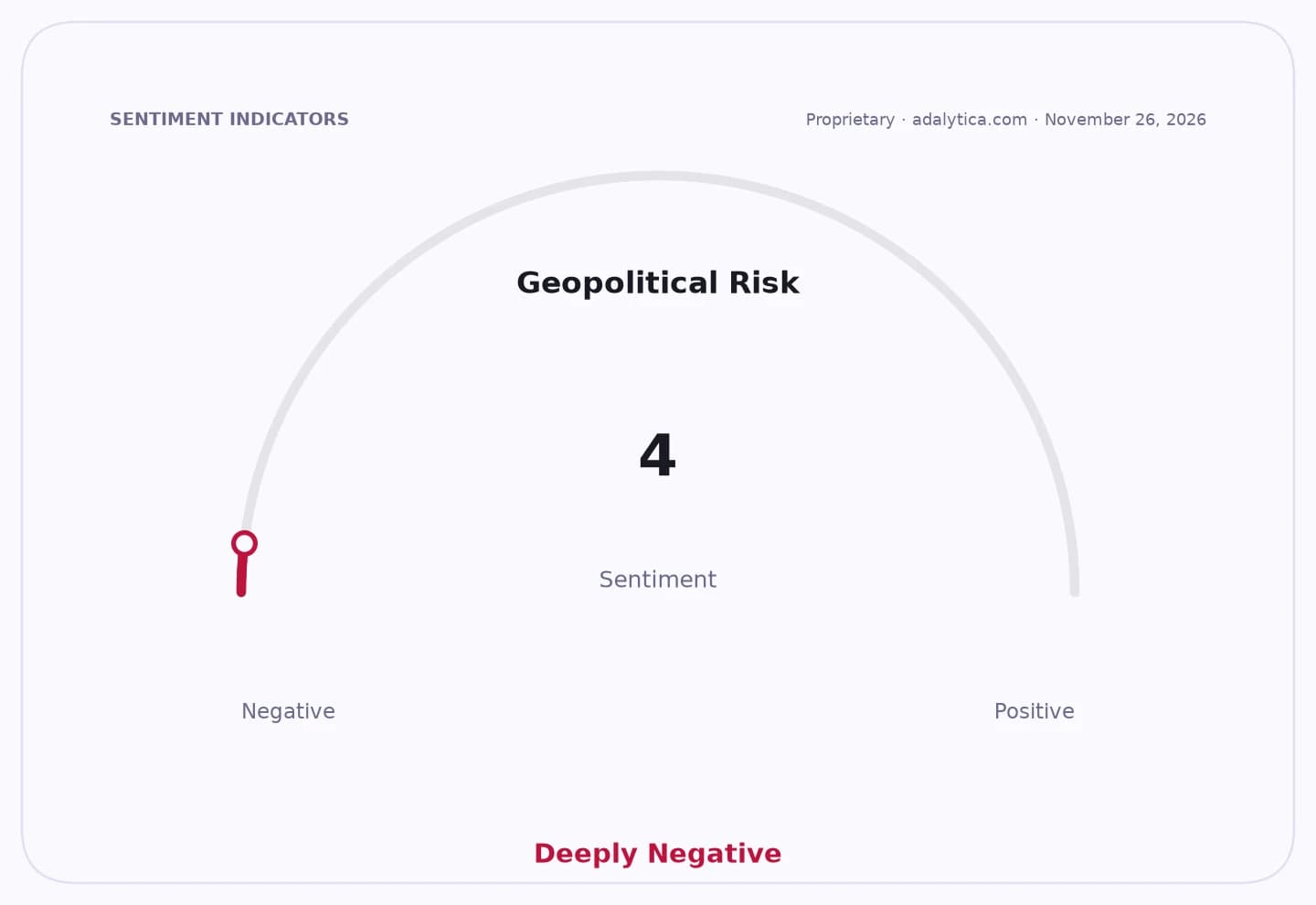
China said it has no intention of using a weaker yuan to win export share, a signal aimed as much at trading partners as at markets that Beijing still wants currency stability even as its trade surplus draws fresh scrutiny.
China PBOC Says It Will Not Weaken Yuan

The People’s Bank of China’s statement matters because exchange-rate policy sits at the center of the debate over how Beijing manages growth, trade tensions and capital flows. A deliberately softer yuan would support exporters in the short run, but it would also risk fanning accusations of competitive devaluation, complicating China’s relations with the U.S. and other major trading partners at a time when its industrial overcapacity and export strength are already under the microscope.
Sentiment Indicators
Chinese Yuan
For investors, the message is that policymakers are still prioritizing currency control over a weaker renminbi as a growth tool. That reduces the odds of an abrupt depreciation cycle that could spill into Asian FX markets, pressure offshore yuan funding costs and unsettle China-linked risk assets. It also suggests the central bank is trying to preserve confidence in the currency while keeping enough flexibility to smooth disorderly moves if herd behavior develops.
The PBOC said it would maintain a market-based exchange rate, but reserved the right to use macroprudential tools or intervene in the foreign-exchange market in extreme circumstances to prevent sharp, disruptive swings. That formulation is important: Beijing is not promising a freely floating yuan, only one managed closely enough to avoid signaling policy weakness or inviting speculative pressure.
Chinese Yuan — 30-day sentimentadalytica.com
Explore this data interactively — full history, time series and cross-market comparisons.
The backdrop is a Chinese economy still leaning on external demand even as domestic growth remains uneven. Strong industrial profits and resilient exports have helped offset softer parts of the economy, but they have also intensified the political sensitivity of China’s trade surplus. Any sign that Beijing was engineering a weaker currency to support shipments would likely sharpen foreign criticism and raise the risk of retaliation.
Marketwise, the statement should be read as supportive for the yuan and for Chinese assets that are sensitive to FX volatility. It also cuts against the idea that policymakers will use the exchange rate as a broad stimulus lever. Bulls will argue that this reduces tail risk and reinforces Beijing’s commitment to orderly markets. Bears will note that the need to issue such a statement underscores how closely investors and policymakers alike are watching for signs of devaluation pressure.
The key question now is whether China can keep the yuan stable without leaning too heavily on intervention or liquidity tools. If the economy slows further, the tension between growth support and exchange-rate discipline will only get harder to manage.
| Entity | Gains | Losses |
|---|---|---|
| Beijing / PBOC | ▲Policy credibility | ▼Flexibility for weaker yuan |
| Yuan holders | ▲Exchange-rate stability | ▼Devaluation hedges |
| Chinese exporters | ▲Avoids trade backlash | ▼Currency-driven boost |
| Foreign rivals / trade partners | ▲Less devaluation risk | ▼Fewer complaints leverage |