China is putting its scientists on billboards, shopping-mall screens and streetscapes in a campaign that goes beyond public relations: it is trying to turn technological ambition into a national habit at a time when growth, security and geopolitics all hinge on homegrown innovation.
China Promotes Scientists in Public Campaign

The effort matters economically because Beijing is signaling that research and engineering are not just support functions for industry, but central pillars of the growth model. By elevating figures such as rocket scientist Qian Xuesen, Nobel laureate Tu Youyou and agricultural pioneer Yuan Longping, the government is tying patriotism to breakthroughs in semiconductors, biotech, food security and advanced manufacturing — sectors that will determine whether China can keep upgrading its economy under U.S. export controls and weaker domestic demand.
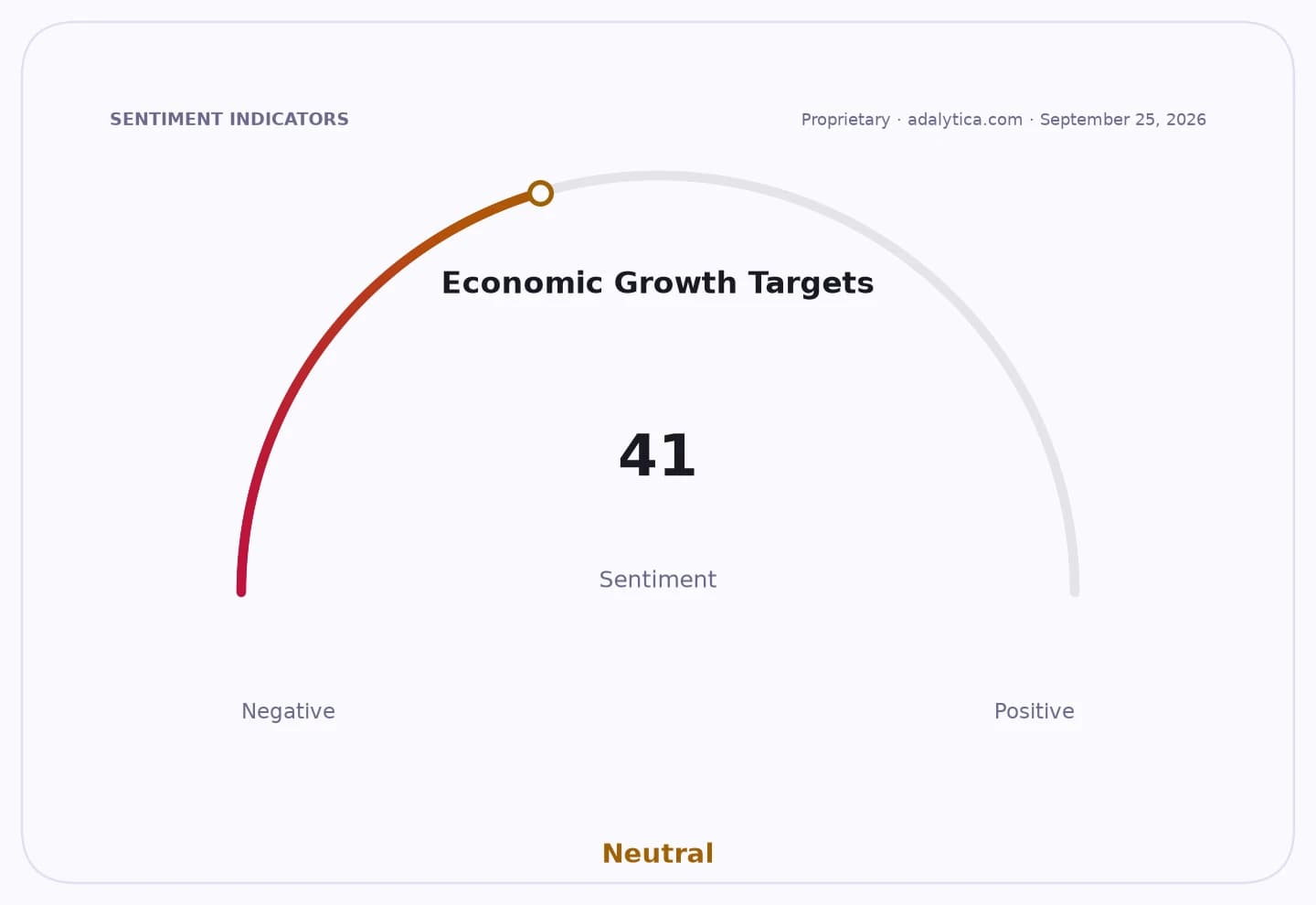
Sentiment IndicatorsⓘProprietary · adalytica.com · September 7, 2026
This is a snapshot — live sentiment, awareness and momentum for 130+ markets update continuously in the dashboard.Open AlphaPulse
The campaign began in Shandong before spreading more widely, suggesting local authorities are being used to test a form of soft power messaging that is also industrial policy. The response, according to reports, has been immediate: people are taking photos in front of the displays, turning the scientists into public icons in the same way entertainers and politicians are typically treated elsewhere. That shift is significant in a country where state priorities can quickly shape consumer behavior, career choices and even capital allocation.
For investors, the message is that Beijing wants more than cyclical stimulus. It wants a long-duration re-rating of sectors linked to national capability. That is relevant for technology, AI, biotech, robotics, education and defense-related suppliers, especially if the state keeps steering funding, subsidies and procurement toward strategic science. It also reinforces the investment case for firms positioned around domestic substitution and research intensity, even as some sectors remain exposed to policy volatility and slower overall consumption.
The broader narrative is about China building an innovation culture to support strategic resilience. That is especially important as tensions with the U.S. keep the technology race front and center; the country’s science push is not happening in a vacuum, but alongside a more militarized and competitive posture in advanced robotics, semiconductors and dual-use technologies. The campaign to glorify scientists is therefore both symbolic and practical: it is meant to normalize technical excellence as a civic virtue while helping Beijing widen its pool of talent for the next phase of industrial competition.
For markets, the key question is whether this kind of messaging translates into durable policy support and better earnings for the companies tied to it. If it does, the beneficiaries are likely to be Chinese champions in high-tech and research-heavy industries. If it does not, the campaign may remain an emblem of ambition rather than a catalyst for fundamentals.
| Entity | Gains | Losses |
|---|---|---|
| China’s science sector | ▲Higher prestige, talent pull | ▼Less focus on entertainment icons |
| Strategic tech firms | ▲Policy support, better funding odds | ▼Firms without national role |
| Students and researchers | ▲Stronger career incentives | ▼Short-term consumer brands |
| U.S. rivals | ▲— | ▼More Chinese innovation pressure |