China’s move to halt certain rare-earth shipments to the U.S. is underscoring a far more consequential kind of power than warships: the ability to choke off the materials that go into missiles, fighter jets, electronics and semiconductors.
China Rare Earth Curbs Hit U.S. Defense Supply Chain
For investors, that makes the rare-earth supply chain a direct defense and industrial risk, not just a trade-policy headline. The restrictions, and the licensing uncertainty around them, hit inputs used across military, aerospace, medical and chipmaking industries, raising the cost and complexity of sourcing for U.S. manufacturers already trying to reduce dependence on China.
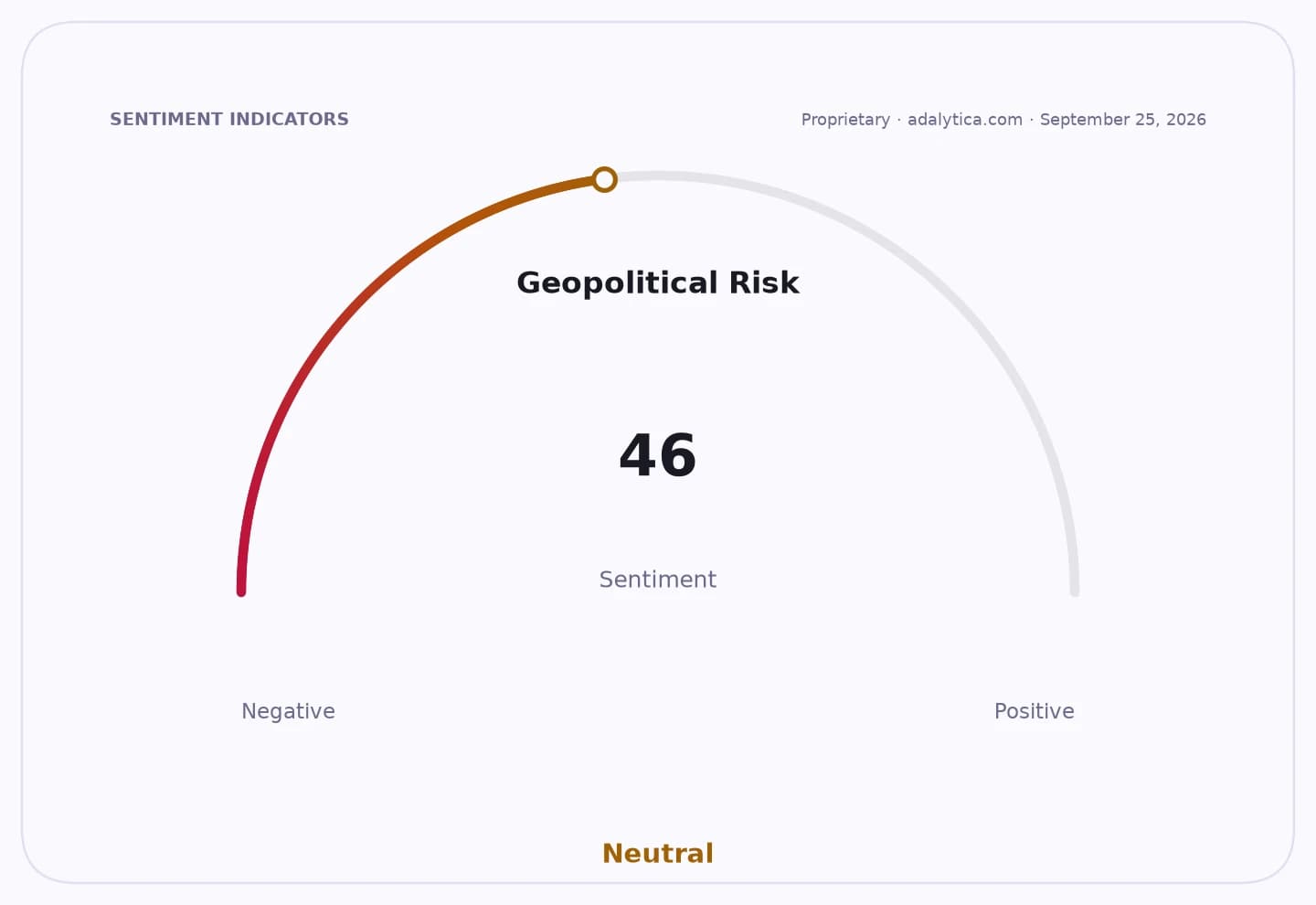
Sentiment IndicatorsⓘProprietary · adalytica.com · September 11, 2026
This is a snapshot — live sentiment, awareness and momentum for 130+ markets update continuously in the dashboard.Open AlphaPulse
The stakes are especially clear for Lockheed Martin, Northrop Grumman and RTX, which rely on advanced materials embedded in weapons systems and electronics. Lockheed shares last traded at $530.12, down from a recent peak above $668, while Northrop closed at $518.95 after briefly topping $761 in March and RTX ended at $198.12, well below its $225.49 high in August. All three remain above their 200-day moving averages, but the recent price action shows investors are rotating away from defense names as supply-chain and valuation risks rise.
The broader issue is industrial leverage. China has spent years building dominance in rare-earth processing while the U.S. and its allies outsourced much of refining and manufacturing, leaving Washington with military superiority but exposure in the materials underneath it. That dependence now gives Beijing a non-military tool that can ripple through defense spending, factory output and technology production without a shot being fired.
US-China Relations vs LMTadalytica.com
Explore this data interactively — full history, time series and cross-market comparisons.Open AlphaPulse

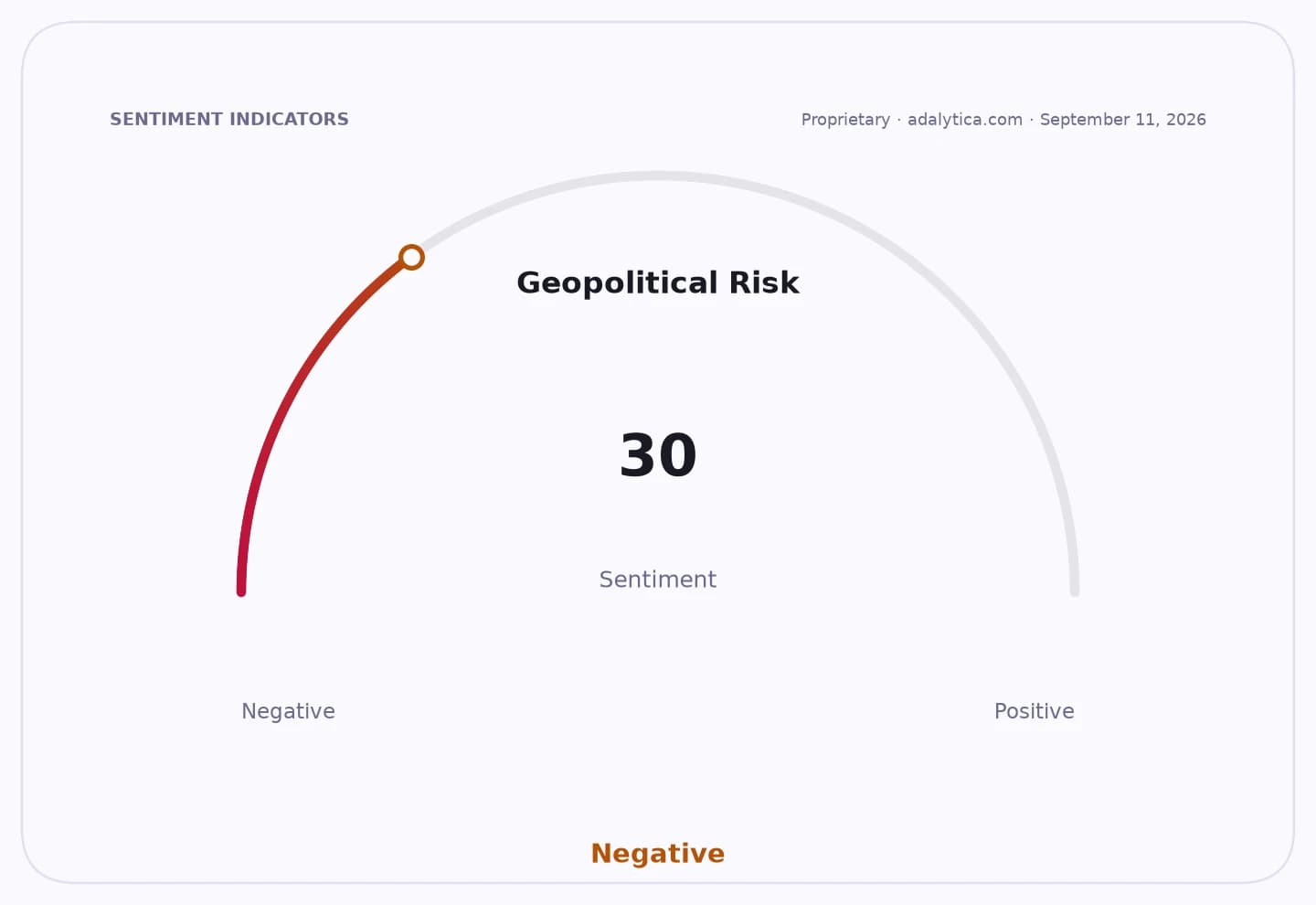
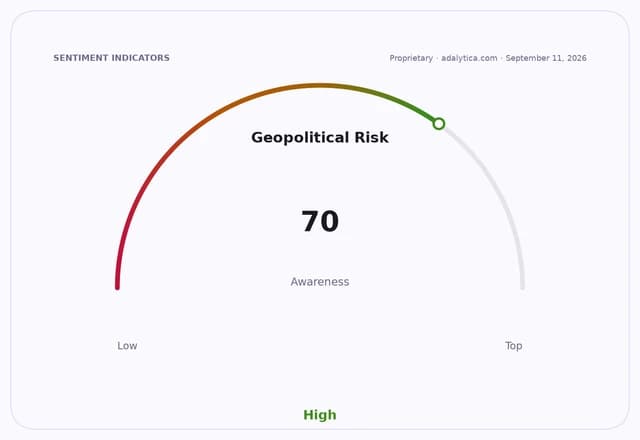
The market response also reflects how quickly geopolitical stress is feeding into pricing. Adalytica’s US–China Relations Sentiment gauge sits at 96, in “Extreme Greed,” but its awareness reading is just 4, in “Extreme Fear,” suggesting investors are highly focused on the issue even as visibility into the full supply-chain impact remains low. A separate global stability gauge has fallen to 30, signaling a more fragile backdrop for risk assets.
Washington and its allies are trying to respond by rebuilding mining, refining and manufacturing capacity, but that takes permits, capital and years. Until then, rare earths remain a strategic choke point, and any further curbs from China could keep defense contractors, chipmakers and industrial suppliers under pressure.
| Entity | Gains | Losses |
|---|---|---|
| China | ▲Supply-chain leverage | ▼Long-term trust with buyers |
| U.S. defense contractors | ▲Incentive to localize sourcing | ▼Higher input costs |
| Lockheed, Northrop, RTX | ▲Strategic urgency for diversification | ▼Margin pressure, supply risk |
| Rare-earth producers outside China | ▲New demand prospects | ▼Need heavy investment to scale |