China’s successful test of a sea-based rocket booster recovery system marks a step toward cheaper reusable launches, raising the competitive stakes for satellite deployment, defense space programs and listed aerospace companies exposed to the launch market.
China Reusable Rocket Test Pressures Launch Stocks
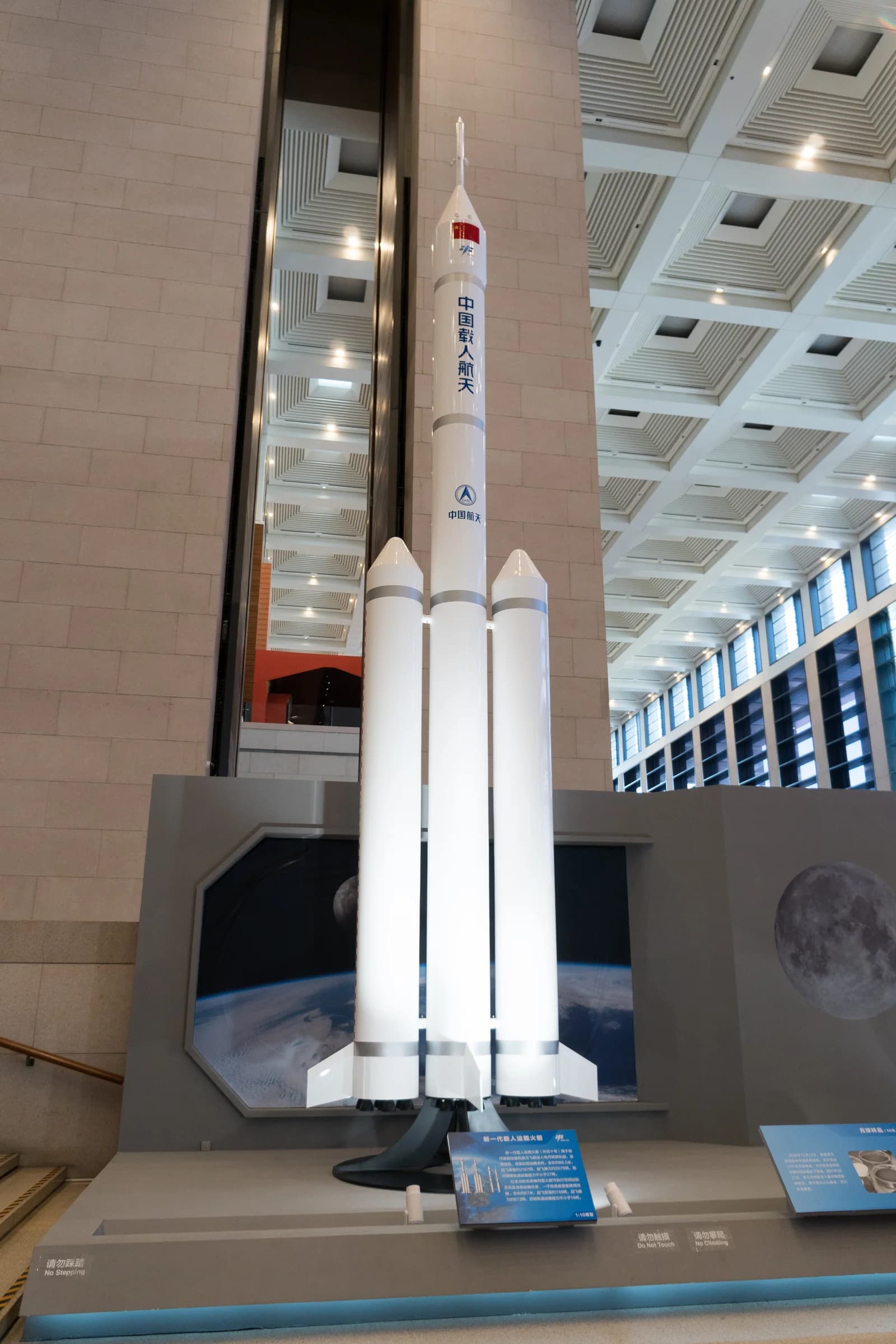
The economic significance is cost. Recovering boosters at sea can expand launch flexibility, reduce hardware losses and bring China closer to the model that has reshaped global access to orbit: frequent, lower-cost launches supporting communications, Earth observation, navigation and military space networks. If Beijing can turn the test into an operational capability, it would strengthen its ability to deploy satellites at scale while narrowing the gap with U.S.-led reusable launch systems.
The development also has geopolitical weight. Space launch capacity is increasingly tied to national security, from resilient satellite constellations to missile-warning and battlefield communications networks. A reusable Chinese booster architecture would deepen competition with U.S. providers and add pressure on Washington-backed launch ecosystems, including SpaceX, Rocket Lab and United Launch Alliance, the Boeing-Lockheed Martin joint venture.
Investors are watching because lower launch costs can shift margins, contract pricing and market share across the space supply chain. Rocket Lab, one of the few publicly traded pure-play launch and space-systems companies, has already been volatile: its shares closed at $81.04 on July 10, down about 40% from a May closing high of $134.28. Conventional technical indicators show the stock below its 50-day moving average of $107.09 but still above its 200-day average of $76.79, with a 14-day RSI near 31, a level traders often view as close to oversold.
Legacy aerospace contractors are less directly exposed to reusable small-launch economics but remain tied to the broader strategic-space race. Lockheed Martin closed at $523.22 on July 10, below its 200-day moving average, while Boeing ended at $222.28, just under its 50-day average and above its 200-day average. Both companies have space and defense exposure, and Boeing and Lockheed jointly own ULA, whose launch business competes in a market increasingly shaped by reusability and price pressure.
The market backdrop is complicated by deteriorating U.S.-China sentiment. Proprietary indicators from Adalytica.com show U.S.–China relations sentiment at 4, labeled “Extreme Fear,” with awareness at 78. That combination suggests investors are highly focused on bilateral risk just as China demonstrates progress in a strategically sensitive technology.
The test does not immediately rewrite the launch market; sea recovery is only one step toward reliable reuse, rapid refurbishment and high launch cadence. But it reinforces a clear direction: China is pushing to industrialize reusable spaceflight, and every successful test makes launch economics, defense procurement and satellite competition more exposed to geopolitical rivalry.
| Entity | Gains | Losses |
|---|---|---|
| China space sector | ▲Lower-cost launch path | ▼Reliance on expendable systems |
| U.S. launch providers | ▲Stronger demand for innovation | ▼Pricing power |
| Satellite operators | ▲More launch options | ▼Schedule scarcity |
| Defense incumbents | ▲Strategic-space budgets | ▼Legacy cost structures |