China has put nine more SatNet internet satellites into low Earth orbit, advancing a state-backed network built to give Beijing a larger role in global broadband, digital infrastructure and secure communications.
China Launches Nine More SatNet Internet Satellites

The launch matters because satellite internet is becoming a strategic layer of the digital economy, not just a space race trophy. China is trying to build a national constellation that can support commercial connectivity at home, expand overseas reach and reduce reliance on foreign-controlled communications systems, all while deepening its space-launch cadence and industrial base.
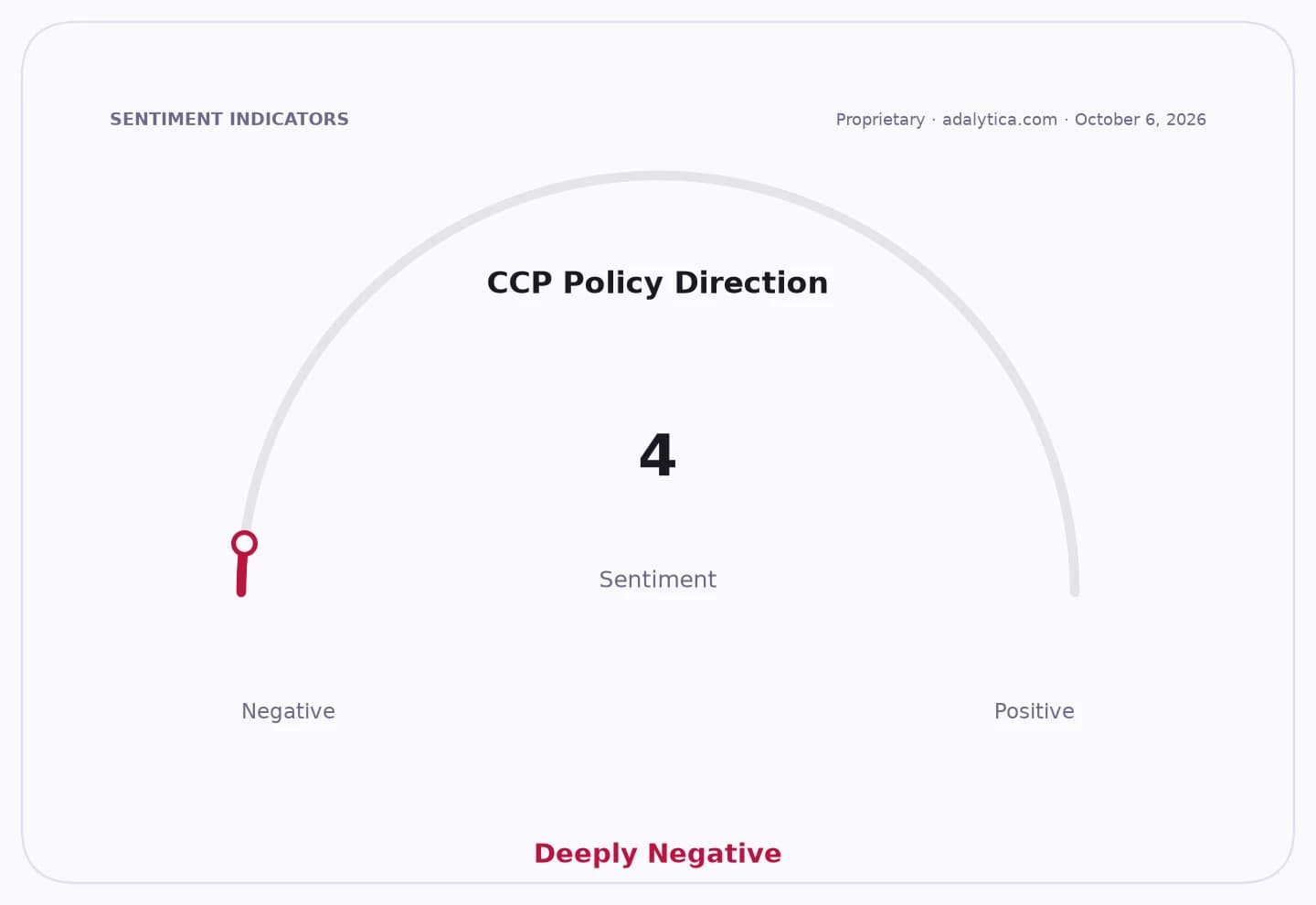
Sentiment IndicatorsⓘProprietary · adalytica.com · October 12, 2026
This is a snapshot — live sentiment, awareness and momentum for 130+ markets update continuously in the dashboard.Open AlphaPulse
State broadcaster CCTV said the satellites were launched from the Wenchang Space Launch Center on Hainan Island aboard a Long March-12A rocket and successfully entered their planned orbit. The mission was part of China’s SatNet national satellite internet program, whose stated goals include global broadband coverage, support for the country’s digital economy and meeting national security and international communications needs.
The latest batch is the 27th in the constellation, underscoring how far China is into the buildout even as Starlink and other Western-led networks remain far larger and more mature. The satellites are operated by the state-owned Satellite Network Group and placed in low Earth orbit, the same regime used by most commercial broadband constellations because it offers lower latency than traditional geostationary systems.
The launch also highlights China’s push to commercialize and scale its space-launch capabilities. The Long March-12A, developed by the Shanghai Academy of Spaceflight Technology, is a medium-lift liquid-fueled rocket that Beijing says can send 12 tons to low Earth orbit, giving China more capacity to support repeated constellation launches.
For investors, the story matters beyond aerospace. A larger Chinese satellite internet footprint could eventually affect telecom equipment demand, satellite components, launch-services capacity, defense communications and the competitive backdrop for global connectivity providers. It also reinforces the strategic importance of space infrastructure as governments treat orbit as critical communications territory.
The broader implication is geopolitical: satellite internet is increasingly part of national power, with implications for sanctions resilience, military communications and cross-border data access. As China keeps filling out SatNet, the key questions are whether it can accelerate deployment fast enough to narrow the gap with Western rivals and how much commercial traction the network can win outside China.
| Entity | Gains | Losses |
|---|---|---|
| China / SatNet | ▲More sovereign connectivity | ▼Dependence on foreign networks |
| Satellite Network Group | ▲Bigger constellation footprint | ▼Launch and deployment costs |
| Western broadband constellation rivals | ▲Higher sector attention | ▼Greater Chinese competition |
| Telecom and space investors | ▲More infrastructure demand | ▼Policy and launch execution risk |